By paying 1,400 employees up to $60 a day, an employer could pay more than $80,000 a day to lessen the number of cars parked at the office.


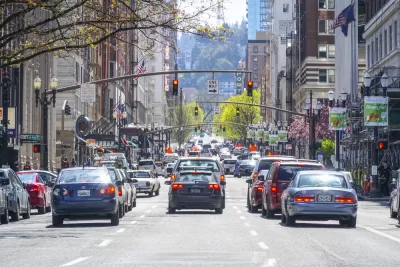
Adidas North America is offering to pay its employees up to 60 dollars a day to take Lyft to work in North Portland, reports Jeff Manning.
The company is offering the subsidy to mitigate parking impacts in the neighborhood surrounding their office.
Already, 1,400 Adidas employees have signed up for the program, which also offers money for taking the bus or commute by bike.
A spokesperson for TriMet, quoted in the article, notes that for $60 a day, the company will be spending in a day and a half the cost of a monthly transit pass. If all 1,400 Adidas employees signed up for the program maximize the benefit, the company could spend $80,000 a day.
Other transit boosters cited in the article note that all of those Lyft rides could increase congestion.
Read the full story: Commuting by Lyft: Adidas will cover the cost in hopes of easing crowding, parking shortage

Portland’s Uber, Lyft, Taxi Ridership is Slower to Recover Than Transit
Fewer Portland residents are calling ride-hailing services than before the pandemic.
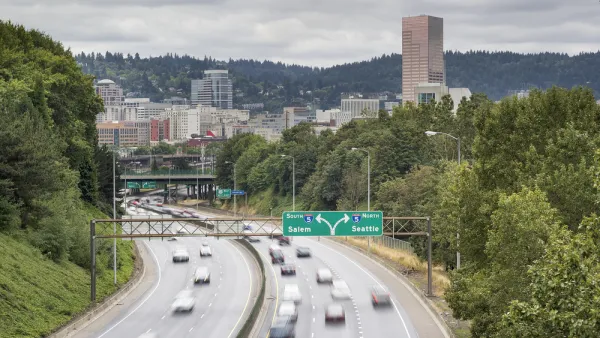
Oregon Youth Activists Protest Highway Expansion
A group of young climate activists are demanding an end to traffic-inducing road expansion projects and a renewed commitment to sustainable, transit-oriented transportation.
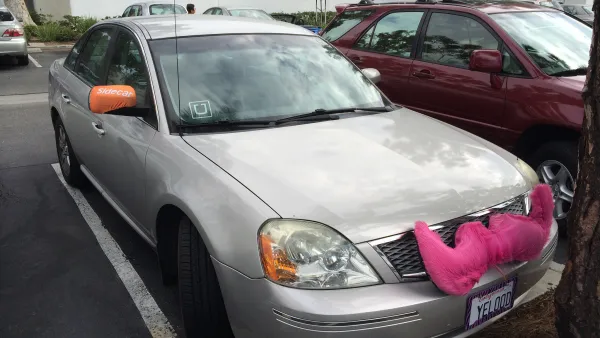
Study: Ride-Sharing Increases Urban Congestion
New research shows that ride sharing contributes to increased congestion and decreased transit ridership.

Planetizen Federal Action Tracker
A weekly monitor of how Trump’s orders and actions are impacting planners and planning in America.

California plans to bury El Niño’s downpour
If the state plays its cards right, it may be able to store a billion acre-feet of El Niño’s water in aquifers.

Desperate measures: Advocates weigh draining Lake Powell to fill Colorado River
Draining the reservoir could reduce evaporation losses by a couple hundred thousand acre-feet.

Chicago voters approve permanent festival grounds, penalty for vacant property owners
Currently, major summer and fall festivals take over public parks for weeks at a time, drawing criticism from nearby residents

NYC votes to cut outdoor dining red tape, speed up permitting
New York City also voted to allow the Department of Transportation to begin work on urgent projects before notifying elected officials.

California appears to reject Prop. 45
The proposition would have expanded the projects that qualify for a streamlined environmental review, effectively paring down the California Environmental Quality Act.

FREE Course: Walkable City 1: Why Walkability?
After describing his path towards focusing on walkability as the essence of good planning, Jeff Speck marches through his five principal reasons for making more walkable places.
Reinventing Malls: Planning Alchemy—Turning Gray Fields Into Gold
The course focuses on the opportunities and imperatives that shape reinvention of mall sites.

City of Rosemead
Rutgers University, Edward J. Bloustein School of Planning and Public Policy
One Hundred Miles
Hunter College, City University of New York (CUNY)
The Architects Foundation
University of Cincinnati Online
City of Cambridge
Montrose County
The Pocatello Development Authority