Low-income households would be eligible for half price fares to and from the Golden Gate Bridge district in Marin County by bus or ferry.



A pilot plan would test lower fares for low-income commuters coming in and out of Marin County in the North Bay Area.
"The Metropolitan Transportation Commission-led pilot project — which BART, Caltrain and San Francisco Muni have also committed to — seeks to increase overall ridership and improve affordability as the Bay Area’s cost-of-living climbs higher,” Will Houston reports for the Marin Independent Journal. The test would begin next year.
"The bridge district and Muni propose to offer a 50% discount to bus and ferry riders who make 200% or below the federal poverty level," Houston reports. This discount would not be available on a system or region wide basis but, rather, serve as a trial. In order to get the benefit, riders would need to have Clipper Cards, something not all low-income riders are able to do.
Other cities have also run trials on low-income fares and seen ridership improve.
Read the full story: Golden Gate Transit mulls low-income discount for ferry, bus fares

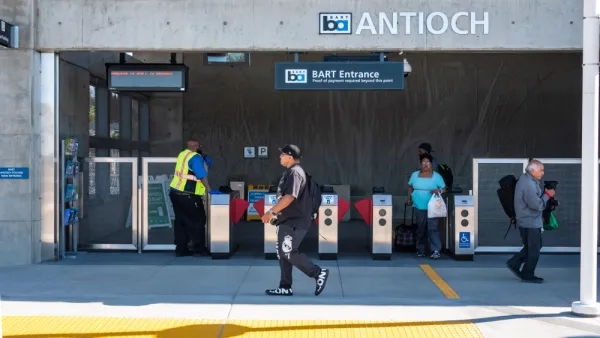
Op-Ed: To Survive, Bay Area Transit Needs Integration
Advocates for ‘seamless’ transit are calling on California state leaders to tie a consolidation study to a one-time injection of funding into the Bay Area’s transit systems.
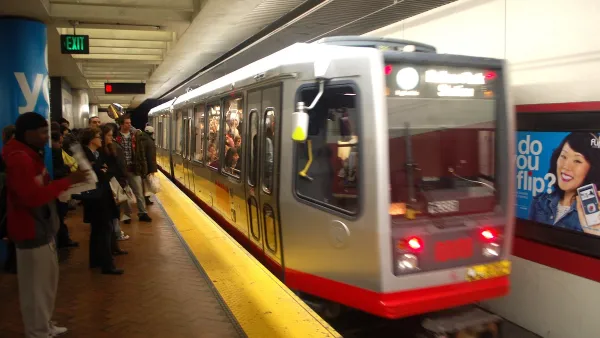
California Revives $750M Loan to Save Bay Area Transit
The state approved a $750 million loan as a stopgap measure to fund regional transit agencies until a 2026 ballot measure that could bring more permanent funding.

California Rejects Loan to Save Bay Area Transit
The state’s Department of Finance wants to extend negotiations about the loan, making it unlikely transit agencies will receive any assistance before the end of the year.

Planetizen Federal Action Tracker
A weekly monitor of how Trump’s orders and actions are impacting planners and planning in America.

California plans to bury El Niño’s downpour
If the state plays its cards right, it may be able to store a billion acre-feet of El Niño’s water in aquifers.

Desperate measures: Advocates weigh draining Lake Powell to fill Colorado River
Draining the reservoir could reduce evaporation losses by a couple hundred thousand acre-feet.

California city breaks ground on transit connector
The project includes three mobility hubs and a pedestrian bridge.

After public outcry, Massachusetts city releases housing development tracker
Cambridge’s tracker currently shows 250 housing projects in various stages of development.

40 years after approval, Chicago breaks ground on new park
The park honors Jean Baptiste Point du Sable, the city’s first permanent non-native settler.

FREE Course: Walkable City 1: Why Walkability?
After describing his path towards focusing on walkability as the essence of good planning, Jeff Speck marches through his five principal reasons for making more walkable places.
Reinventing Malls: Planning Alchemy—Turning Gray Fields Into Gold
The course focuses on the opportunities and imperatives that shape reinvention of mall sites.

City of Rosemead
Rutgers University, Edward J. Bloustein School of Planning and Public Policy
One Hundred Miles
Hunter College, City University of New York (CUNY)
The Architects Foundation
University of Cincinnati Online
City of Cambridge
Montrose County
The Pocatello Development Authority