A Red Line train recently derailed on the T in Boston, providing the latest example of the need for drastic measures to course correct public transit in the region.


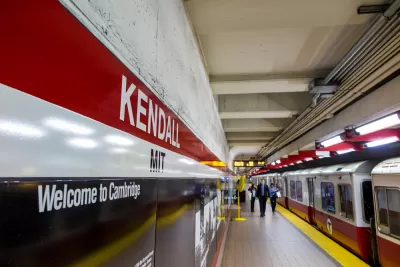
Powerful business interests in Kendall Square, the corner of Cambridge where the region's tech industry focuses around the Massachusetts Institute of Technology, has had enough of the dilapidated condition of public transit.
According to an article by Jon Chesto, "a group of CEOs and other managers from three dozen or so employers who sent a letter to state officials on Monday complaining about an increasing source of frustration: the daily commute."
The letter focuses on the state's public transportation, which they describe as in a "state of emergency."
"And they want more money to fix it," writes Chesto. "The Kendall Square Association’s letter to Governor Charlie Baker, House Speaker Robert DeLeo, and Senate President Karen Spilka declares, without any ambiguity, that it 'is time to raise revenue for transportation and end this crisis.'"
A June 11 derailment of a Red Line train on the T subway provides the most alarming context for the letter, but the letter is also "referring to the snafus and snarls, big and small, that hamper commutes around Greater Boston on a daily basis," according to Chesto.
FULL STORY: Kendall Square businesses, citing a ‘state of emergency,’ demand revenue to fix the T

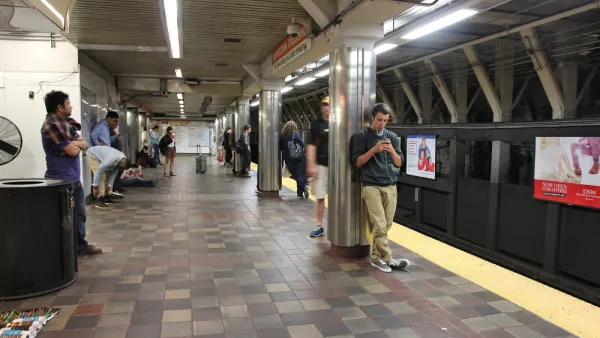
Opinion: Funding The T Should Be a Massachusetts State Priority
With ridership revenue still lagging and fatal incidents plaguing the Boston-area transit agency, one writer argues that state lawmakers must step in to fund upgrades for the aging system.
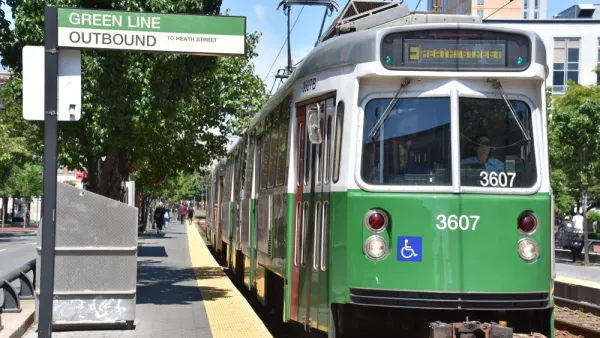
Potential Delays Trouble Boston Region's Green Line Extension Project
The Green Line extension will bring light rail service from Boston to Somerville and Medford, when it's done.
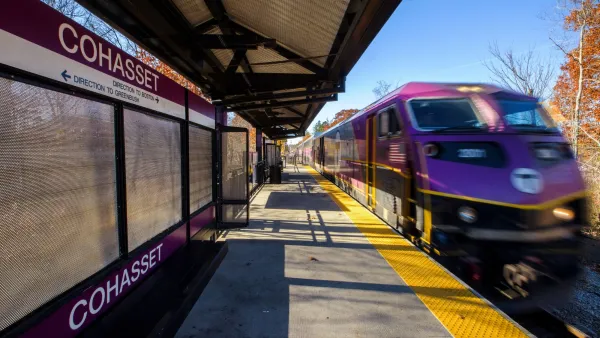
MBTA extends commuter rail discounts and lowers express bus fare to keep passengers riding into the fall
Boston-area commuters can access half-price monthly passes through November.

The state-sanctioned urbicide of Austin
People don’t kill cities. Freeways do.

US to reduce Colorado River water deliveries to Mexico
A new Colorado Treaty amendment reduces Mexico’s Colorado River water allocation by 250,000 acre feet.

New Jersey’s second-largest city bans standalone data centers
Jersey City will continue to allow co-location facilities, such as those meant for research institutions that store their own data.

Amtrak not solely to blame for New Jersey commuter rail's unreliability, report finds
A new study from the Garden State Initiative found that NJ Transit’s budget grew 20% across a 4 year period, but reliability declined significantly over the same period.

EPA erases limits on planet-warming pollution from power plants
Under Monday’s plan, power plants would still have some limits on how much mercury, arsenic and other contaminants they can emit.

Phoenix announces new on-demand transit service, more frequent RAPID buses
Both new services will launch in October, and are part of Phoenix's Project Effective Access Solutions for Easing Congestion.

FREE Course: Walkable City 1: Why Walkability?
After describing his path towards focusing on walkability as the essence of good planning, Jeff Speck marches through his five principal reasons for making more walkable places.
Reinventing Malls: Planning Alchemy—Turning Gray Fields Into Gold
The course focuses on the opportunities and imperatives that shape reinvention of mall sites.

Eagle County Government
Harvard University Graduate School of Design
Nashville Planning Department
The Architects Foundation
University of Cincinnati Online
The Pocatello Development Authority
The Urban Renewal Agency of the City of Pocatello
Journal of the American Planning Association