The "fear of missing out," also known as FOMO, is no way to make transportation decisions, according to this article.


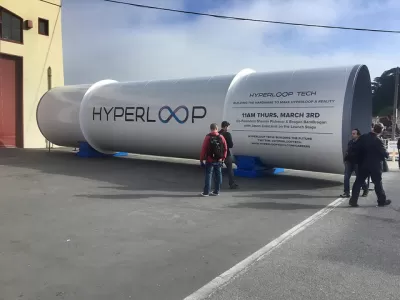
"More likely than not, your elected officials are basing mobility policy decisions not on cost-benefit analysis or strategic foresight, but on a classic modern insecurity: FOMO."
That's David Zipper's theory, explained in an article for CityLab. When transportation decision makers start make the FOMO mistake, cities get saddled with expensive demonstration projects for autonomous vehicles that show off more than provide benefits for residents.
There are other kinds of projects that move forward as a result of FOMO, according to Zipper, like the Hyperloop of the Boring Company, both of which have made progress, in iterative forms somewhat resembling their original ideas, in Las Vegas, Chicago, Pennsylvania, Missouri, and a route connecting Baltimore and Washington, D.C.
"The problem with these projects," writes Zipper, "is that they are the policy equivalent of Instagram glamour shots, crafted to elicit admiration and envy rather than improve lives. And, like the mayor of Springfield in TheSimpsons who is determined to get a new monorail before Shelbyville does, their backers insist on unveiling the shiny new technology ahead of anyone else."
Read the full story: Why FOMO Is the Enemy of Good Urban Mobility Policy

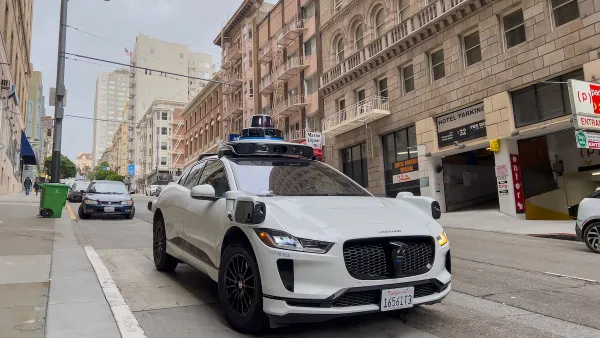
The Era Of Autonomous Vehicles Has Arrived
Autonomous vehicles are no longer perpetually “five years away.” They are here now. Planners must act now to ensure they don't degrade city life.

Planning for the Autonomous Future
With some historical perspective, transportation planners and policymakers can avoid the mistakes of the past and develop a transportation system that acknowledges the needs of all road users.

Las Vegas Doubles Down on Elon Musk and the Boring Co.
The Clark County Commission wants more Teslas in more tunnels.

Planetizen Federal Action Tracker
A weekly monitor of how Trump’s orders and actions are impacting planners and planning in America.
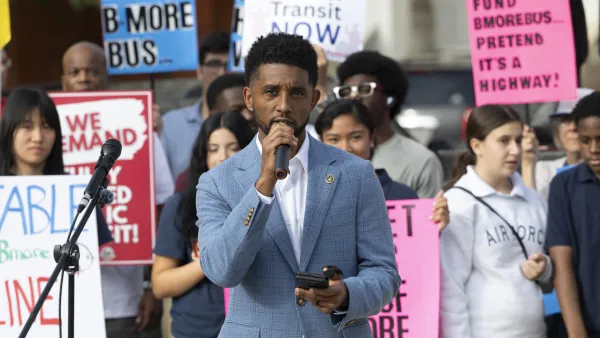
‘Going backwards:’ Baltimore mayor, students rally against state's transit funding plan
Maryland's proposed six-year plan provides no funding for Baltimore’s BMORE bus program and reduces its road maintenance funding.
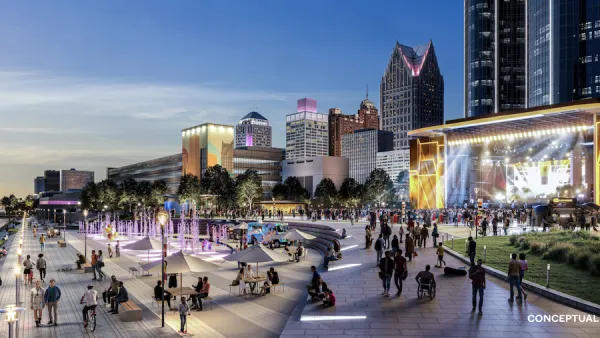
Detroit to transform waterfront with $2.2 billion investment
Developers will convert about 18 acres of unused parking lot space into civic spaces.

25 states, cities sue the EPA over erased power plant emissions limits
The coalition also intends to sue the EPA for not regulating emissions from gas-fired power plants.

Newsom vetoes giving CA tribes greater voice in water projects
In his veto letter, Newsom said the bill would add ‘uncertainty’ to the state’s fight to secure Californians’ water supplies.

Michigan Senate votes to revise 'lax' dam safety laws
A Bridge Michigan investigation found more than 100,000 Michigan residents live in the floodpath of a high or significant-hazard dam.

FREE Course: Walkable City 1: Why Walkability?
After describing his path towards focusing on walkability as the essence of good planning, Jeff Speck marches through his five principal reasons for making more walkable places.
Reinventing Malls: Planning Alchemy—Turning Gray Fields Into Gold
The course focuses on the opportunities and imperatives that shape reinvention of mall sites.

City of Thousand Oaks
City of Wisconsin Rapids
Harvard University Graduate School of Design
The Architects Foundation
University of Cincinnati Online
Northern Illinois Transit Authority (NITA)
The Pocatello Development Authority
The Urban Renewal Agency of the City of Pocatello