Advocates are relieved Elon Musk's proposal to build a new subterranean connection to O'Hare is dead, but still disappointed at the wasted brainpower and public funding devoted to the idea.


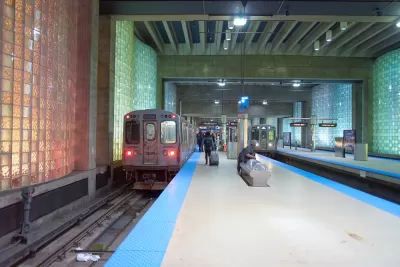
Fran Spielman reports on Chicago Mayor Lori Lightfoot's take on "Elon Musk’s plan to build a 'Tesla-in-a-tunnel' high-speed transit system between downtown and O’Hare Airport."
Mayor Lightfoot clearly has a different opinion of the project than her predecessor, Rahm Emanual. The idea that the project wouldn't require funding from the city: "a fantasy," according to Mayor Lightfoot. Lightfoot also referenced the opinion of former Secretary of the U.S. Department of Transportation Ray LaHood, who has called project a "pipe dream."
The harsh words were prompted by growing concern over the fate of an empty transit station, constructed by the city and bond financed by federal grant money. The city is concerned the feds could seek reimbursement of the grants because the station isn't being used for public transit, according to Spielman.
A separate article focuses on the Elon Musk/O'Hare proposal, seeking to reassure "people who care about creating a more efficient and equitable transit system for actual Chicagoans" that the project is likely dead.
FULL STORY: CTA could be forced to repay federal money used in Block 37 project super-station project

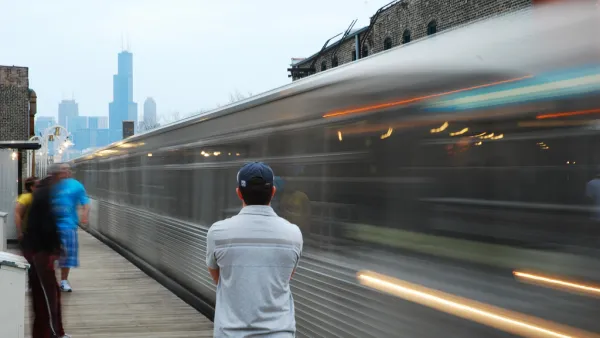
Chicago's New Train to O'Hare Won't Be a Train—It's Elon Musk's 'Loop'
Loop, as in a derivation of Hyperloop, conceived by Elon Musk and to be built by his newest venture, The Boring Company, is the technology of choice for high-speed transit to O'Hare Airport.

The Boring Company Coming Up Short of Expectations in Las Vegas
It seems like the Las Vegas Convention and Visitor’s Authority expected trouble with The Boring Company, and built a contract that will impact Elon Musk's bottom line for falling short of agreed system capacity and construction timelines.

Editorial Board Calls for Tax Increment Financing Reform in Chicago
The Chicago Tribune says the city of Chicago can't be trusted with tax increment financing (TIF), so it's time for a do-over.

Planetizen Federal Action Tracker
A weekly monitor of how Trump’s orders and actions are impacting planners and planning in America.

The state-sanctioned urbicide of Austin
People don’t kill cities. Freeways do.

US to reduce Colorado River water deliveries to Mexico
A new Colorado Treaty amendment reduces Mexico’s Colorado River water allocation by 250,000 acre feet.

Baltimore to break ground on $50 million Transit Priority Project
The project will bring faster bus trips, safer streets and better bike connections to Baltimore.

Airbnb launches $250 million 'last-dollar financing' housing accelerator, makes first investment in Austin
The company will put $6.4 million towards affordable housing development in Texas’ capital.

Guerilla urbanists are building DIY bus stop benches in Chicago
A before-and-after of one of the bus stops with a new bench. The new benches are not officially sanctioned or permitted, but the residents who placed them hope they will be the start of a network of DIY benches across the city.

FREE Course: Walkable City 1: Why Walkability?
After describing his path towards focusing on walkability as the essence of good planning, Jeff Speck marches through his five principal reasons for making more walkable places.
Reinventing Malls: Planning Alchemy—Turning Gray Fields Into Gold
The course focuses on the opportunities and imperatives that shape reinvention of mall sites.

Eagle County Government
Harvard University Graduate School of Design
Nashville Planning Department
The Architects Foundation
University of Cincinnati Online
The Pocatello Development Authority
The Urban Renewal Agency of the City of Pocatello
Journal of the American Planning Association