Milwaukee wants Wisconsin to overturn its law that prohibits red light cameras throughout the states. New state legislation could help achieve the city's goal.



"The city of Milwaukee wants state law changed to allow red light cameras and speed enforcement cameras installed at the most dangerous intersections in the city," reports Corri Hess.
According to Hess, there is already draft legislation in the works that would "allow law enforcement agencies in Milwaukee to photograph vehicles going through a red light and those speeding more than 21 miles per hour."
"Danielle Decker, a lobbyist for the city of Milwaukee, said if the Legislature were to approve the bill, the city would start a five-year pilot of the cameras at about 50 intersections," according to Hess.
The article sets the political debate over red lights in Wisconsin (where it's illegal throughout the state to install cameras at intersections) in context of debates in other cities and states, headlined most recently by a law signed in Texas to outlaw the cameras.
Hess also notes a 2017 study by Case Western Reserve University researchers [pdf] that "found red light cameras changed the types of accidents occurring, but not the frequency of accidents or injuries." Unmentioned is a more recent analysis that finds pedestrian fatalities increase after red light cameras are removed.
FULL STORY: Bill Allows Red Light Cameras in City

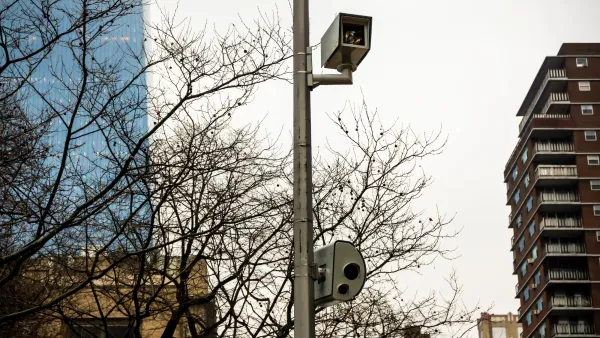
NYC Will Quadruple Traffic Camera Locations This Year
New York has used red light cameras since the 1990s and plans to deploy them to 600 intersections this year.
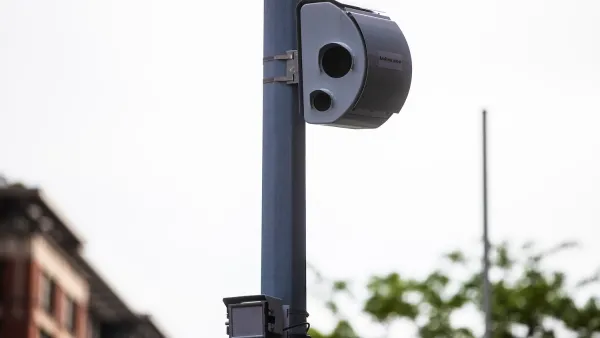
NYC to Expand Red-Light Camera Program, Target 'Ghost Cars'
The city plans to add 450 new cameras to catch red light violations.

Editorial: Reform, Don't Ban, Red Light Camera Programs
The Chicago Sun-Times responds to two Illinois state legislators who have recently proposed bills that would ban red light cameras statewide.

Planetizen Federal Action Tracker
A weekly monitor of how Trump’s orders and actions are impacting planners and planning in America.

The state-sanctioned urbicide of Austin
People don’t kill cities. Freeways do.

US to reduce Colorado River water deliveries to Mexico
A new Colorado Treaty amendment reduces Mexico’s Colorado River water allocation by 250,000 acre feet.

5 New England states march closer to 800 megawatt wind energy project
Securing federal approval for the project may be complicated under the Trump administration, which has historically been hostile towards domestic wind power.

Baltimore to break ground on $50 million Transit Priority Project
The project will bring faster bus trips, safer streets and better bike connections to Baltimore.

Airbnb launches $250 million 'last-dollar financing' housing accelerator, makes first investment in Austin
The company will put $6.4 million towards affordable housing development in Texas’ capital.

FREE Course: Walkable City 1: Why Walkability?
After describing his path towards focusing on walkability as the essence of good planning, Jeff Speck marches through his five principal reasons for making more walkable places.
Reinventing Malls: Planning Alchemy—Turning Gray Fields Into Gold
The course focuses on the opportunities and imperatives that shape reinvention of mall sites.

Eagle County Government
Harvard University Graduate School of Design
Nashville Planning Department
The Architects Foundation
University of Cincinnati Online
The Pocatello Development Authority
The Urban Renewal Agency of the City of Pocatello
Journal of the American Planning Association