The $45 billion transportation bill approved by the Illinois Legislature ended up including more public transit funding than it originally offered, but a Kendall County Metra project raises questions.



Despite the fears of those who saw an earlier version of Illinois’ transportation capital investment bill, the final version approved earlier this month puts cash into the Metra, CTA, and Pace transit systems. "The bill that passed this weekend, which includes a $33 billion, six-year transportation capital program, turned out to be much better for sustainable transportation than many advocates had anticipated," according to an article by John Greenfield.
The timing of the funding is also important. Illinois has traditionally funded transit agencies through sporadic capital bills making it hard for transit operators to budget. This bill looks to address that problem. "The bill also includes long-term, sustainable funding for public transportation, with transit receiving $4.7 billion over the first six years and $281 million for each year afterwards," Greenfield reports.
Chicago’s commuter railroad agency received funds to make improvements and replace outdated equipment to bring it into a state of good repair. "The capital bill earmarks $100 million for construction of a BNSF extension beyond Aurora and into Kendall County," according to a seprate article published on Yard Social. This particular project drew criticism in the same piece, which argued that far-off Kendall county might not be the right place to push for additional rail service.
"The bill provides a significant amount of capital funds that allow our transportation agencies to put a serious dent in much-needed state-of-good-repair improvements and ongoing annual capital funds to start taking service improvements more seriously. But without a fundamental shift in how our system works — whether that’s at the individual project level or more holistically," according to the Yard Social opinion piece.
FULL STORY: Pritzker’s Nearly $45B Capital Plan Is Way Better for Transportation Than Expected

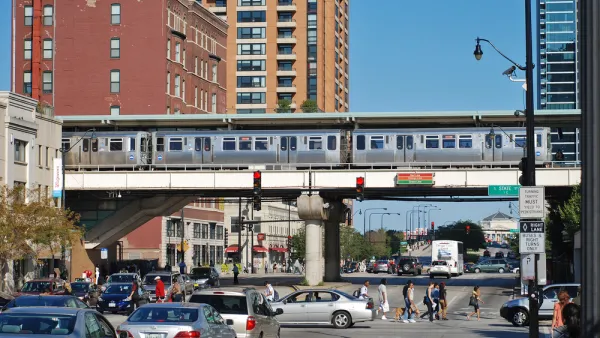
Study: Loss of Public Transit in Chicago Would Have ‘Severe’ Mobility, Economic Consequences
The first-of-it’s kind study found that without public transit, Chicago would lose an estimated $35 billion in economic activity annually and the quality of life of residents, particularly women and low-income groups, would take a major hit.

Chicago Transit Agencies on Brink of Major Crisis
Without additional funding, regional transit agencies will be forced to cut services by 40 percent.
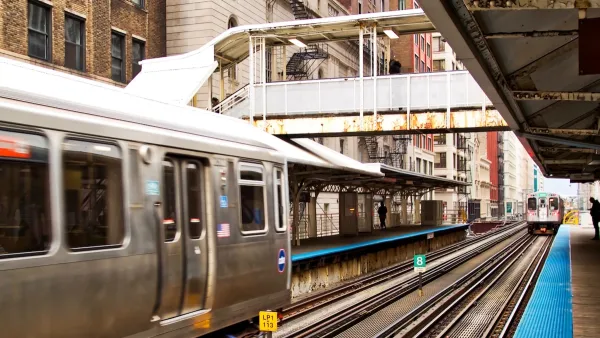
Chicago Commute Times Could Double Without New Transit Funding
A dire warning from regional transit leaders paints a bleak scenario for traffic if agencies are forced to cut service.

Planetizen Federal Action Tracker
A weekly monitor of how Trump’s orders and actions are impacting planners and planning in America.

The state-sanctioned urbicide of Austin
People don’t kill cities. Freeways do.

US to reduce Colorado River water deliveries to Mexico
A new Colorado Treaty amendment reduces Mexico’s Colorado River water allocation by 250,000 acre feet.

5 New England states march closer to 800 megawatt wind energy project
Securing federal approval for the project may be complicated under the Trump administration, which has historically been hostile towards domestic wind power.

Baltimore to break ground on $50 million Transit Priority Project
The project will bring faster bus trips, safer streets and better bike connections to Baltimore.

Airbnb launches $250 million 'last-dollar financing' housing accelerator, makes first investment in Austin
The company will put $6.4 million towards affordable housing development in Texas’ capital.

FREE Course: Walkable City 1: Why Walkability?
After describing his path towards focusing on walkability as the essence of good planning, Jeff Speck marches through his five principal reasons for making more walkable places.
Reinventing Malls: Planning Alchemy—Turning Gray Fields Into Gold
The course focuses on the opportunities and imperatives that shape reinvention of mall sites.

Eagle County Government
Harvard University Graduate School of Design
Nashville Planning Department
The Architects Foundation
University of Cincinnati Online
The Pocatello Development Authority
The Urban Renewal Agency of the City of Pocatello
Journal of the American Planning Association