The so-called car capital of the world is now a "hotbed for mobility disruption," a Harvard studio suggests.


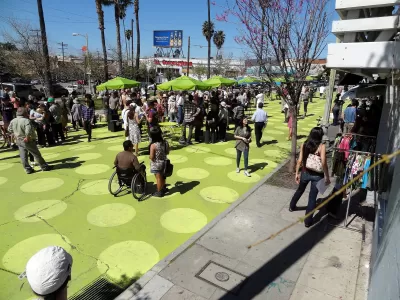
A recent course at the Harvard Graduate School of Design explored the future of urban mobility in light of the rapid advent of automated, shared, and electric transportation technologies. The Future of Streets studio particularly focused on Los Angeles, where leaders said was innovation was bubbling in the private sector and "unprecedented investments" were being made in the public sector.
In a final studio discussion published in The Planning Report, Los Angeles city planner Claire Bowin touted the city's Mobility Plan 2035, which she said anticipated new mobility technologies by "set[ting] a policy foundation for enabling change." The plan shifted the city's car-centric transportation planning framework toward accommodating multiple users of the street space, in part by measuring traffic impacts in Vehicle Miles Traveled rather than Level of Service, she said.
Major auto companies like Nissan and Ford, eager to get ahead of the curve in new mobility markets, also participated.
Rachel Nguyen, executive director of the Renault Nissan Future Lab, said the car company's future role could be to "design and build vehicles for a future mobility system.” Nissan could also partner with cities to offer “decades of R&D on technologies to deliver zero emissions and zero fatalities,” she said. The lab recently joined the LA Cleantech Incubator's Transportation Electrification Partnership to promote EVs.
A question central to the future of urban mobility, the panelists said, was how to encourage carpooling and public transportation even as ride-hailing and autonomous vehicles become increasingly cost-competitive. "The only thing we know for certain about the future is that people will have more options," Nguyen said. "I believe that Metro stations will be the hubs of those multimodal options."
The discussion also touched on the intersection of transportation with land use. Ryan J. Westrom of Greenfield Labs, a subsidiary of Ford's Smart Mobility program, highlighted an organization started by Ford called the National Street Service "to create an advocate for the street—the largest portion of public space in the country." He also suggested that a bus system that is "appealing across the socio-demographic spectrum" is the recipe for achieving mass transit while preserving "a space that we all consider beautiful."
FULL STORY: The Future of Streets and the Value of Shared, Multimodal Transit

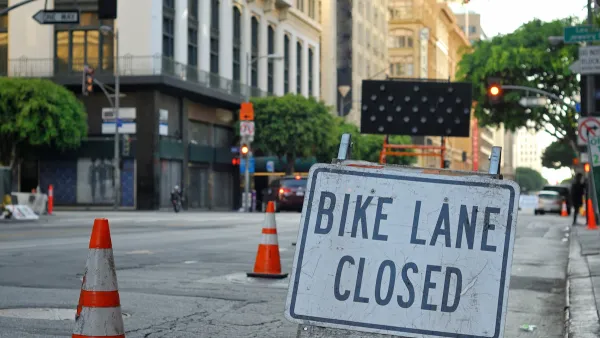
LA’s Mobility Plan Implementation Up to Voters
A measure on the local ballot in March could force the city to implement its own mobility plan, which city officials call “a guide, not a mandate.”
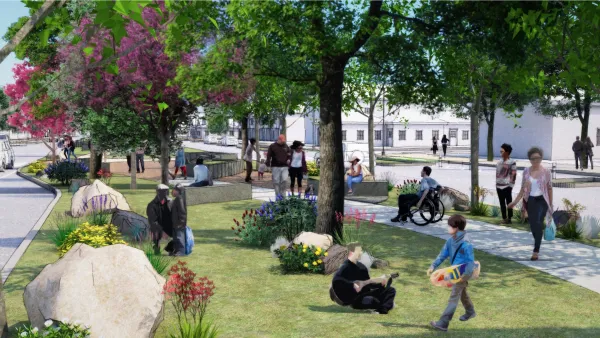
South L.A. Complete Streets Project Back on Track
First proposed in 2015, the Broadway-Manchester redesign would add bike infrastructure, pedestrian improvements, trees, and other amenities.

Report: How L.A.'s Transportation System Fails Women
According to an LADOT study, the city's women face disproportionate barriers in accessing safe, efficient transportation.

The state-sanctioned urbicide of Austin
People don’t kill cities. Freeways do.

US to reduce Colorado River water deliveries to Mexico
A new Colorado Treaty amendment reduces Mexico’s Colorado River water allocation by 250,000 acre feet.

New Jersey’s second-largest city bans standalone data centers
Jersey City will continue to allow co-location facilities, such as those meant for research institutions that store their own data.

Amtrak not solely to blame for New Jersey commuter rail's unreliability, report finds
A new study from the Garden State Initiative found that NJ Transit’s budget grew 20% across a 4 year period, but reliability declined significantly over the same period.

EPA erases limits on planet-warming pollution from power plants
Under Monday’s plan, power plants would still have some limits on how much mercury, arsenic and other contaminants they can emit.

Phoenix announces new on-demand transit service, more frequent RAPID buses
Both new services will launch in October, and are part of Phoenix's Project Effective Access Solutions for Easing Congestion.

FREE Course: Walkable City 1: Why Walkability?
After describing his path towards focusing on walkability as the essence of good planning, Jeff Speck marches through his five principal reasons for making more walkable places.
Reinventing Malls: Planning Alchemy—Turning Gray Fields Into Gold
The course focuses on the opportunities and imperatives that shape reinvention of mall sites.

Eagle County Government
Harvard University Graduate School of Design
Nashville Planning Department
The Architects Foundation
University of Cincinnati Online
The Pocatello Development Authority
The Urban Renewal Agency of the City of Pocatello
Journal of the American Planning Association