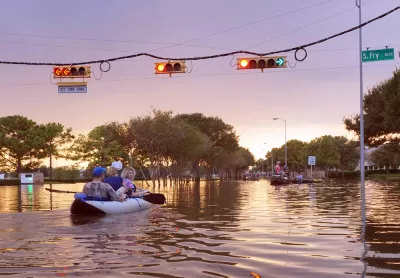
Residents of Houston are less likely to think of flooding as a concern, or to think development should be prohibited in flood-prone areas, as in the years immediately following Hurricane Harvey.


Emily Foxhall shares findings from the Kinder Houston Area Survey, released earlier this week.
Foxhall focuses specifically on the survey's findings about changing sentiments about flood preparations as the memory of Hurricane Harvey fades.
"Researchers compiling the Kinder Houston Area Survey asked residents what they considered Houston’s biggest problem, and the share who named flooding this year fell to 7 percent from 15 percent last year," according to Foxhall. "Only 1 percent cited flooding as the top problem in 2017, before Hurricane Harvey deluged the state with unprecedented amounts of rain."
Moreover: "The share of people who supported banning new construction in flood-prone areas dropped to 56 percent from 71 percent in 2018. Half favored increased taxes to buy out flooded homes, down from 55 percent last year."
The article includes more insight into the findings of the survey, including local sentiment about the economy and diversity.
FULL STORY: Public concern about flooding ebbs in area, Kinder survey shows

Criticism for Army Corps' Houston Flood Protection Plans
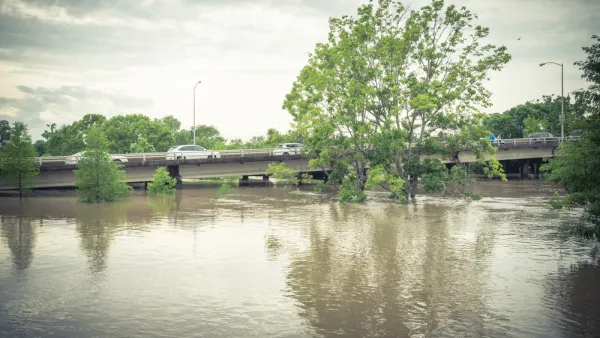
The U.S. Army Corps of Engineers has revised a plan to protect the Houston region from flooding by tossing out a proposed tunnel and opting instead to dig Buffalo Bayou wider and deeper.
Changes in Houston Over the Last Decade
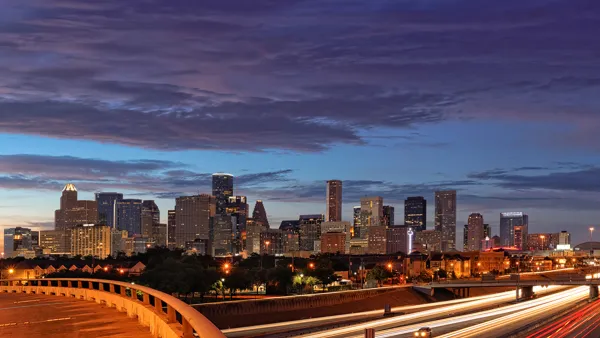
Comparing Houston in 2010 to the city today reveals a variety of transportation, infrastructure, and economic changes.
New Stormwater Resilience Measures Approved in Austin
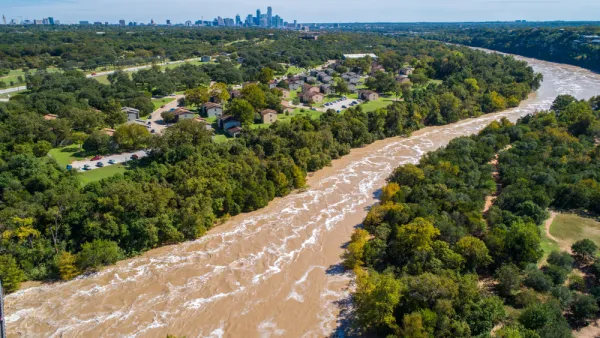
The Austin City Council adopted the latest in a series of measures intended to improve the city's stormwater resilience after experiencing repeated flooding events in the past decade.

Planetizen Federal Action Tracker
A weekly monitor of how Trump’s orders and actions are impacting planners and planning in America.

The state-sanctioned urbicide of Austin
People don’t kill cities. Freeways do.

US to reduce Colorado River water deliveries to Mexico
A new Colorado Treaty amendment reduces Mexico’s Colorado River water allocation by 250,000 acre feet.

Mamdani overhauls NYC's Vision Zero plan with 100 new policy goals
The overhaul aims to reduce traffic deaths and make streets safer for pedestrians, cyclists and drivers through lower speed limits, new safety infrastructure and more.

Amtrak not solely to blame for New Jersey commuter rail's unreliability, report finds
A new study from the Garden State Initiative found that NJ Transit’s budget grew 20% across a 4 year period, but reliability declined significantly over the same period.

EPA erases limits on planet-warming pollution from power plants
Under Monday’s plan, power plants would still have some limits on how much mercury, arsenic and other contaminants they can emit.

FREE Course: Walkable City 1: Why Walkability?
After describing his path towards focusing on walkability as the essence of good planning, Jeff Speck marches through his five principal reasons for making more walkable places.
Reinventing Malls: Planning Alchemy—Turning Gray Fields Into Gold
The course focuses on the opportunities and imperatives that shape reinvention of mall sites.

Eagle County Government
Harvard University Graduate School of Design
Nashville Planning Department
The Architects Foundation
University of Cincinnati Online
The Pocatello Development Authority
The Urban Renewal Agency of the City of Pocatello
Journal of the American Planning Association