The Austin City Council adopted the latest in a series of measures intended to improve the city's stormwater resilience after experiencing repeated flooding events in the past decade.


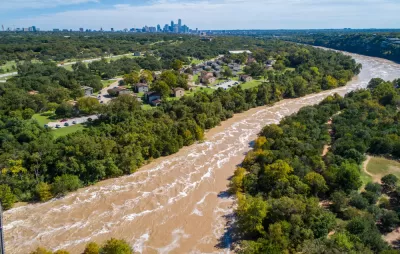
The Austin City Council last week adopted a "resolution that incorporates a range of initiatives to improve flood mitigation infrastructure, expand disaster response training and provide vulnerable households access to affordable flood insurance," reports Kali Bramble.
The resolution "encourages the city to make maximal use of funding available for flood resilience projects," according to Bramble. "In addition to directing the city manager to seek funding for infrastructure improvements at the state and federal level through organizations like FEMA, it calls for connecting vulnerable communities with disaster preparedness and response training."
The resolution also "builds upon work done by the city’s Watershed Protection Department, affirming the city’s commitment to tightening regulations on future development and investing in flood mitigation infrastructure such as gutters and drainage swales."
The source article details how the Halloween floods of 2013 and 2015 contributed to the political will to achieve this new priority on flood control in Austin. The City Council also approve the resolution while the city was under a flash flood warning.
FULL STORY: Council approves flood resilience resolution ahead of anniversary of devastating floods

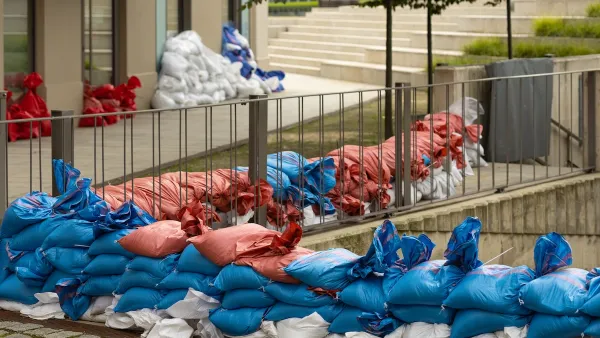
How US Communities Are Building Resilience Against Flooding
Flooding causes over $400 billion in damage in the United States every year.

Study: Outdated Stormwater Infrastructure Exacerbates Flooding
Infrastructure built to mitigate flooding a century ago no longer serves current needs.
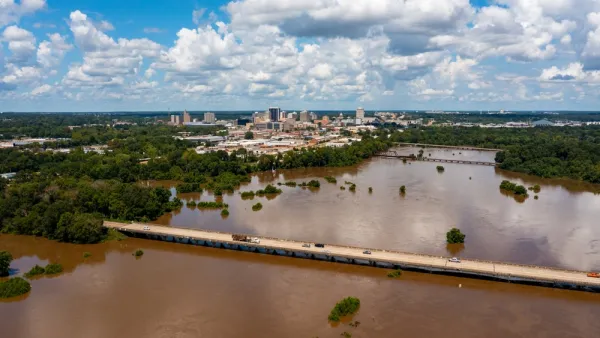
Costs to Fix Jackson's Water System Estimated at $1 Billion
Planning and funding are both in dire need in Jackson, Mississippi. The question is who should be in charge of all the planning and funding.

Planetizen Federal Action Tracker
A weekly monitor of how Trump’s orders and actions are impacting planners and planning in America.

The state-sanctioned urbicide of Austin
People don’t kill cities. Freeways do.

US to reduce Colorado River water deliveries to Mexico
A new Colorado Treaty amendment reduces Mexico’s Colorado River water allocation by 250,000 acre feet.

5 New England states march closer to 800 megawatt wind energy project
Securing federal approval for the project may be complicated under the Trump administration, which has historically been hostile towards domestic wind power.

Baltimore to break ground on $50 million Transit Priority Project
The project will bring faster bus trips, safer streets and better bike connections to Baltimore.

Airbnb launches $250 million 'last-dollar financing' housing accelerator, makes first investment in Austin
The company will put $6.4 million towards affordable housing development in Texas’ capital.

FREE Course: Walkable City 1: Why Walkability?
After describing his path towards focusing on walkability as the essence of good planning, Jeff Speck marches through his five principal reasons for making more walkable places.
Reinventing Malls: Planning Alchemy—Turning Gray Fields Into Gold
The course focuses on the opportunities and imperatives that shape reinvention of mall sites.

Eagle County Government
Harvard University Graduate School of Design
Nashville Planning Department
The Architects Foundation
University of Cincinnati Online
The Pocatello Development Authority
The Urban Renewal Agency of the City of Pocatello
Journal of the American Planning Association