The City Council of Kansas City is preparing to vote on the Bike KC Master Plan, which would set the city on a course to build a large network of high-quality bike infrastructure.


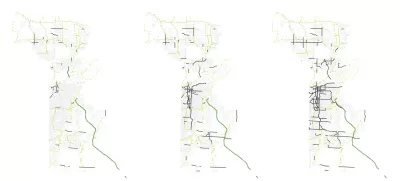
Alex Smith reports that the Kansas City City Council will soon vote on the Bike KC Master Plan [pdf], which would add "up to 658 miles of trails and lanes plus cycling programs at a cost of around $400 million."
Planners and the community have been working on the plan for three years, and the final product is a 156-page plan that "outlines a long-term development strategy for bike infrastructure throughout Kansas City that its designers say prioritizes safety and equity and includes a 5-Year Priority Plan, consisting of three phases of development," according to Smith.
Smith's coverage provides a thorough primer on the details and motivations of the Bike KC Master Plan. One particularly ambitious statistic reported here is sure to make bike advocates and planners in many cities envious: "As part of a focus on safety and accessibility, 59% of the completed bike network would be protected bike lanes, shared used paths or recreational trails, as opposed to conventional bike lanes or road 'diets' painted on streets, which restrict automobile traffic flow to make room for bike lanes." Bike advocates in Kansas City mostly support the plan.
Read the full story: Advocates Dream Big On A New But Flexible Plan For Kansas City’s Cycling Future
Biking's Billion-Dollar Value, Right Under Our Wheels
A strategic switch to biking would dramatically reduce the depth of roads, saving untold billions over the next generation.
Hundreds of Miles of New Bike Lanes Coming to Pittsburgh
Checking in with the Bike(+) Plan in Pittsburgh.
A Thorough, Mixed Review for a New Protected Bike Lane in Seattle
So many highly anticipated bike facilities finally deliver only to fall short of real game changing status. Seattle provides the latest example of the phenomenon in the wild.

Planetizen Federal Action Tracker
A weekly monitor of how Trump’s orders and actions are impacting planners and planning in America.

California plans to bury El Niño’s downpour
If the state plays its cards right, it may be able to store a billion acre-feet of El Niño’s water in aquifers.

Desperate measures: Advocates weigh draining Lake Powell to fill Colorado River
Draining the reservoir could reduce evaporation losses by a couple hundred thousand acre-feet.

In Texas, data centers are swallowing promised parkland
Residents who moved to Taylor, Texas for a rural community now have to contend with three data centers in their backyard.

How a Chicago-sized wind farm beat the odds and powered on
The project spanned five presidential administrations and a standoff with a U.S. military base.

MTA gives itself 30 days to transform pit into basketball court
The site has been under construction since 2022; the city originally estimated it would finish the court in 2024.

FREE Course: Walkable City 1: Why Walkability?
After describing his path towards focusing on walkability as the essence of good planning, Jeff Speck marches through his five principal reasons for making more walkable places.
Reinventing Malls: Planning Alchemy—Turning Gray Fields Into Gold
The course focuses on the opportunities and imperatives that shape reinvention of mall sites.

City of Rosemead
Rutgers University, Edward J. Bloustein School of Planning and Public Policy
One Hundred Miles
Hunter College, City University of New York (CUNY)
The Architects Foundation
University of Cincinnati Online
City of Cambridge
Montrose County
The Pocatello Development Authority