Last week, the New York City Council approved some of the most substantial climate change legislation to date by a city in the United States—call it the local example of the Green New Deal.


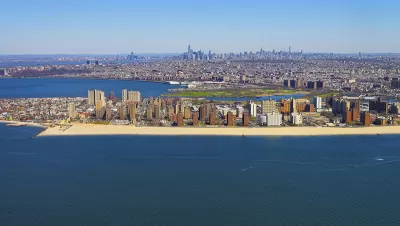
Alexander C. Kaufman reports on the "Climate Mobilization Act" approved by the New York City Council late last week, just in time for Earth Day.
The legislation requires "large and medium-sized buildings, which account for nearly a third of all greenhouse gas emissions in the city, to reduce their emissions 40% by 2030 and 80% by 2050," according to a City Council statement on the legislation.
"The effort demonstrates one of the clearest examples yet of what a municipal version of the Green New Deal, the national movement for a multi-trillion dollar climate-friendly industrial plan, might look like," writes Kaufman for perspective. "The legislation is forecast to spur thousands of blue-collar jobs and make it easier for the city to take advantage of future state and federal funding for clean energy projects and climate change-ready infrastructure."
Supporters of the legislation are calling the effort the single largest mandate to cut greenhouse gas emissions by any city in the world, according to Kaufman.
For further reading on the subject, Nilda Mesa, a senior research scientist at Columbia University and a former director of the Mayor’s Office of Sustainability, wrote an opinion piece for Crain's New York Business in support of the legislation.
FULL STORY: New York City Passes Historic Climate Legislation


The Local Green Building Policies Showing the Way for the Green New Deal
The heating and cooling of buildings must be addressed if the United States is going to curb its emissions.

Over 500 NYC ‘Blue Zones’ at Risk of More Destructive Floods
High-risk flood zones cover roughly 20% of the city’s land.
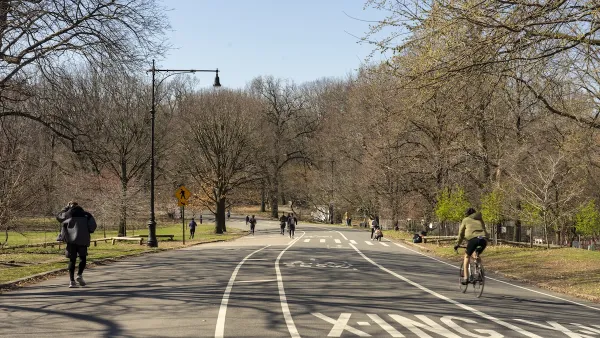
New Yorkers Face New Climate Risks
A two-acre fire in a city park prompted city officials to ban grilling while urging residents to conserve water to limit the impact of a historic drought.

Planetizen Federal Action Tracker
A weekly monitor of how Trump’s orders and actions are impacting planners and planning in America.

The state-sanctioned urbicide of Austin
People don’t kill cities. Freeways do.

US to reduce Colorado River water deliveries to Mexico
A new Colorado Treaty amendment reduces Mexico’s Colorado River water allocation by 250,000 acre feet.

5 New England states march closer to 800 megawatt wind energy project
Securing federal approval for the project may be complicated under the Trump administration, which has historically been hostile towards domestic wind power.

Baltimore to break ground on $50 million Transit Priority Project
The project will bring faster bus trips, safer streets and better bike connections to Baltimore.

Airbnb launches $250 million 'last-dollar financing' housing accelerator, makes first investment in Austin
The company will put $6.4 million towards affordable housing development in Texas’ capital.

FREE Course: Walkable City 1: Why Walkability?
After describing his path towards focusing on walkability as the essence of good planning, Jeff Speck marches through his five principal reasons for making more walkable places.
Reinventing Malls: Planning Alchemy—Turning Gray Fields Into Gold
The course focuses on the opportunities and imperatives that shape reinvention of mall sites.

Eagle County Government
Harvard University Graduate School of Design
Nashville Planning Department
The Architects Foundation
University of Cincinnati Online
The Pocatello Development Authority
The Urban Renewal Agency of the City of Pocatello
Journal of the American Planning Association