The future of light rail in Phoenix is in voters' hands.


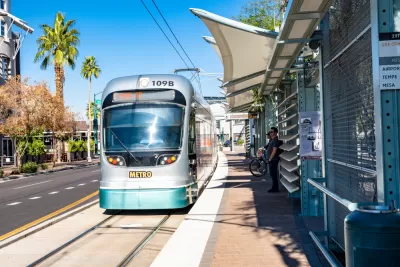
"A group of light-rail opponents dubbed Building a Better Phoenix collected enough signatures to force light rail back on the ballot," reports Jessica Boehm. "Proponents of light rail tried tried [sic] to get the initiative kicked off the ballot in a legal challenge this week, but were unsuccessful."
"If passed, the Building a Better Phoenix Initiative would halt all light-rail spending and cancel all light-rail projects approved by voters in 2015," explains Boehm, including the South Central extension, the Capitol/I-10 West extension, Phase II of the Northwest extension, the ASU West extension, the West Phoenix/Camelback extension, and the Northeast extension.
Any future rail spending, on Amtrak or of commuter rail, would also be forbidden by the initiative.
"The funding for the planned light-rail extensions comes from three sources," explains Boehm: "countywide transportation tax revenue, federal grants and revenue from a city sales tax increase voters approved in 2015."
"If the initiative passes, the city's sales tax revenue will divert to other transportation projects, including sidewalk improvements, road repairs and new bus systems. The Phoenix Citizens Transportation Commission will recommend how the money should be spent."
The qualification of the referendum for citywide election is just the latest setback for public transit politics in Phoenix, coming just a few weeks after the Phoenix City Council voted to rescind funding for the West Phoenix/Camelback extension.
FULL STORY: Phoenix voters could kill light rail to these 6 neighborhoods

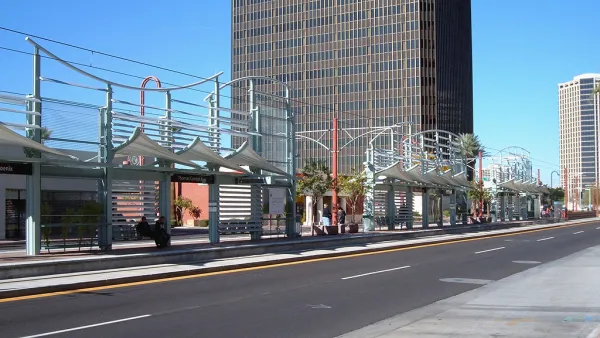
As Phoenix Light Rail Extension Debate Devolves, Questions About Funding
Transit advocates are saying the Koch Brothers are responsible for a sudden outbreak of controversy surrounding the South Central Light Rail Extension in Phoenix.
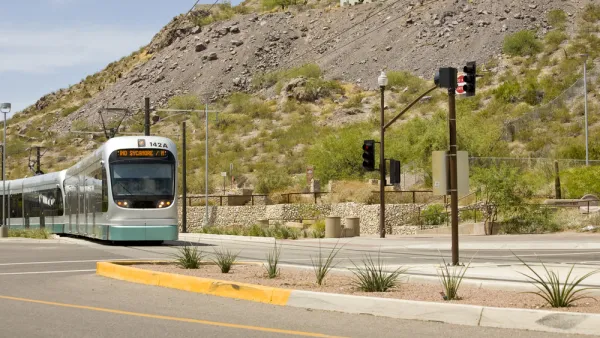
Scoop: Koch Brothers Connections to Phoenix Anti-Transit Initiative Revealed
New evidence reveals the deep involvement of Koch Industries funding in the Phoenix anti-light rail campaign.
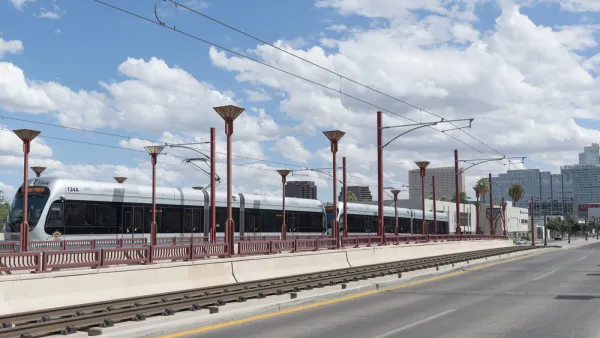
Phoenix City Council Shifts Voter-Approved Light Rail Project Funding to Roads
Locally generated sales tax revenue will no longer fund a planned light rail extension in west Phoenix.

Planetizen Federal Action Tracker
A weekly monitor of how Trump’s orders and actions are impacting planners and planning in America.

The state-sanctioned urbicide of Austin
People don’t kill cities. Freeways do.

US to reduce Colorado River water deliveries to Mexico
A new Colorado Treaty amendment reduces Mexico’s Colorado River water allocation by 250,000 acre feet.

Mamdani overhauls NYC's Vision Zero plan with 100 new policy goals
The overhaul aims to reduce traffic deaths and make streets safer for pedestrians, cyclists and drivers through lower speed limits, new safety infrastructure and more.

Amtrak not solely to blame for New Jersey commuter rail's unreliability, report finds
A new study from the Garden State Initiative found that NJ Transit’s budget grew 20% across a 4 year period, but reliability declined significantly over the same period.

EPA erases limits on planet-warming pollution from power plants
Under Monday’s plan, power plants would still have some limits on how much mercury, arsenic and other contaminants they can emit.

FREE Course: Walkable City 1: Why Walkability?
After describing his path towards focusing on walkability as the essence of good planning, Jeff Speck marches through his five principal reasons for making more walkable places.
Reinventing Malls: Planning Alchemy—Turning Gray Fields Into Gold
The course focuses on the opportunities and imperatives that shape reinvention of mall sites.

Eagle County Government
Harvard University Graduate School of Design
Nashville Planning Department
The Architects Foundation
University of Cincinnati Online
The Pocatello Development Authority
The Urban Renewal Agency of the City of Pocatello
Journal of the American Planning Association