The city is putting money into a risk mitigation fund, but activists want to see better protections for renters in a rapidly changing neighborhood.


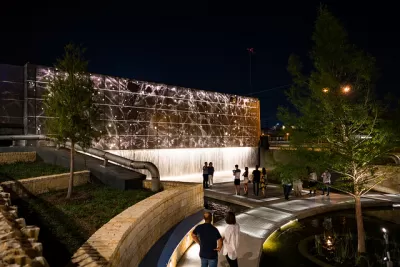
Kriston Capps reports that revitalization efforts are ramping up in the San Pedro Creek neighborhood of San Antonio, Texas. San Pedro Creek Culture Park is being described as a "Latino High Line" that will both restore the local ecosystem and bring cultural and artistic features highlighting the Latino heritage of the area.
But community activists are concerned that the redevelopment will also displace vulnerable residents. Similar projects in other cities have led to skyrocketing housing costs, and San Antonio’s River Walk project has already shown the impacts this type of development can have on a neighborhood:
The riverfront saw a transformational expansion of parkland, shops, walkways, and restaurants that bougified the San Antonio River a decade ago. The city is only beginning to learn the lesson that while growth is good, it poses risks for residents on the wrong side of a steep income drop-off.
In response to the looming threat, the city council recently approved $1 million for a Risk Mitigation Fund to help displaced residents. However, activists say the fund is not enough. "What San Antonio needs, according to [Amelia] Adams, is a displacement risk mitigation policy with teeth. The fund authorized by the city council on Thursday does not come with any obligations for developers," notes Capps.
Read the full story: A ‘Latino High Line’ Promises Change for San Antonio


Placemaking in the Barrio: Conceptualizing Infill Development in Disenfranchised Communities
How one San Antonio neighborhood could approach sustainable revitalization while supporting the existing community and drawing on its rich and diverse history and cultural resources.
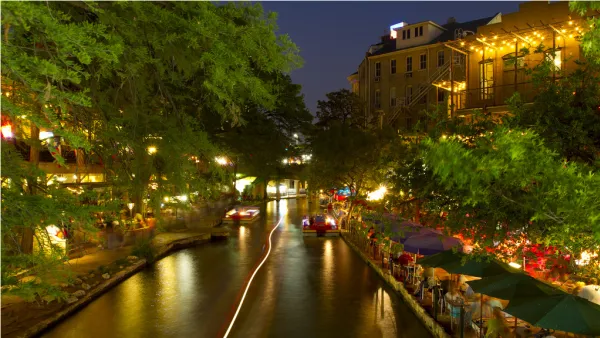
San Antonio Officials Remove Invasive Snails During River Walk Draining
As part of the biannual cleaning of the city's prized River Walk, San Antonio officials removed hundreds of invasive snails from the channel.
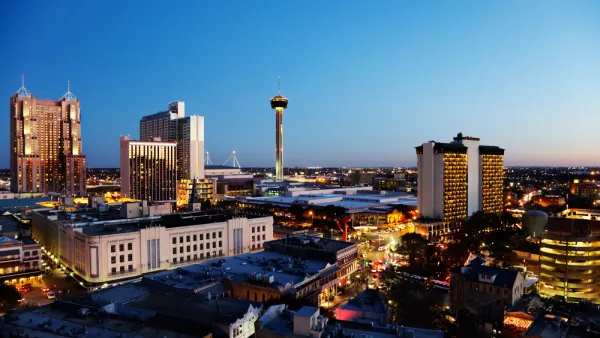
In San Antonio, Planning Ahead for Affordable Housing
The city anticipates significant population growth in the coming decades, and it has put a funding plan into action to ensure affordable housing doesn’t fall by the wayside.

Planetizen Federal Action Tracker
A weekly monitor of how Trump’s orders and actions are impacting planners and planning in America.

California plans to bury El Niño’s downpour
If the state plays its cards right, it may be able to store a billion acre-feet of El Niño’s water in aquifers.

Desperate measures: Advocates weigh draining Lake Powell to fill Colorado River
Draining the reservoir could reduce evaporation losses by a couple hundred thousand acre-feet.

California city breaks ground on transit connector
The project includes three mobility hubs and a pedestrian bridge.

After public outcry, Massachusetts city releases housing development tracker
Cambridge’s tracker currently shows 250 housing projects in various stages of development.

40 years after approval, Chicago breaks ground on new park
The park honors Jean Baptiste Point du Sable, the city’s first permanent non-native settler.

FREE Course: Walkable City 1: Why Walkability?
After describing his path towards focusing on walkability as the essence of good planning, Jeff Speck marches through his five principal reasons for making more walkable places.
Reinventing Malls: Planning Alchemy—Turning Gray Fields Into Gold
The course focuses on the opportunities and imperatives that shape reinvention of mall sites.

City of Rosemead
Rutgers University, Edward J. Bloustein School of Planning and Public Policy
One Hundred Miles
Hunter College, City University of New York (CUNY)
The Architects Foundation
University of Cincinnati Online
City of Cambridge
Montrose County
The Pocatello Development Authority