Development in industrial areas is pushing out manufacturers, but new zoning regulations could help control the incursion.


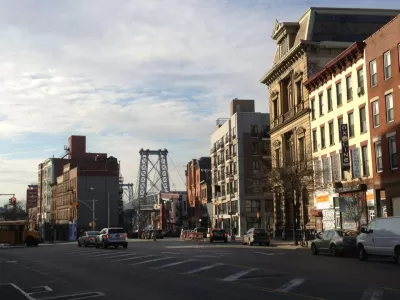
Areas in New York City zoned for manufacturing are grappling with the influx of other land uses, particularly hotels, that are driving up costs for manufacturers, leading to a decrease in industrial buildings, and forcing workers to relocate farther away from jobs.
The city is finally taking steps to better regulate the conversion of industrial property by updating a zoning ordinance that had not changed since 1961, says Oscar Perry Abello:
City Council’s move last year requires that hotel special permit applications go through the city’s standard land use review process, known as ULURP (Uniform Land Use Review Procedure), which includes nonbinding input from the community as well as a binding vote by City Council. The council typically defers to the member whose district encompasses the land use application request.
The city has tried to support manufacturing in the past through the establishment of industrial business zones and an Industrial Action Plan. But community advocates say protecting land zoned for manufacturing is crucial. While the special permit for hotels is a move in the right direction, they are still concerned about existing development in these neighborhoods and the land use pressures that will come in the future, notes Abello.
Read the full story: If Your City Wants Equitable Job Growth, It Has to Zone for It

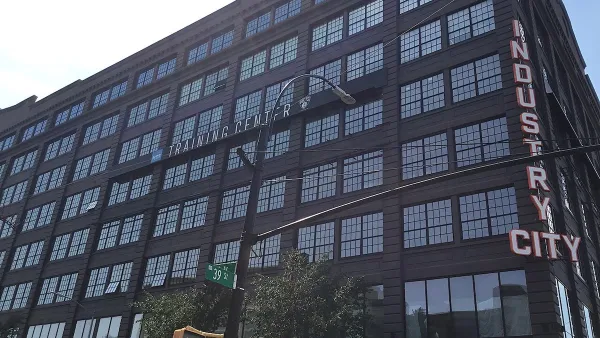
‘Emergent City’ Documentary Highlights Rare Anti-Gentrification Victory
The film charts the saga of a Brooklyn site called Industry City.

The Street-Level Consequences of Zoning
Modern zoning practices separated uses, claiming this was a better way to organize American cities. However, the social, cultural, and urban design outcomes drastically changed the world we live in.

Designated Zones to Protect New York Manufacturing
Without designated industrial zones, New York manufacturing companies risk losing their facilities to the residential development market. The de Blasio administration has promised some zoning protections for industrial enclaves.

Planetizen Federal Action Tracker
A weekly monitor of how Trump’s orders and actions are impacting planners and planning in America.

Amtrak, CN end decades-long dispute with eight-year agreement
The new operating agreement establishes an updated framework for the companies to work together, including processes to resolve disputes.

Colorado’s Largest Data Center Could Rise Next to Homes — Without a Public Hearing
The proposed campus would consume 11 times the power of Denver International Airport; as it has across the country, opposition mounts.

'This is going to be painful:’ Virginia stares down $1.7 billion funding gap for highway maintenance
The state may address the deficit by shifting $290 million from its construction budget to maintenance projects.

Judges permit Denver to divert 77,000 acre feet from the Colorado River for reservoir expansion
Overuse and climate change have caused the Colorado River’s water levels to plummet.

Amtrak, CN end decades-long dispute with eight-year agreement
The new operating agreement establishes an updated framework for the companies to work together, including processes to resolve disputes.

FREE Course: Walkable City 1: Why Walkability?
After describing his path towards focusing on walkability as the essence of good planning, Jeff Speck marches through his five principal reasons for making more walkable places.
Reinventing Malls: Planning Alchemy—Turning Gray Fields Into Gold
The course focuses on the opportunities and imperatives that shape reinvention of mall sites.


KFH Group Inc.
Greater Baltimore Committee
Eagle County Government
The Architects Foundation
University of Cincinnati Online
The Pocatello Development Authority
The Urban Renewal Agency of the City of Pocatello