A $2.75 billion plan to build a channel for flood waters around Fargo, North Dakota is described as one of the most ambitious infrastructure projects in the country.


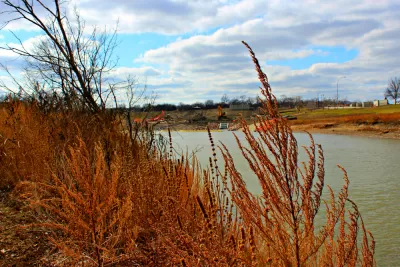
"It's one of the biggest and most ambitious infrastructure projects in America right now: a $2.75 billion plan to build a new channel to divert flood waters from the Red River for 30 miles around Fargo, N.D., in order to save the area from future floods," reports Daniel C. Vock.
The Red River diversion project requires the cooperation of local officials, state authorities from North Dakota and Minnesota, and the U.S. Army Corps of Engineers. The state of Minnesota finally cleared the way for the project recently after a two-year standoff, and now it's up to North Dakota state legislators to fund the remainder of the project's cost.
As for the unprecedented involvement of the private sector on the project, Vock provides the following information:
A specially created local government entity, called the Diversion Authority, would then be primarily responsible for building the channel between the reservoir and a point downstream on the Red River from Fargo. The diversion agency, though, plans to hire a private consortium to build the 30-mile channel and maintain it for 30 years. It already has three contracting groups that have indicated they would be interested in undertaking the project.
The article also lists several desired benefits of the P3 arrangement.
Read the full story: North Dakota's Massive Effort to Avoid Floods
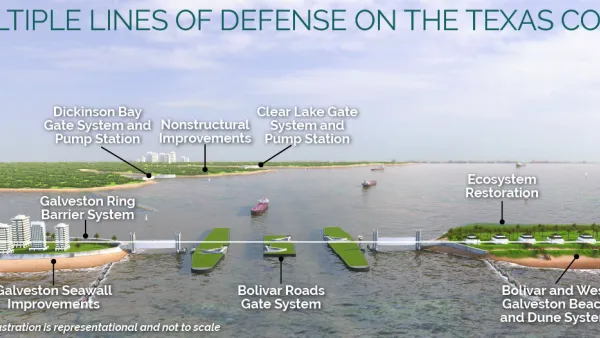
$31 Billion ‘Ike Dike’ Hurricane Protection Project Moving Through Congress
Congress authorized the $31 billion ‘Ike Dike’ sea-level rise adaptation project, along with a laundry list of other water infrastructure projects.
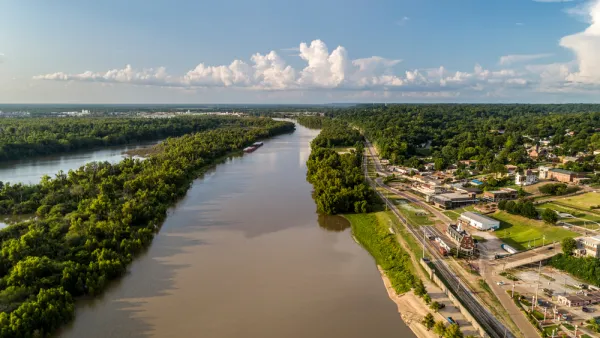
Army Corps Pulls the Plug on $450 Million Mississippi Floodwater Project
A coalition of environmental scored a victory this month, when the U.S. Army Corps of Engineers canceled an expensive, and controversial, flood control project.
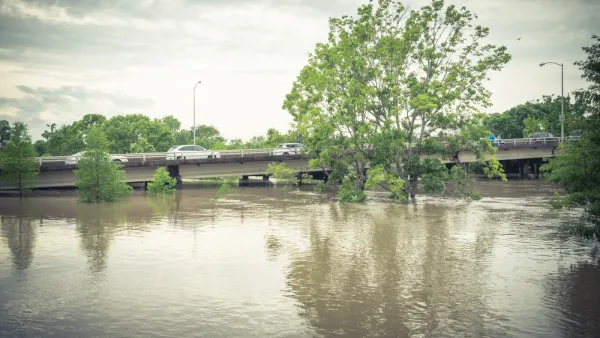
Criticism for Army Corps' Houston Flood Protection Plans
The U.S. Army Corps of Engineers has revised a plan to protect the Houston region from flooding by tossing out a proposed tunnel and opting instead to dig Buffalo Bayou wider and deeper.

Planetizen Federal Action Tracker
A weekly monitor of how Trump’s orders and actions are impacting planners and planning in America.

California plans to bury El Niño’s downpour
If the state plays its cards right, it may be able to store a billion acre-feet of El Niño’s water in aquifers.

Desperate measures: Advocates weigh draining Lake Powell to fill Colorado River
Draining the reservoir could reduce evaporation losses by a couple hundred thousand acre-feet.

Housing is the top priority of Seattle’s sole new councilmember
Jenks campaigned on building 1,000 new units of affordable housing.

New tax cuts may slash $1.5 billion in funding for Miami transit, public parks
Amendment 3 will save Miami-Dade residents homeowners $2,700 in 2028.

Arizona, Wisconsin, Pennsylvania hope to finally advance climate goals post-midterms
The three states have spent years under Republican or divided control.

FREE Course: Walkable City 1: Why Walkability?
After describing his path towards focusing on walkability as the essence of good planning, Jeff Speck marches through his five principal reasons for making more walkable places.
Reinventing Malls: Planning Alchemy—Turning Gray Fields Into Gold
The course focuses on the opportunities and imperatives that shape reinvention of mall sites.

City of Rosemead
Rutgers University, Edward J. Bloustein School of Planning and Public Policy
One Hundred Miles
University of Michigan School for Environment and Sustainability (SEAS)
Hunter College, City University of New York (CUNY)
The Architects Foundation
City of Cambridge
Montrose County
The Pocatello Development Authority