A coalition of environmental scored a victory this month, when the U.S. Army Corps of Engineers canceled an expensive, and controversial, flood control project.


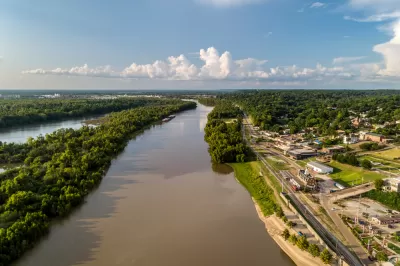
The Associated Press reports that U.S. Army Corps of Engineers has canceled the $450 million Yazoo Pumps flood control project planned in Mississippi for the flatlands between the Mississippi and Yazoo rivers.
Environmental groups, including American Rivers, the National Audubon Society, the Sierra Club, Healthy Gulf, and Earthjustice, sued the Army Corps to delay the Yazoo Pumps Project. The aforementioned environmental groups put out a press release to celebrate the project's cancelation and describe the basis for their legal challenge.
The Yazoo Pumps would have drained 14,000 cubic-feet-per-second of floodwaters from farmland in the area, but the environmental group argued that the plan would leave most local communities vulnerable. "Corps data shows only 17% of the backwater would receive any flood relief from the Pumps," according to the press release.
Read the full story: Corps cancels Mississippi flood project that EPA rejected


Los Angeles Wants its River Back From the Feds
Regional officials don't think the federal government is doing enough to warrant continued ownership of the Los Angeles River flood control channels that cut a 40-mile path through the city and county.
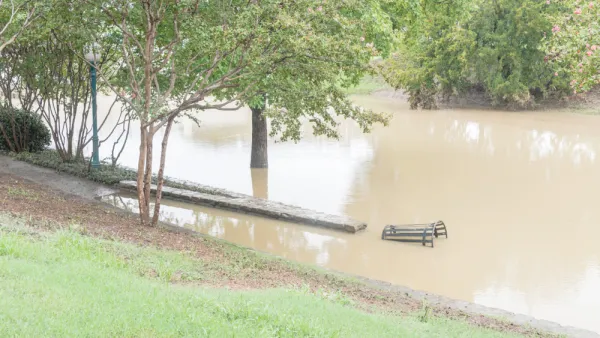
Fort Worth Spending More on Flood Control; Still Well Short of What’s Needed
Fort Worth could spend $136 million on stormwater infrastructure and flood control over the next five years. In all, the city needs more like $1 billion of investment.
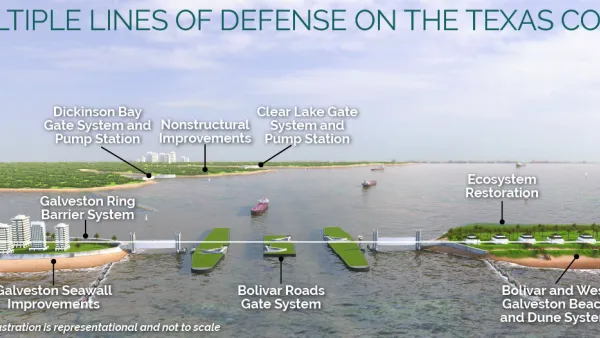
$31 Billion ‘Ike Dike’ Hurricane Protection Project Moving Through Congress
Congress authorized the $31 billion ‘Ike Dike’ sea-level rise adaptation project, along with a laundry list of other water infrastructure projects.

Planetizen Federal Action Tracker
A weekly monitor of how Trump’s orders and actions are impacting planners and planning in America.

California plans to bury El Niño’s downpour
If the state plays its cards right, it may be able to store a billion acre-feet of El Niño’s water in aquifers.

Desperate measures: Advocates weigh draining Lake Powell to fill Colorado River
Draining the reservoir could reduce evaporation losses by a couple hundred thousand acre-feet.

California city breaks ground on transit connector
The project includes three mobility hubs and a pedestrian bridge.

After public outcry, Massachusetts city releases housing development tracker
Cambridge’s tracker currently shows 250 housing projects in various stages of development.

40 years after approval, Chicago breaks ground on new park
The park honors Jean Baptiste Point du Sable, the city’s first permanent non-native settler.

FREE Course: Walkable City 1: Why Walkability?
After describing his path towards focusing on walkability as the essence of good planning, Jeff Speck marches through his five principal reasons for making more walkable places.
Reinventing Malls: Planning Alchemy—Turning Gray Fields Into Gold
The course focuses on the opportunities and imperatives that shape reinvention of mall sites.

City of Rosemead
Rutgers University, Edward J. Bloustein School of Planning and Public Policy
One Hundred Miles
Hunter College, City University of New York (CUNY)
The Architects Foundation
University of Cincinnati Online
City of Cambridge
Montrose County
The Pocatello Development Authority