Analyzing the potential outcomes of Senate Bill 10, one of two statewide upzoning bills under consideration in the state of Oregon this year.


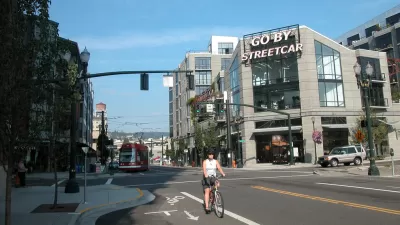
Michael Andersen digs into the details of one of the big land use bills under consideration in the Oregon Legislature—SB 10, which would "legalize hundreds of thousands of potential future homes, almost all of them in three urban areas: Portland, Eugene-Springfield, and Salem."
The bill would allow new levels of density around transit lines, and remove parking requirements for new development neat transit stops.
"There’s compelling logic to it," writes Andersen. "Oregonians have spent billions of dollars on their mass transit systems and spend more than a billion more every year. Why not let people live near them if they want to?"
The bill would have especially broad reach in Portland, where TriMet has mapped the areas of the city that would be affected by the zoning changes mandated by Senate Bill 10 (click through to see the map).
The bill offers a kind of sliding scale for the kinds of density that would be legalized, depending on the size of the city and the capacity of nearby transit lines. Andersen collects examples of the varying degrees of density that would be possible if the legislature approves the bill. (Senate Bill is not to be confused with House Bill 2001, which would end single-family zoning in all cities in the state with a population over 10,000.)
Read the full story: HERE’S WHAT OREGON’S HUGE NEW TRANSIT HOUSING BILL WOULD LEGALIZE
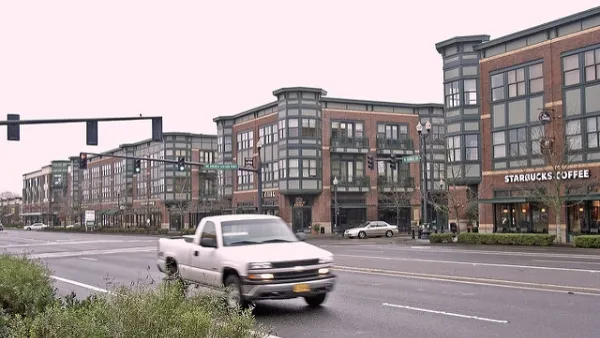
Oregon to Consider New Densities for Transit Adjacent Neighborhoods
The Oregon Legislature is already considering one of the most sweeping and ambitious statewide land use reform bills in the country. A new bill would allow even more density around transit stations.
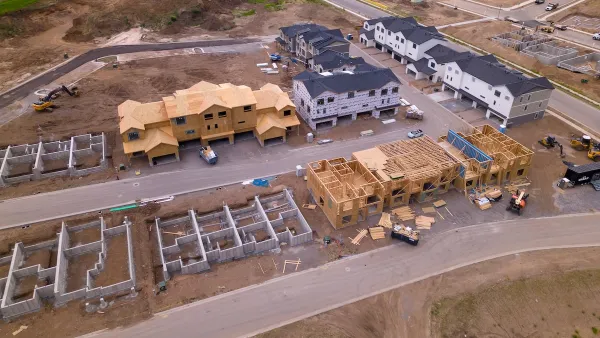
‘Montana Miracle:’ The State Actually Succeeding at Housing Reform
A series of ambitious zoning reforms is having a significant impact on the state’s housing supply.
Poll: 2/3 of Virginians Don’t Trust Local Governments to Address Housing Crisis
Three-quarters of residents say the state needs to do more to address housing supply and affordability.

Planetizen Federal Action Tracker
A weekly monitor of how Trump’s orders and actions are impacting planners and planning in America.

California plans to bury El Niño’s downpour
If the state plays its cards right, it may be able to store a billion acre-feet of El Niño’s water in aquifers.

Desperate measures: Advocates weigh draining Lake Powell to fill Colorado River
Draining the reservoir could reduce evaporation losses by a couple hundred thousand acre-feet.

In Texas, data centers are swallowing promised parkland
Residents who moved to Taylor, Texas for a rural community now have to contend with three data centers in their backyard.

How a Chicago-sized wind farm beat the odds and powered on
The project spanned five presidential administrations and a standoff with a U.S. military base.

MTA gives itself 30 days to transform pit into basketball court
The site has been under construction since 2022; the city originally estimated it would finish the court in 2024.

FREE Course: Walkable City 1: Why Walkability?
After describing his path towards focusing on walkability as the essence of good planning, Jeff Speck marches through his five principal reasons for making more walkable places.
Reinventing Malls: Planning Alchemy—Turning Gray Fields Into Gold
The course focuses on the opportunities and imperatives that shape reinvention of mall sites.

City of Rosemead
Rutgers University, Edward J. Bloustein School of Planning and Public Policy
One Hundred Miles
Hunter College, City University of New York (CUNY)
The Architects Foundation
University of Cincinnati Online
City of Cambridge
Montrose County
The Pocatello Development Authority