The Land Use subcommittee of the Virginia House of Delegates decided quickly to uphold local control of zoning.


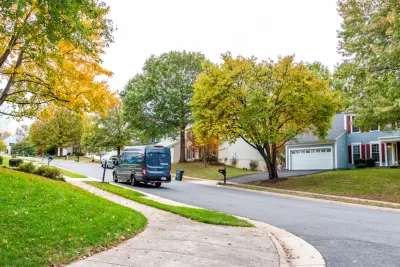
"In Virginia, a bold proposal to address housing shortages in the state died in a House of Delegates subcommittee hearing Thursday morning," reports Ally Schweitzer.
"The bill [HB 152] from Del. Ibraheem Samirah (D-Herndon) would have forced localities statewide to open up all single-family neighborhoods to duplexes and other housing types that accommodate two families," adds Schweitzer.
"Subcommittee members raised concerns about allowing the state to exercise more influence over zoning, which is traditionally handled by local governments."
The same Land Use subcommittee shot down another bill proposed by Samirah, HB 151, "which would have legalized construction of tiny homes and other ADUs (accessory dwelling units) statewide," according to Schweitzer.
The chance for Virginia to join a small but growing number of states to address a housing affordability crisis by preempting local land use regulations was short-lived. Samirah proposed HB 152 in December. Oregon is still the only state to approve statewide legislation to end single-family zoning statewide, though state legislatures in Nebraska and Maryland are still scheduled to consider similar laws this year.
Alex Baca, who testified in support of HB 152 at the subcommittee hearing, provides additional coverage of the bill's failure, and potential next steps, in an article for Greater Greater Washington.
FULL STORY: An Ambitious Housing Proposal In Virginia Is Dead — For Now


Statewide Density Increases Proposed in Virginia
The Commonwealth of Virginia will consider a bill that would legalize duplexes in single-family zones throughout the state.

Another Defeat for Statewide Zoning Reform in California
Another year, another defeat for sweeping changes to the status quo of single-family zoning in the state of California. SB 1120 would have allowed duplexes in areas previously zoned for detached single family zoning.
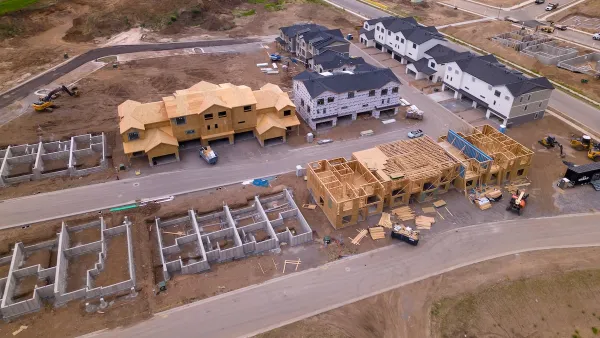
‘Montana Miracle:’ The State Actually Succeeding at Housing Reform
A series of ambitious zoning reforms is having a significant impact on the state’s housing supply.

The state-sanctioned urbicide of Austin
People don’t kill cities. Freeways do.

US to reduce Colorado River water deliveries to Mexico
A new Colorado Treaty amendment reduces Mexico’s Colorado River water allocation by 250,000 acre feet.

New Jersey’s second-largest city bans standalone data centers
Jersey City will continue to allow co-location facilities, such as those meant for research institutions that store their own data.

Amtrak not solely to blame for New Jersey commuter rail's unreliability, report finds
A new study from the Garden State Initiative found that NJ Transit’s budget grew 20% across a 4 year period, but reliability declined significantly over the same period.

EPA erases limits on planet-warming pollution from power plants
Under Monday’s plan, power plants would still have some limits on how much mercury, arsenic and other contaminants they can emit.

Phoenix announces new on-demand transit service, more frequent RAPID buses
Both new services will launch in October, and are part of Phoenix's Project Effective Access Solutions for Easing Congestion.

FREE Course: Walkable City 1: Why Walkability?
After describing his path towards focusing on walkability as the essence of good planning, Jeff Speck marches through his five principal reasons for making more walkable places.
Reinventing Malls: Planning Alchemy—Turning Gray Fields Into Gold
The course focuses on the opportunities and imperatives that shape reinvention of mall sites.

Eagle County Government
Harvard University Graduate School of Design
Nashville Planning Department
The Architects Foundation
University of Cincinnati Online
The Pocatello Development Authority
The Urban Renewal Agency of the City of Pocatello
Journal of the American Planning Association