The tech is part of a public-private partnership meant to improve connectivity to Waze and other navigation apps from underground.


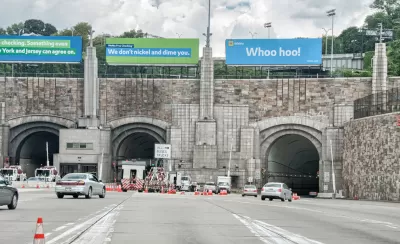
Waze has entered a partnership with the New York MTA and Port Authority aimed at improving navigation for drivers in New York City.
Several tunnels in the city now boast Waze Beacons, an open-source technology meant to allow users of navigation apps to stay connected even when they don't have a signal—particularly useful for drivers entering tunnels, the company expects. The tiny devices stick to tunnel walls and can support any navigation app, not just Waze. Chaim Gartenberg explains in The Verge:
"The Waze Beacons themselves are just battery-powered microcontrollers that use low-powered Bluetooth signals to communicate with smartphones, allowing for Waze to provide alternative location services to drivers even when out of GPS range (relying on Google’s near-field Eddystone technology to communicate)."
Boston, Chicago, and Pittsburgh are among the cities already using the private infrastructure, now also online in New York's Holland, Lincoln, Queens-Midtown, and Brooklyn-Battery Tunnels.
FULL STORY: Waze adds Beacons to NYC tunnels so drivers can stay connected to GPS apps

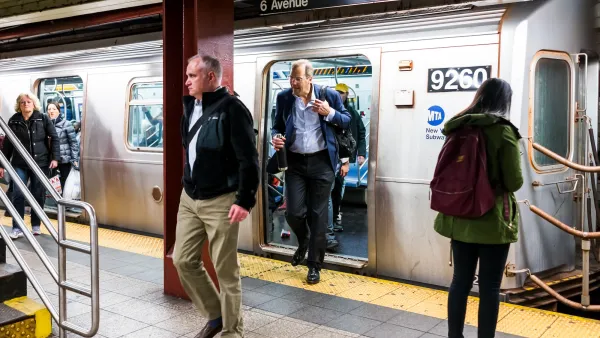
NYC to Upgrade 1/3 of its Subway Car Fleet
The MTA is seeking proposals for up to 2,390 new subway cars to upgrade its aging fleet.
New York MTA Upholds Pause on Congestion Pricing, Scales Back Projects
The agency will not be able to go forward with former plans to improve station facilities and transit safety, and expand service.
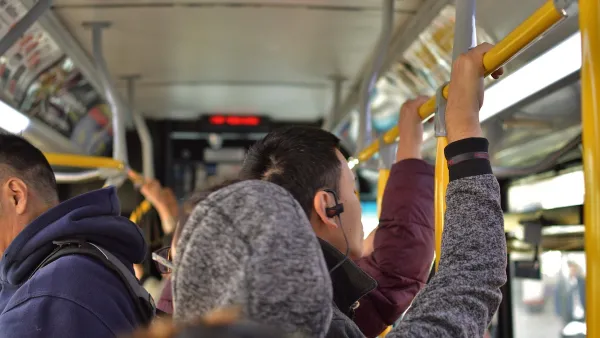
New York MTA Makes Five Bus Routes Fare-Free
The state-funded effort is a way to assess how free fares impact ridership.

Planetizen Federal Action Tracker
A weekly monitor of how Trump’s orders and actions are impacting planners and planning in America.

The state-sanctioned urbicide of Austin
People don’t kill cities. Freeways do.

US to reduce Colorado River water deliveries to Mexico
A new Colorado Treaty amendment reduces Mexico’s Colorado River water allocation by 250,000 acre feet.

Mamdani overhauls NYC's Vision Zero plan with 100 new policy goals
The overhaul aims to reduce traffic deaths and make streets safer for pedestrians, cyclists and drivers through lower speed limits, new safety infrastructure and more.

Amtrak not solely to blame for New Jersey commuter rail's unreliability, report finds
A new study from the Garden State Initiative found that NJ Transit’s budget grew 20% across a 4 year period, but reliability declined significantly over the same period.

EPA erases limits on planet-warming pollution from power plants
Under Monday’s plan, power plants would still have some limits on how much mercury, arsenic and other contaminants they can emit.

FREE Course: Walkable City 1: Why Walkability?
After describing his path towards focusing on walkability as the essence of good planning, Jeff Speck marches through his five principal reasons for making more walkable places.
Reinventing Malls: Planning Alchemy—Turning Gray Fields Into Gold
The course focuses on the opportunities and imperatives that shape reinvention of mall sites.

Eagle County Government
Harvard University Graduate School of Design
Nashville Planning Department
The Architects Foundation
University of Cincinnati Online
The Pocatello Development Authority
The Urban Renewal Agency of the City of Pocatello
Journal of the American Planning Association