Other polar vortex-related transit news included fire on the tracks in Chicago.


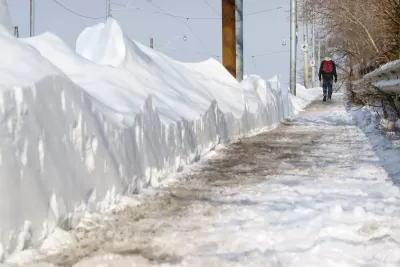
"Record-breaking cold Thursday is forcing the QLINE in Detroit to temporarily suspend service," reports Maryann Struman.
The bad news for anyone who still intended getting around on the city's streetcar amidst the polar vortex was created by batteries running the heat at full blast and taking longer to charge because of the frigid temperatures. "Just like cars and cell phones, the QLINE's battery is having trouble holding a charge," according to Struman.
Meanwhile, a day earlier, Chicago's Metra system made news for taking some pretty radical steps to keep the system running in the cold—setting fire to the tracks. Why? Allow Doug Criss to explain:
In some cases the tracks experience what's called "pull-aparts." This kind of rail defect occurs when two rails separate at their connection. The extreme cold shrinks the metal and the rails literally pull apart from each other, Metra said in a recent Instagram post. Heating the tracks with fire expands the metal until the two rails can be put back together again.
Despite the burning train tracks achieving some manner of viral fame on Tuesday, the actions are standard operating procedure, according to Criss.
FULL STORY: Bitter cold weather saps QLINE battery, service halted

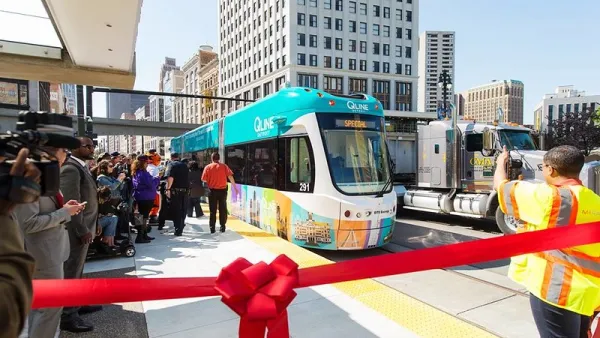
How Detroit's QLine Streetcar Got Off Track
The QLine could ride its own dedicated lane and serve a real need for commuters. Instead, it's a slow circulator for a small part of downtown.
Ridership Drops As Detroit's QLine Streetcar Starts Charging
Since Detroit's new streetcar system started charging, ridership has dropped. Those who are riding aren't necessarily paying anyways.
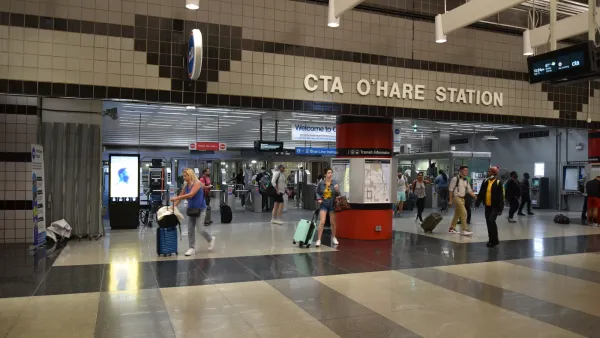
The Vast Majority of Riders Suspended by Chicago Transit Agencies are Black or Latino
The agencies are allowed to ban riders who are accused of violent or threatening behavior.

The state-sanctioned urbicide of Austin
People don’t kill cities. Freeways do.

US to reduce Colorado River water deliveries to Mexico
A new Colorado Treaty amendment reduces Mexico’s Colorado River water allocation by 250,000 acre feet.

New Jersey’s second-largest city bans standalone data centers
Jersey City will continue to allow co-location facilities, such as those meant for research institutions that store their own data.

Amtrak not solely to blame for New Jersey commuter rail's unreliability, report finds
A new study from the Garden State Initiative found that NJ Transit’s budget grew 20% across a 4 year period, but reliability declined significantly over the same period.

EPA erases limits on planet-warming pollution from power plants
Under Monday’s plan, power plants would still have some limits on how much mercury, arsenic and other contaminants they can emit.

Phoenix announces new on-demand transit service, more frequent RAPID buses
Both new services will launch in October, and are part of Phoenix's Project Effective Access Solutions for Easing Congestion.

FREE Course: Walkable City 1: Why Walkability?
After describing his path towards focusing on walkability as the essence of good planning, Jeff Speck marches through his five principal reasons for making more walkable places.
Reinventing Malls: Planning Alchemy—Turning Gray Fields Into Gold
The course focuses on the opportunities and imperatives that shape reinvention of mall sites.

Eagle County Government
Harvard University Graduate School of Design
Nashville Planning Department
The Architects Foundation
University of Cincinnati Online
The Pocatello Development Authority
The Urban Renewal Agency of the City of Pocatello
Journal of the American Planning Association