PG&E announced that it is filing for Chapter 11 bankruptcy, facing $30 billion in liability after two years of catastrophic wildfires in the state of California.



"Citing 'extraordinary challenges' from the devastating 2017 and 2018 California wildfires, PG&E said Monday that it will file for Chapter 11 bankruptcy protection," reports Levi Sumagaysay.
"In a filing with the Securities and Exchange Commission, the utility that serves 16 million Californians gave the 15-day notice required by law for filing for bankruptcy" adds Sumagaysay. "The company’s stock dropped by more than half Monday in response to the early-morning announcement."
In a follow up article, Sumagaysay reported that PG&E had placed barricades around its San Francisco headquarters to usher employees to and from the building after the announcement. "The utility would not say whether any executives or employees had received threats, but there were about a dozen guards visible outside the company’s buildings Monday afternoon," according to Sumagaysay.
Another article by Janie Har and Cathy Bussewitz for the Associated Press provides additional details on the bankruptcy proceedings, placing the utility's potential liability from lawsuits connected to the wildfires of 2017 and 2018 at $30 billion.
An article by Mark Chediak and Kiel Porter reports on the resignation of Geisha Williams, the company's chief executive officer. General Counsel John Simon will act as interim CEO.
Another article by Umair Irfan calls the bankruptcy a sign of the effects of climate change: "the fall of a major utility is also a chilling example of how the impacts of climate change can pummel US companies and taxpayers right now. And the risks are only growing."
Additional news coverage on the bankruptcy is available on sites like Bloomberg, Reuters, and the Wall Street Journal.
Read the full story: PG&E to file for bankruptcy due to wildfire lawsuits; shares tank

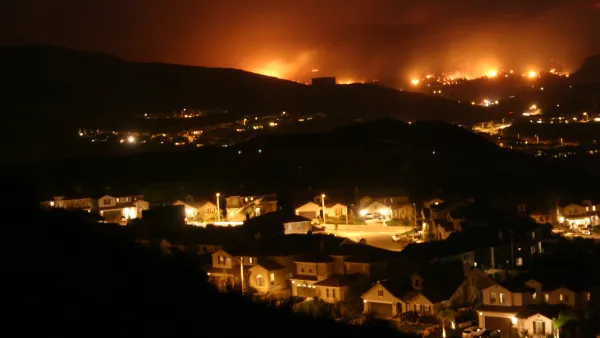
PG&E Promises to Keep the Lights on After Declaring Chapter 11 Bankruptcy
Pacific Gas and Electric has declared Chapter 11 bankruptcy in the face of "actual and potential" liability.
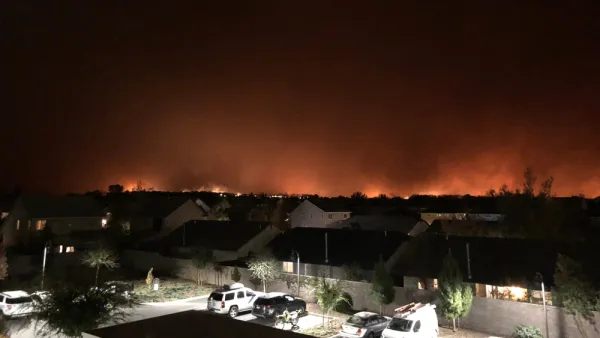
Paradise Was Prepared for the Camp Fire, Report Says. It Wasn't Enough.
Sobering findings from a thorough examination of the causes of the 2018 Camp Fire.
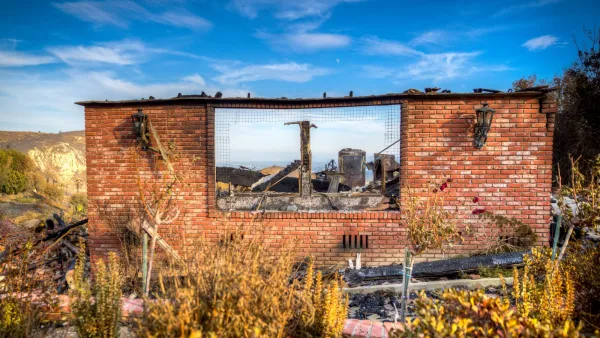
California Faces Costly Measures in Preparing for Future Wildfires
In California, recovery after wildfires means many upfront investments by communities and the state.

Planetizen Federal Action Tracker
A weekly monitor of how Trump’s orders and actions are impacting planners and planning in America.

The state-sanctioned urbicide of Austin
People don’t kill cities. Freeways do.

Colorado’s Largest Data Center Could Rise Next to Homes — Without a Public Hearing
The proposed campus would consume 11 times the power of Denver International Airport; as it has across the country, opposition mounts.
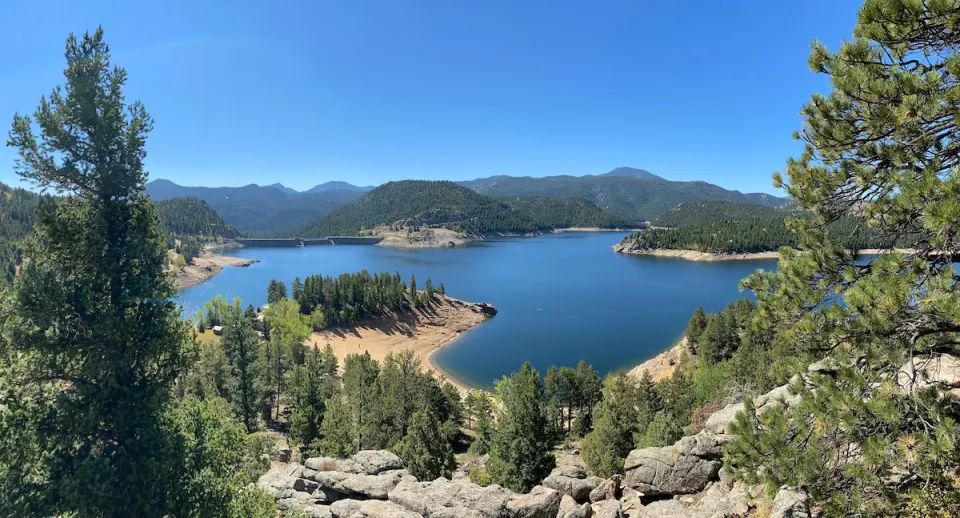
Judges permit Denver to divert 77,000 acre feet from the Colorado River for reservoir expansion
Overuse and climate change have caused the Colorado River’s water levels to plummet.

Amtrak, CN end decades-long dispute with eight-year agreement
The new operating agreement establishes an updated framework for the companies to work together, including processes to resolve disputes.

Raised interest rates may kill financially vulnerable construction projects
The chief economist at ConstructConnect warns that if construction project owners are negatively impacted by the raised rates, it could result in delayed payments to contractors.

FREE Course: Walkable City 1: Why Walkability?
After describing his path towards focusing on walkability as the essence of good planning, Jeff Speck marches through his five principal reasons for making more walkable places.
Reinventing Malls: Planning Alchemy—Turning Gray Fields Into Gold
The course focuses on the opportunities and imperatives that shape reinvention of mall sites.

KFH Group Inc.
Greater Baltimore Committee
Eagle County Government
The Architects Foundation
University of Cincinnati Online
The Pocatello Development Authority
The Urban Renewal Agency of the City of Pocatello