The District Department of Transportation wants to build a bike lane in front of the Capitol Building, but Congress has not authorized the change because of complaints about losing parking.



Washington, D.C. is having trouble getting the federal government on board with its plans for a bike lane. "More than three years after it was proposed, a 0.6-mile cycle track on Louisiana Avenue between Union Station and the U.S. Capitol awaits a green light from the Hill," Luz Lazo reports for the Washington Post.
While local activists complain the local road should be subject to local oversight, this particular bit of road falls under federal jurisdiction, and some federal employees are worried about losing the parking spaces the bike lane would replace. "Thirty-seven parking spaces, to be exact. The road is only 0.4 miles long stretching from Constitution Avenue NW at the foot of the Capitol to Columbus Circle NE across from Union Station," Lazo writes.
Read the full story: The District’s long road to building a half-mile bike lane leads to the U.S. Capitol

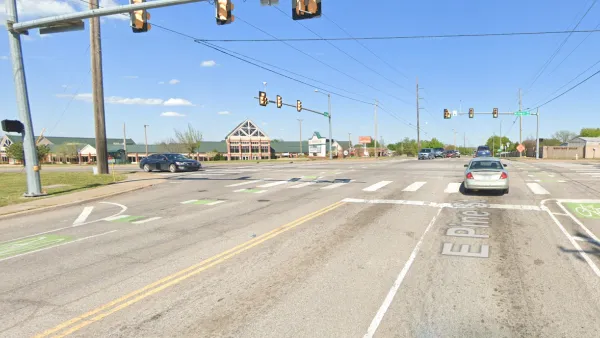
Business Owners Force Removal of New Tulsa Bike Lanes
Local politics is still an obstacle for street reconfigurations that make space for people on bikes.

Bikelash Wins in Phoenix
Neighborhood opposition overwhelmed a plan to reduce the number of vehicles lanes on North Central Avenue to make space for a new bike lane, despite evidence of the benefits of the proposed street reconfiguration.
Checking in on Two of Seattle's Bike Infrastructure Plans
The city of Seattle is moving through the planning and design stages on two important bike infrastructure projects located at the south end of Downtown.

Planetizen Federal Action Tracker
A weekly monitor of how Trump’s orders and actions are impacting planners and planning in America.

The state-sanctioned urbicide of Austin
People don’t kill cities. Freeways do.

US to reduce Colorado River water deliveries to Mexico
A new Colorado Treaty amendment reduces Mexico’s Colorado River water allocation by 250,000 acre feet.

Brightline West’s future may rely on $6 billion federal loan
The company has until Nov. 2 to make a $400 million equity investment into its proposed high-speed rail line.

LA Metro’s ultimatum: no extra buses for LA28 if federal funding isn’t imminently secured
If Metro does not provide additional buses, LA28 organizers will have to find a new way to manage Olympic traffic. LA28’s budget does not include a line item for transit.

Colorado’s Largest Data Center Could Rise Next to Homes — Without a Public Hearing
The proposed campus would consume 11 times the power of Denver International Airport; as it has across the country, opposition mounts.

FREE Course: Walkable City 1: Why Walkability?
After describing his path towards focusing on walkability as the essence of good planning, Jeff Speck marches through his five principal reasons for making more walkable places.
Reinventing Malls: Planning Alchemy—Turning Gray Fields Into Gold
The course focuses on the opportunities and imperatives that shape reinvention of mall sites.

Eagle County Government
Harvard University Graduate School of Design
Nashville Planning Department
The Architects Foundation
University of Cincinnati Online
The Pocatello Development Authority
The Urban Renewal Agency of the City of Pocatello
Journal of the American Planning Association