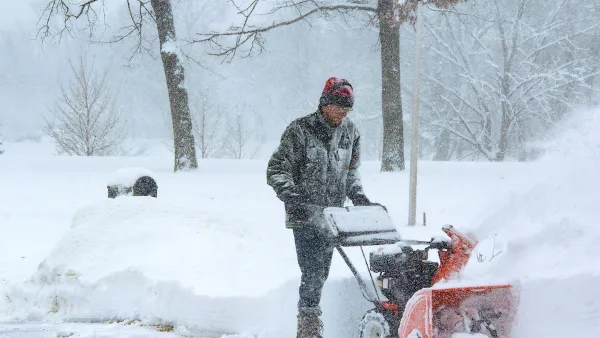
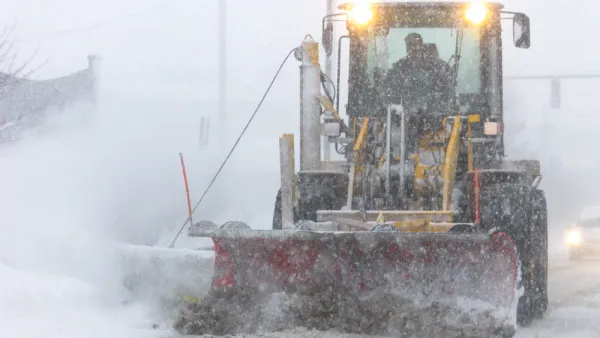
Minneapolis is stepping up enforcement of snow removal scofflaws and considering taking on the job of clearing sidewalks in the name of walkability.



"After decades of trusting residents to shovel their sidewalks during the winter, and fining them if they don’t, the city of Minneapolis has admitted defeat," writes Miguel Otárola.
"The city is considering whether to take responsibility for plowing its nearly 2,000 miles of sidewalks," adds Otárola. "It could cost as much as $20 million, but would fulfill the goal of making the city more walkable in winter and eliminate the current system, in which uncleared sidewalks can remain a slippery menace for a week or more."
Taking responsibility means the city would send inspectors around the city after the first plowable snow and inform scofflaw residents of violations of code. Previously, enforcement was based on a more "neighbor-telling-on-neighbor" approach. Noncompliance is rampant.
In case you're wondering how much snow Minneapolis residents have to deal with every winter, Otárola writes: "Minneapolis has 1,910 miles of sidewalks, which are covered by an average of 52 inches of snow a year…"
FULL STORY: Minneapolis looking to get tougher on sidewalk snow removal

Chicago Considers Sidewalk Snow Removal Pilot
The program would keep sidewalks clear of snow in areas with heavy foot traffic, but some aldermen say it would cost too much.
Editorial: Toronto’s Snow Clearing Plan Isn’t Fair
The city’s plan for dealing with snow and ice on sidewalks this winter doesn't address past problems and won't meet the needs of residents, say critics.

The number of kids walking to school dropped from over 50% to 11% since the 1960s
Unsafe pedestrian infrastructure makes walking to school dangerous or impossible for a growing number of American students.

Planetizen Federal Action Tracker
A weekly monitor of how Trump’s orders and actions are impacting planners and planning in America.

The state-sanctioned urbicide of Austin
People don’t kill cities. Freeways do.

US to reduce Colorado River water deliveries to Mexico
A new Colorado Treaty amendment reduces Mexico’s Colorado River water allocation by 250,000 acre feet.

LA Metro’s ultimatum: no extra buses for LA28 if federal funding isn’t imminently secured
If Metro does not provide additional buses, LA28 organizers will have to find a new way to manage Olympic traffic. LA28’s budget does not include a line item for transit.

Colorado’s Largest Data Center Could Rise Next to Homes — Without a Public Hearing
The proposed campus would consume 11 times the power of Denver International Airport; as it has across the country, opposition mounts.

5 New England states march closer to 800 megawatt wind energy project
Securing federal approval for the project may be complicated under the Trump administration, which has historically been hostile towards domestic wind power.

FREE Course: Walkable City 1: Why Walkability?
After describing his path towards focusing on walkability as the essence of good planning, Jeff Speck marches through his five principal reasons for making more walkable places.
Reinventing Malls: Planning Alchemy—Turning Gray Fields Into Gold
The course focuses on the opportunities and imperatives that shape reinvention of mall sites.

Eagle County Government
Harvard University Graduate School of Design
Nashville Planning Department
The Architects Foundation
University of Cincinnati Online
The Pocatello Development Authority
The Urban Renewal Agency of the City of Pocatello
Journal of the American Planning Association