Beginning this week, the city of Boston will ask developers how they plan to include women and minorities as workers and investors when putting city-owned real estate out for bid.


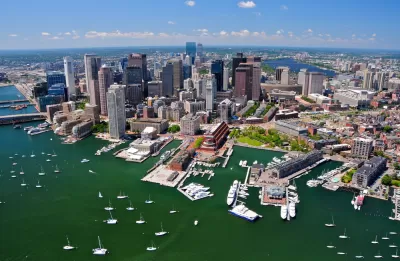
To address "persistent criticism" that lower-income, non-white neighborhoods are being denied the benefits of recent construction in Boston, the city is debuting a new process in which developers seeking to build on city-owned sites will be queried on their inclusion commitments.
Tim Logan writes, "When putting city-owned real estate out for bid, city agencies will now specifically ask developers how they will work to include minority workers, professional-service firms, and investors in their project, and how they'd address the risk of residents, and neighbors, being priced out of their buildings."
Last year, City Council members Ayanna Pressley and Michelle Wu "spearheaded an ordinance that calls for similar diversity plans on city contracts and construction projects." Now those guidelines will apply to a variety of real estate sites the city plans to sell.
The new rules only apply to city-owned land, not land owned by state agencies or privately-held sites. But officials like economic development director John Barros hope a broader conversation will emerge. "This is about where the City of Boston is going, and how we do business. We're saying this matters," he said.
FULL STORY: Boston to ask developers about their inclusion of minority and women workers, investors

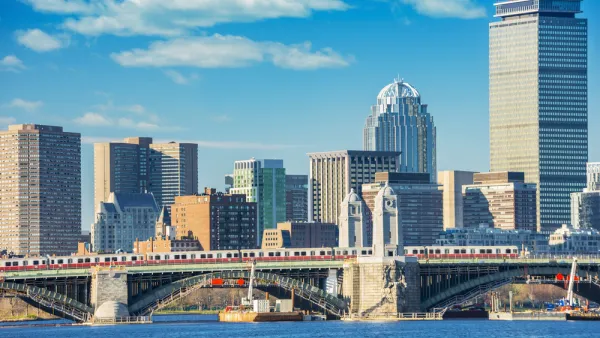
Boston Will Urge Developers to Provide Diversity Disclosures
Stopping short of a mandate, the city plans to request that developers provide information about diversity and inclusion on their teams.

No More Hidden Gems Thanks to Investor-Centric Real Estate
Although large investors made only 4.3 percent of single-family home purchases in 2014, they may be reducing the competitiveness of traditional buyers. With ready cash and sophisticated algorithms, investors get there first and make better bids.
The Challenges of Being a Black Developer
In an overwhelmingly white industry, Black developers find it harder to access investment, equity, and opportunities.

Planetizen Federal Action Tracker
A weekly monitor of how Trump’s orders and actions are impacting planners and planning in America.

The state-sanctioned urbicide of Austin
People don’t kill cities. Freeways do.

US to reduce Colorado River water deliveries to Mexico
A new Colorado Treaty amendment reduces Mexico’s Colorado River water allocation by 250,000 acre feet.

5 New England states march closer to 800 megawatt wind energy project
Securing federal approval for the project may be complicated under the Trump administration, which has historically been hostile towards domestic wind power.

Baltimore to break ground on $50 million Transit Priority Project
The project will bring faster bus trips, safer streets and better bike connections to Baltimore.

Airbnb launches $250 million 'last-dollar financing' housing accelerator, makes first investment in Austin
The company will put $6.4 million towards affordable housing development in Texas’ capital.

FREE Course: Walkable City 1: Why Walkability?
After describing his path towards focusing on walkability as the essence of good planning, Jeff Speck marches through his five principal reasons for making more walkable places.
Reinventing Malls: Planning Alchemy—Turning Gray Fields Into Gold
The course focuses on the opportunities and imperatives that shape reinvention of mall sites.

Eagle County Government
Harvard University Graduate School of Design
Nashville Planning Department
The Architects Foundation
University of Cincinnati Online
The Pocatello Development Authority
The Urban Renewal Agency of the City of Pocatello
Journal of the American Planning Association