Republican Gov. Bruce Rauner might as well have accused his Democratic opponent of wanting to hike the gas tax. J.B. Pritzker denies he plans to introduce a VMT fee but admits that he's open to all ideas to raise revenue to maintain infrastructure.


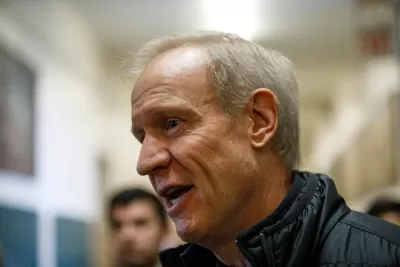
"J.B. Pritzker proposed a mileage tax on cars," charged Rauner at a forum in late August in Normal for the Illinois Farm Bureau. He warned it would be "devastating for farm families or anyone who lives in a small town or rural community... and the Illinois economy."
Gov. Bruce Rauner repeated the warning at an NBC 5 debate last week, reports Greg Bishop for Illinois News Network on Sept. 24. "Pritzker denied he has a plan to do so during Thursday's debate, but he said at a forum last month he’s open to all ideas to find more money for roads." Bishop reported on that forum as well:
“We’ve got to invest in infrastructure,” Pritzker said. ”So we’ve got to find ways to pay for an infrastructure bill because ten years without an infrastructure bill in this state, you all know, our roads and bridges and waterways are crumbling.”
Pritzker referenced the Oregon Road Usage Charge program known as OReGO that began July 2015. Other states have launched, or announced, pilot projects since then, including California, Colorado, Hawaii, Washington, and Delaware (on behalf of the I-95 Corridor Coalition).
An April 2016 post indicates that Illinois Senate President John Cullerton (D-Chicago) did propose such a fee which could be paid in two ways:
"The plan would give drivers the option of putting a device in their car that monitors their miles, or they could choose to pay a 1.5-cent-per-mile tax on a base of 30,000 miles traveled per year, which would be $450," according to Natalie Martinez of NBC5.
OReGO charges 1.7 cent-per-mile and credits state gas taxes paid against the road usage charge, as did Cullerton's unsuccessful proposal.
There is some irony to Gov. Rauner's charges about the VMT fee hurting rural drivers because they may drive more than their urban counterparts, and Bishop's reporting on "car enthusiasts" negatively reacting to the proposal. Both groups often driver older model, less fuel-efficient vehicles which would stand to benefit with a flat-rate VMT fee as proposed in 2016.
"The Prius owners are the reason we need the bill," Cullerton told the Daily Herald.
As for Gov. Rauner's plans on how to raise "$43 billion in needed transportation infrastructure investments in the state of Illinois over the next decade," according to a 2016 report by the Metropolitan Planning Council, hopefully it includes more than borrowing, as posted in January 2016.
One option would be hiking the 37.32 cents-per-gallon gas tax, last increased in 1991. Bishop reported in April on a proposal to increase the gas tax to 85 cents-per-gallon. I wonder how that would go over with voters?
A poll released Aug. 21 had Pritzker leading Gov. Rauner by 16 points.
Related in Planetizen:
-
Illinois Considering a Vehicle Miles Traveled Tax, April 19, 2016
Hat tip to IBTTA Smart Brief.
FULL STORY: Car enthusiasts say vehicle miles traveled tax is a non-starter

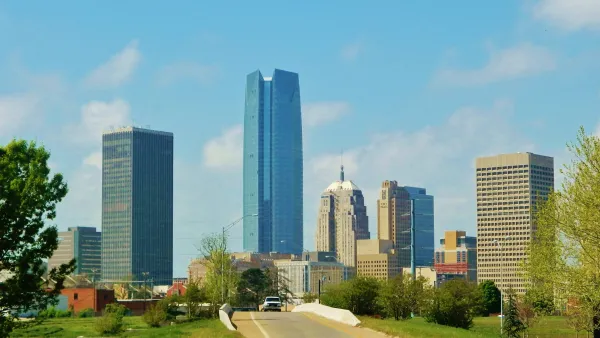
Oklahoma Launches 'Pay-per-Mile' Pilot
Mileage fee programs go by different names. In the West, it's the road usage charge or RUC. Oklahoma adopted a simpler term. What most have in common, though, is the for-profit company helping to manage them.
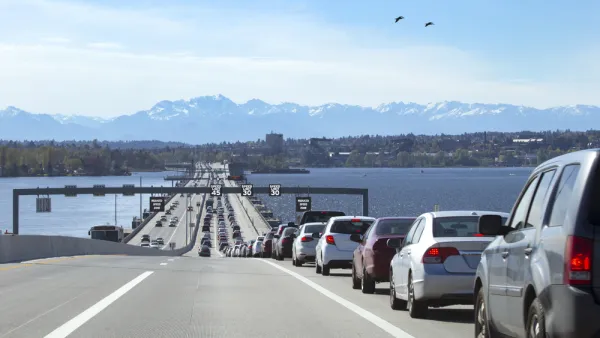
Washington State to Decide on Transition From Gas Tax to Road Usage Charge
Having completed a pilot program last year, the Washington State Transportation Commission will hear a report in October and vote in December on phasing out its 49.4 cents per gallon gas tax, fourth highest in the nation but not indexed to inflation.
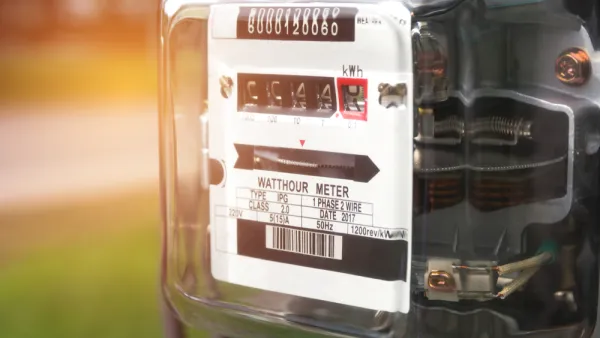
How Much Should Electric Vehicles Be Charged in Lieu of Gas Tax?
Currently, electric vehicles pay a $17.50 annual registration fee in Illinois. A bill to double the 19 cents per gallon gas tax, unchanged in almost 30 years, would also increase the EV fee over 57-fold to $1,000.

Planetizen Federal Action Tracker
A weekly monitor of how Trump’s orders and actions are impacting planners and planning in America.

The state-sanctioned urbicide of Austin
People don’t kill cities. Freeways do.

US to reduce Colorado River water deliveries to Mexico
A new Colorado Treaty amendment reduces Mexico’s Colorado River water allocation by 250,000 acre feet.

Mamdani overhauls NYC's Vision Zero plan with 100 new policy goals
The overhaul aims to reduce traffic deaths and make streets safer for pedestrians, cyclists and drivers through lower speed limits, new safety infrastructure and more.

Amtrak not solely to blame for New Jersey commuter rail's unreliability, report finds
A new study from the Garden State Initiative found that NJ Transit’s budget grew 20% across a 4 year period, but reliability declined significantly over the same period.

EPA erases limits on planet-warming pollution from power plants
Under Monday’s plan, power plants would still have some limits on how much mercury, arsenic and other contaminants they can emit.

FREE Course: Walkable City 1: Why Walkability?
After describing his path towards focusing on walkability as the essence of good planning, Jeff Speck marches through his five principal reasons for making more walkable places.
Reinventing Malls: Planning Alchemy—Turning Gray Fields Into Gold
The course focuses on the opportunities and imperatives that shape reinvention of mall sites.

Eagle County Government
Harvard University Graduate School of Design
Nashville Planning Department
The Architects Foundation
University of Cincinnati Online
The Pocatello Development Authority
The Urban Renewal Agency of the City of Pocatello
Journal of the American Planning Association