The furnishing giant's concept imagines an app-summoned fleet of "living rooms on wheels" delivering everything from groceries to health services.



According to a conceptual report by IKEA's think tank SPACE10, there's no need for autonomous vehicles to restrict themselves to sleek aerodynamics. Instead, "in a future where people no longer have to worry about driving, vehicle interiors can expand to a point where we no longer are designing cars, but rather small spaces," said IKEA’s Göran Nilsson.
The concepts, Anne Quito writes, include "seven public service units that can be summoned to any location via an app (the prototypes can also be explored through an augmented reality app). They include a medical clinic, a farm stand, and a fully equipped mobile office [...] The project isn't a formal proposal but a provocation designed to inspire the public to imagine alternative uses for driverless vehicles."
While the model could be advantageous for people without easy access to services and amenities (i.e. those living in food deserts), commentators worry about taking things too far. For one thing, "fleets of private, commercial vehicles could further edge out citizens from public spaces." And then there's the wider worry that on-demand services will erode social cohesion by enabling entirely isolated, insular lifestyles.
FULL STORY: IKEA's Think Tank Envisions Self-Driving Cars as Rooms on Wheels

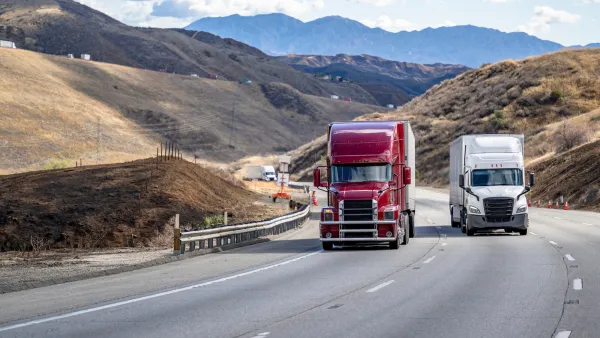
California lifts ban on heavy-duty autonomous vehicles
AV manufacturers can begin testing self-driving vehicles weighing over 10,001 pounds on California roads.
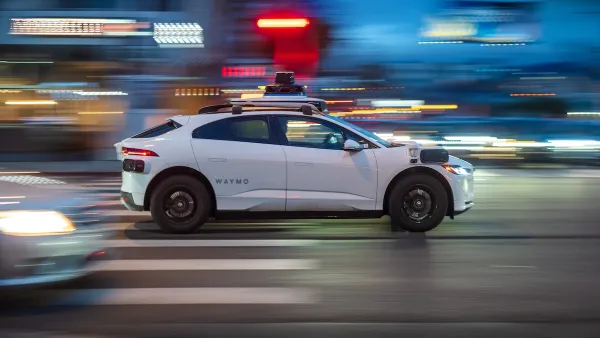
Seattle's Plan for Adopting Driverless Cars
Equity, safety, accessibility and affordability are front of mind as the city prepares for robotaxis and other autonomous vehicles.
Waymo Expansion Makes Phoenix ‘World’s Largest Self-Driving Car Zone’
The company’s autonomous taxis will soon be available in most parts of the metro area including Tempe, Mesa, and a new airport pick-up location.

Planetizen Federal Action Tracker
A weekly monitor of how Trump’s orders and actions are impacting planners and planning in America.

The state-sanctioned urbicide of Austin
People don’t kill cities. Freeways do.

US to reduce Colorado River water deliveries to Mexico
A new Colorado Treaty amendment reduces Mexico’s Colorado River water allocation by 250,000 acre feet.

5 New England states march closer to 800 megawatt wind energy project
Securing federal approval for the project may be complicated under the Trump administration, which has historically been hostile towards domestic wind power.

Baltimore to break ground on $50 million Transit Priority Project
The project will bring faster bus trips, safer streets and better bike connections to Baltimore.

Airbnb launches $250 million 'last-dollar financing' housing accelerator, makes first investment in Austin
The company will put $6.4 million towards affordable housing development in Texas’ capital.

FREE Course: Walkable City 1: Why Walkability?
After describing his path towards focusing on walkability as the essence of good planning, Jeff Speck marches through his five principal reasons for making more walkable places.
Reinventing Malls: Planning Alchemy—Turning Gray Fields Into Gold
The course focuses on the opportunities and imperatives that shape reinvention of mall sites.

Eagle County Government
Harvard University Graduate School of Design
Nashville Planning Department
The Architects Foundation
University of Cincinnati Online
The Pocatello Development Authority
The Urban Renewal Agency of the City of Pocatello
Journal of the American Planning Association