The company’s autonomous taxis will soon be available in most parts of the metro area including Tempe, Mesa, and a new airport pick-up location.


The Phoenix metropolitan area is now home to the largest contiguous autonomous car service area in the world, reports Corina Vanek for Arizona Republic, after the company doubled its coverage area last week. The company also plans to grow its Phoenix-area fleet with an unspecified number of vehicles.
The expansion connects a 40-square-mile coverage area and a 50-square-mile coverage area, creating a 180-square-mile service zone. The area now includes most of Tempe and parts of Old Town Scottsdale and Mesa. “So far, the vehicles only provide autonomous rides on freeways to Waymo employees with a specialist present, a company spokesperson said. Employees are providing feedback about freeway travel before the company rolls out freeway trips to the public.”
Waymo and other autonomous car operators and manufacturers such as Cruise and Tesla are facing backlash and federal investigations for deploying their vehicles on public streets before the technology is fully vetted and for misleading marketing. Phoenix residents have observed Waymo cars idling on neighborhood streets or stalled in traffic, while San Francisco’s Waymo fleet has had multiple run-ins with emergency personnel and law enforcement, with city officials calling the situation ‘mayhem’ in a letter to the state. Meanwhile, driverless cars raise ethical questions about AV testing and responsibility in crashes and other incidents.
FULL STORY: Metro Phoenix now has world's largest self-driving car service zone after Waymo expansion

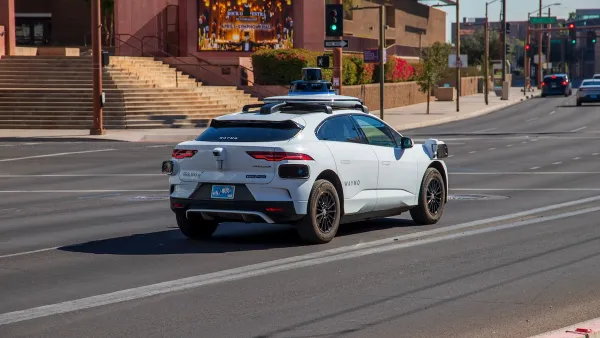
What Happens When a Robotaxi Gets Pulled Over?
In Phoenix, a police officer who pulled over a Waymo driving in the wrong lane was “unable to issue citation to computer.”
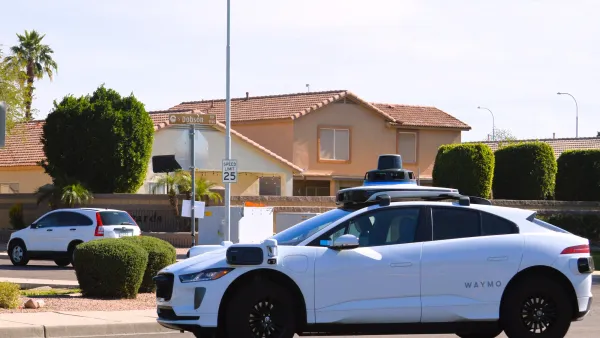
Uber and Waymo part ways in Phoenix
The companies ended a three-year pilot program, with Waymo saying it plans to keep its Phoenix robotaxi fleet available through its own app.

Waymo's troubles with emergency vehicles are getting worse
In one case, first responders waited 53 minutes to reach a Waymo support representative during an emergency.

The state-sanctioned urbicide of Austin
People don’t kill cities. Freeways do.

US to reduce Colorado River water deliveries to Mexico
A new Colorado Treaty amendment reduces Mexico’s Colorado River water allocation by 250,000 acre feet.

New Jersey’s second-largest city bans standalone data centers
Jersey City will continue to allow co-location facilities, such as those meant for research institutions that store their own data.

Amtrak not solely to blame for New Jersey commuter rail's unreliability, report finds
A new study from the Garden State Initiative found that NJ Transit’s budget grew 20% across a 4 year period, but reliability declined significantly over the same period.

EPA erases limits on planet-warming pollution from power plants
Under Monday’s plan, power plants would still have some limits on how much mercury, arsenic and other contaminants they can emit.

Phoenix announces new on-demand transit service, more frequent RAPID buses
Both new services will launch in October, and are part of Phoenix's Project Effective Access Solutions for Easing Congestion.

FREE Course: Walkable City 1: Why Walkability?
After describing his path towards focusing on walkability as the essence of good planning, Jeff Speck marches through his five principal reasons for making more walkable places.
Reinventing Malls: Planning Alchemy—Turning Gray Fields Into Gold
The course focuses on the opportunities and imperatives that shape reinvention of mall sites.

Eagle County Government
Harvard University Graduate School of Design
Nashville Planning Department
The Architects Foundation
University of Cincinnati Online
The Pocatello Development Authority
The Urban Renewal Agency of the City of Pocatello
Journal of the American Planning Association