The AV Start Act (S. 1885, Thune) is making its way through the U.S. Senate. Critics say the bill will rush autonomous vehicles to the market, and to the streets, without safety regulations.


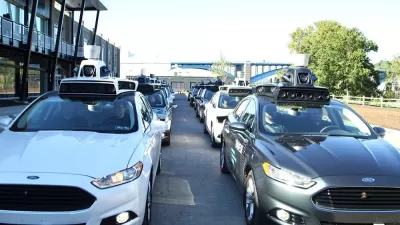
"A group of senators led by South Dakota Republican John Thune wants to let companies rush self-driving cars to market before any federal safety standards related to autonomous systems have been drafted," according to an article by Angie Schmitt.
Already a coalition of safety advocates has sounded the alarm about the measure:
A coalition of 65 consumer advocacy and street safety organizations has warned against the bill known as AV START, which would preempt state and local safety regulations of self-driving cars without spelling out any federal safety rules (although it would allow U.S. DOT to draft some). In addition, the bill would exempt AVs from many safety standards that apply to all other cars. Each manufacturer would get an allotment of 100,000 vehicles to sell for use on public streets within three years.
Schmitt also notes that Sen. Thune, who chairs the Senate Commerce Committee, represents one of the most rural, least populated states in the nation—but this bill would have much more obvious consequences in places where cars congregate in much larger numbers.
Additional coverage of the coalition of safety groups opposing the bill is available in an article by Pete Bigelow.
FULL STORY: Senators Want to Sneak Safety Exemptions for Self-Driving Cars Into Law

The Dilemma of Autonomous Vehicle Testing
Autonomous vehicles hold the potential to greatly reduce auto crashes. Advocates want them on the road as early as possible to reduce fatalities. Skeptics worry that the public will be guinea pigs during the testing—case in point: Elaine Herzberg.

Pedestrian Safety Concerns and New Doubts About Autonomous Vehicles
Autonomous vehicle technology is no longer enjoying an uncritical reception. Skepticism, it seems, is becoming a more common response to the idea of setting robot cars free on the streets.
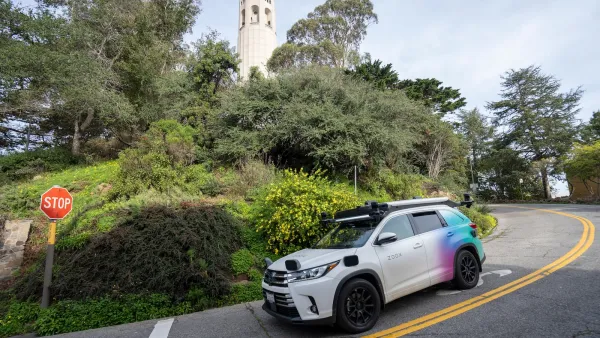
Feds want to make brake pedals optional in AVs
A proposed rule change would no longer require carmakers to include manual brake pedals or steering wheels in fully self-driving cars.

Planetizen Federal Action Tracker
A weekly monitor of how Trump’s orders and actions are impacting planners and planning in America.

The state-sanctioned urbicide of Austin
People don’t kill cities. Freeways do.

US to reduce Colorado River water deliveries to Mexico
A new Colorado Treaty amendment reduces Mexico’s Colorado River water allocation by 250,000 acre feet.

5 New England states march closer to 800 megawatt wind energy project
Securing federal approval for the project may be complicated under the Trump administration, which has historically been hostile towards domestic wind power.

Baltimore to break ground on $50 million Transit Priority Project
The project will bring faster bus trips, safer streets and better bike connections to Baltimore.

Airbnb launches $250 million 'last-dollar financing' housing accelerator, makes first investment in Austin
The company will put $6.4 million towards affordable housing development in Texas’ capital.

FREE Course: Walkable City 1: Why Walkability?
After describing his path towards focusing on walkability as the essence of good planning, Jeff Speck marches through his five principal reasons for making more walkable places.
Reinventing Malls: Planning Alchemy—Turning Gray Fields Into Gold
The course focuses on the opportunities and imperatives that shape reinvention of mall sites.

Eagle County Government
Harvard University Graduate School of Design
Nashville Planning Department
The Architects Foundation
University of Cincinnati Online
The Pocatello Development Authority
The Urban Renewal Agency of the City of Pocatello
Journal of the American Planning Association