Miles brings the frequent flyer concept to ground level by offering rewards for your daily commute.


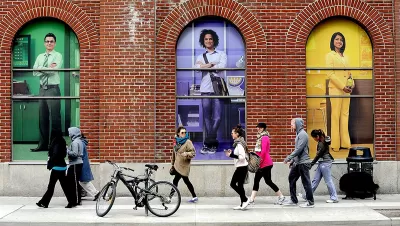
Verge writer Sean O'Kane introduces Miles, an app that allows users to accumulate points for every mile they travel on foot, in public transit, or by car. Points can then be redeemed for discounts at participating companies like Starbucks, Amazon, Target, and Hello Fresh, among others.
Ostensibly, the greener the transportation method, the bigger a multiplier assigned to those miles: one mile traveled in a car nets you one reward mile, for example, while one mile in a ride-share is worth two, a mile of biking is worth five, and one mile of walking or running is worth 10. (One mile of flying is worth just 0.1 miles.)
In order to work, the Miles app continuously logs users' locations—essentially tracking their every move. All that data goes to third-party companies seeking insight into mobility patterns and consumer demand. The company says it looks at aggregate and anonymized data in order to determine "where and when people move, how they got there, and maybe even why they moved in the first place," then uses a "predictive marketing AI platform" to decide which rewards to offer.
Read the full story: Miles is an app that tracks your every move in exchange for deals and discounts
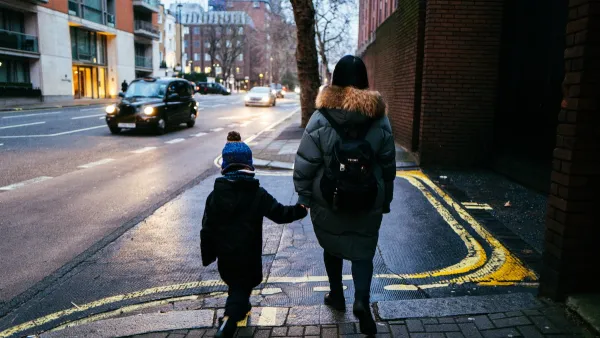
London Low-Emissions Zone Prompts Shift to Active Modes
More children are using active transportation modes to get to school in the wake of a policy that charges drivers to enter a low-emissions zone in central London.
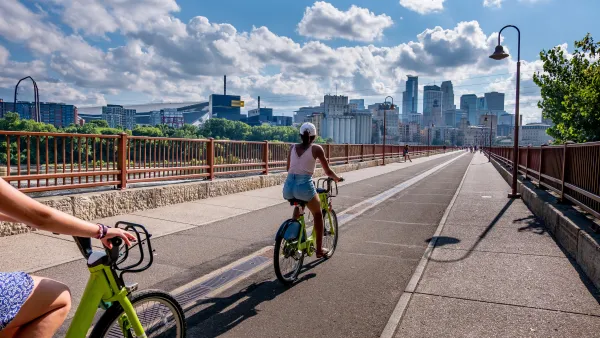
Minnesota Awards Active Transportation Grants
The grants are aimed at helping cities create action plans for improving their bike and pedestrian networks.
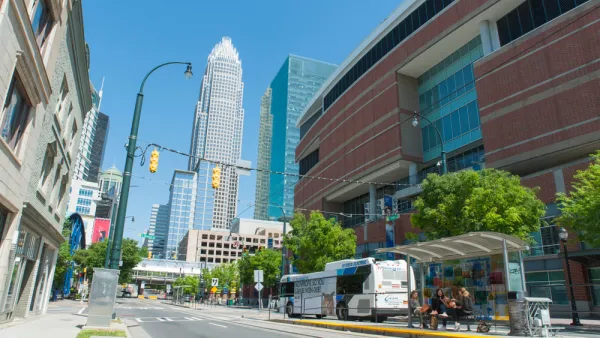
Charlotte Mobility Plan Centers Improved Multimodal Options and Economic Mobility
The city’s newly approved Strategic Mobility Plan highlights the need for better options when it comes to walking, biking, and public transit, setting a goal to reduce driving to half of total trips.

Planetizen Federal Action Tracker
A weekly monitor of how Trump’s orders and actions are impacting planners and planning in America.

California plans to bury El Niño’s downpour
If the state plays its cards right, it may be able to store a billion acre-feet of El Niño’s water in aquifers.

Desperate measures: Advocates weigh draining Lake Powell to fill Colorado River
Draining the reservoir could reduce evaporation losses by a couple hundred thousand acre-feet.

Chicago voters approve permanent festival grounds, penalty for vacant property owners
Currently, major summer and fall festivals take over public parks for weeks at a time, drawing criticism from nearby residents

NYC votes to cut outdoor dining red tape, speed up permitting
New York City also voted to allow the Department of Transportation to begin work on urgent projects before notifying elected officials.

California appears to reject Prop. 45
The proposition would have expanded the projects that qualify for a streamlined environmental review, effectively paring down the California Environmental Quality Act.

FREE Course: Walkable City 1: Why Walkability?
After describing his path towards focusing on walkability as the essence of good planning, Jeff Speck marches through his five principal reasons for making more walkable places.
Reinventing Malls: Planning Alchemy—Turning Gray Fields Into Gold
The course focuses on the opportunities and imperatives that shape reinvention of mall sites.

City of Rosemead
Rutgers University, Edward J. Bloustein School of Planning and Public Policy
One Hundred Miles
Hunter College, City University of New York (CUNY)
The Architects Foundation
University of Cincinnati Online
City of Cambridge
Montrose County
The Pocatello Development Authority