Seattle's suburbs are no longer leading the region in housing construction, even as Seattle's urban core is building more housing than ever.


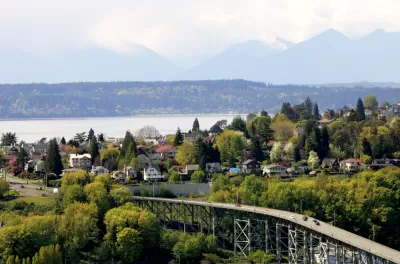
Mike Rosenberg reports on the regional housing market in Seattle, where suburban housing construction has slowed considerably, especially compared to the record-setting pace of building taking place in the more urban, central areas of the region.
The region's suburbs are no longer producing housing at a rate commensurate with the suburban share of the region's population. "Overall, Seattle housing construction has grown 130 percent this decade compared to the average over the prior three decades, while housing development in the suburbs has dropped 43 percent from its historical average," reports Rosenberg. The decline of suburban housing means housing production is declining for the region as a whole—that despite steady development in Seattle producing what some are describing as a glut in the rental market.
"The shift is the result of a combination of developers chasing the biggest profits in Seattle – where housing demand has gone through the roof, and city leaders have opened the floodgates for bigger buildings – and suburbs restricting new construction through zoning laws that all but ban new housing in most parts of the region," according to Rosenberg.
The feature-length coverage of the regional landscape for housing development includes a lot of data visualizations and additional means of putting the suburban housing slow down in perspective.
FULL STORY: Housing construction in local suburbs is at historic lows, while Seattle is setting records

Vermont Catalog of Pre-approved Middle Housing Designs Harkens Back to Sears Catalog Homes
The 802 Homes initiative provides templates for ADUs, duplexes, and other mid-sized homes.

Robotaxi Charging Lots Could Complicate San Francisco Housing Development
Multiple sites slated for housing development are now being turned into charging and storage lots for autonomous vehicles, making housing an unintended victim of the robotaxi revolution.
Seattle Council Rejects Transportation Impact Fee
Councilmembers who opposed the proposal say the fee would have slowed housing development and raised housing costs.

Planetizen Federal Action Tracker
A weekly monitor of how Trump’s orders and actions are impacting planners and planning in America.

The state-sanctioned urbicide of Austin
People don’t kill cities. Freeways do.

US to reduce Colorado River water deliveries to Mexico
A new Colorado Treaty amendment reduces Mexico’s Colorado River water allocation by 250,000 acre feet.

Colorado’s Largest Data Center Could Rise Next to Homes — Without a Public Hearing
The proposed campus would consume 11 times the power of Denver International Airport; as it has across the country, opposition mounts.

5 New England states march closer to 800 megawatt wind energy project
Securing federal approval for the project may be complicated under the Trump administration, which has historically been hostile towards domestic wind power.

Baltimore to break ground on $50 million Transit Priority Project
The project will bring faster bus trips, safer streets and better bike connections to Baltimore.

FREE Course: Walkable City 1: Why Walkability?
After describing his path towards focusing on walkability as the essence of good planning, Jeff Speck marches through his five principal reasons for making more walkable places.
Reinventing Malls: Planning Alchemy—Turning Gray Fields Into Gold
The course focuses on the opportunities and imperatives that shape reinvention of mall sites.

Eagle County Government
Harvard University Graduate School of Design
Nashville Planning Department
The Architects Foundation
University of Cincinnati Online
The Pocatello Development Authority
The Urban Renewal Agency of the City of Pocatello
Journal of the American Planning Association