Proposed state legislation would close a ‘legal gap’ that lets drivers who kill get away with few repercussions.


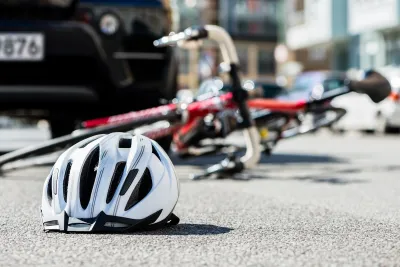
A series of bills proposed in the Michigan state legislature would protect cyclists and other vulnerable road users by strengthening the state’s laws against drivers who kill pedestrians or cyclists in crashes.
As David Horak explains in an article for Wood TV, “Under current law, drivers who kill or seriously injure a vulnerable road user are often charged with a misdemeanor, “moving violation causing death,” which carries a maximum penalty of one year in jail.” In more severe cases, charges such as second degree murder have been brought, but these are an exception, creating a significant gap between a misdemeanor with little penalty and a second-degree murder charge.
Now, a proposed package of legislation would close the legal gap by introducing “new felony charges with penalties of up to 10 years in prison and a $7,500 fine for crashes that result in a death, and up to five years or $5,000 for serious injuries.”
According to Horak, “The updated legislation also consolidates earlier versions of the bills to streamline the process and improve their chances of passage.”
FULL STORY: Bills would bridge legal ‘gap’ for deadly crashes, cyclists say

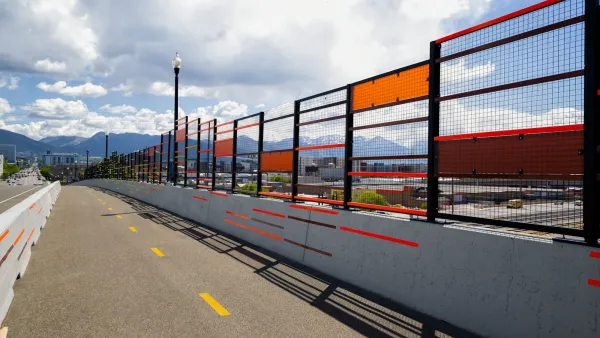
Salt Lake City opens protected bike path on viaduct trail
The 400 South Viaduct Trail features the state's longest continuous piece of public art.

Traffic deaths rise by 15% on major album release days
Enjoy those new tracks, but don't forget to keep your eyes on the road.
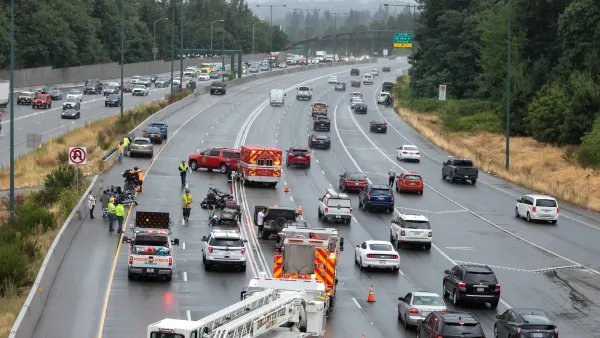
Commentary: Counting Road Deaths by VMT Minimizes the Harm and Normalizes Traffic Violence
When measured per capita, traffic fatalities in the United States far outstrip those in peer countries.

Planetizen Federal Action Tracker
A weekly monitor of how Trump’s orders and actions are impacting planners and planning in America.

The state-sanctioned urbicide of Austin
People don’t kill cities. Freeways do.

US to reduce Colorado River water deliveries to Mexico
A new Colorado Treaty amendment reduces Mexico’s Colorado River water allocation by 250,000 acre feet.

Airbnb launches $250 million 'last-dollar financing' housing accelerator, makes first investment in Austin
The company will put $6.4 million towards affordable housing development in Texas’ capital.

Guerilla urbanists are building DIY bus stop benches in Chicago
A before-and-after of one of the bus stops with a new bench. The new benches are not officially sanctioned or permitted, but the residents who placed them hope they will be the start of a network of DIY benches across the city.

Mamdani overhauls NYC's Vision Zero plan with 100 new policy goals
The overhaul aims to reduce traffic deaths and make streets safer for pedestrians, cyclists and drivers through lower speed limits, new safety infrastructure and more.

FREE Course: Walkable City 1: Why Walkability?
After describing his path towards focusing on walkability as the essence of good planning, Jeff Speck marches through his five principal reasons for making more walkable places.
Reinventing Malls: Planning Alchemy—Turning Gray Fields Into Gold
The course focuses on the opportunities and imperatives that shape reinvention of mall sites.

Eagle County Government
Harvard University Graduate School of Design
Nashville Planning Department
The Architects Foundation
University of Cincinnati Online
The Pocatello Development Authority
The Urban Renewal Agency of the City of Pocatello
Journal of the American Planning Association