One apartment building — and its tenants who faced eviction — became a potent symbol of the city’s growing housing crisis.


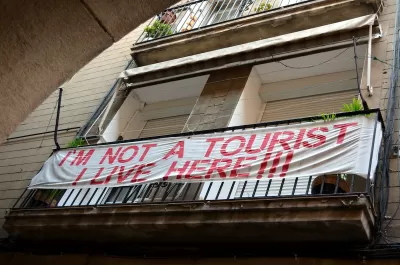
The city of Barcelona purchased a residential building that has become a symbol of the city’s housing crisis, a strategy becoming more common in European cities.
As Feargus O'Sullivan explains in Bloomberg CityLab, “The buyout has focused attention on new strains on Barcelona’s housing market — specifically the knock-on effects of rent control regulations and the city’s ban on short-term rentals.”
The city banned short-term rentals last year, but landlords have been exploiting loopholes that leave ‘medium-term’ rentals more loosely regulated. “In September 2024, a survey found that over 63% of Barcelona rentals advertised on Idealista were for medium-term contracts. Their average rent of €1,500 per month is €300 above the average for long-term rentals.”
The 27-unit Casa Orsola building was bought by a real estate company last year that planned to convert the units to higher-priced, medium-term rentals that would serve foreigners and evict current tenants. After protests, the city’s government agreed to purchase the building with a local affordable housing provider.
FULL STORY: Why Barcelona Bought the Building That Symbolizes Its Housing Crisis


Spain Moves to Regulate Short-Term Rentals
Calls for regulation at the national level have prompted lawmakers to consider limiting tourist rentals amidst a growing housing crisis.
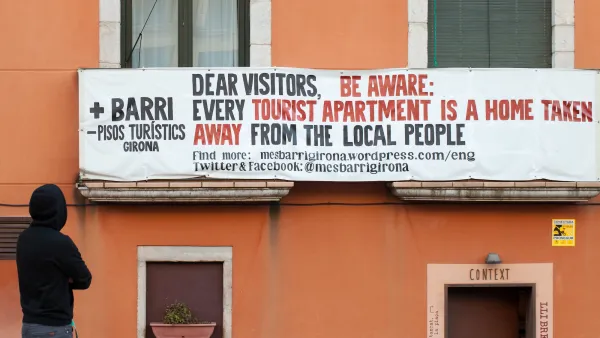
Spain Fines Airbnb $75 Million After Crackdown on Unlicensed Rentals
The government took action after residents in tourist centers protested, blaming tourist rentals for a growing housing crisis.

Spain Moves to Ban 66,000 Airbnbs
The national government is requiring the short-term rental operator to remove thousands of illegal listings from its site as part of an effort to stem a growing housing crisis.

The state-sanctioned urbicide of Austin
People don’t kill cities. Freeways do.

US to reduce Colorado River water deliveries to Mexico
A new Colorado Treaty amendment reduces Mexico’s Colorado River water allocation by 250,000 acre feet.

New Jersey’s second-largest city bans standalone data centers
Jersey City will continue to allow co-location facilities, such as those meant for research institutions that store their own data.

Amtrak not solely to blame for New Jersey commuter rail's unreliability, report finds
A new study from the Garden State Initiative found that NJ Transit’s budget grew 20% across a 4 year period, but reliability declined significantly over the same period.

EPA erases limits on planet-warming pollution from power plants
Under Monday’s plan, power plants would still have some limits on how much mercury, arsenic and other contaminants they can emit.

Phoenix announces new on-demand transit service, more frequent RAPID buses
Both new services will launch in October, and are part of Phoenix's Project Effective Access Solutions for Easing Congestion.

FREE Course: Walkable City 1: Why Walkability?
After describing his path towards focusing on walkability as the essence of good planning, Jeff Speck marches through his five principal reasons for making more walkable places.
Reinventing Malls: Planning Alchemy—Turning Gray Fields Into Gold
The course focuses on the opportunities and imperatives that shape reinvention of mall sites.

Eagle County Government
Harvard University Graduate School of Design
Nashville Planning Department
The Architects Foundation
University of Cincinnati Online
The Pocatello Development Authority
The Urban Renewal Agency of the City of Pocatello
Journal of the American Planning Association