SDOT has installed safety improvements at more than 260 public schools since 2015.


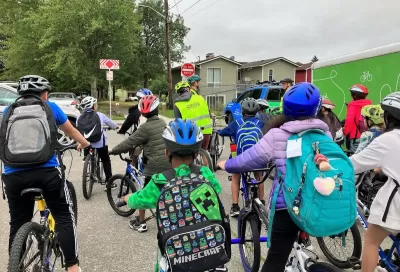
The Seattle Department of Transportation (SDOT) announced it has met its goal to make safety improvements to intersections around all public schools in the city.
The goal was established by the 2015 Move Seattle Levy. According to a press release from the Mayor’s office, “Since the Levy’s approval in 2015, SDOT has built over 260 school-focused projects citywide. Safe Routes to School projects often include upgrades to sidewalks, crosswalks, speed cushions, and other kinds of traffic calming.” The city’s 2023-2024 Safe Routes to School Annual Report notes that 28 percent of Seattle students walk or bike to school, and that adding speed cushions has led to a 21 percent reduction in speeds on arterial streets.
SDOT also offers community initiatives that include giving out essential safety items for community and school groups. “Additionally, schools, PTAs, and community groups can apply for grants of up to $1,000 to organize walking and biking activities, such as walking/biking school buses.” Another program, School Streets, has closed off 16 street segments to traffic during school hours to make walking and biking to school safer for children and families.

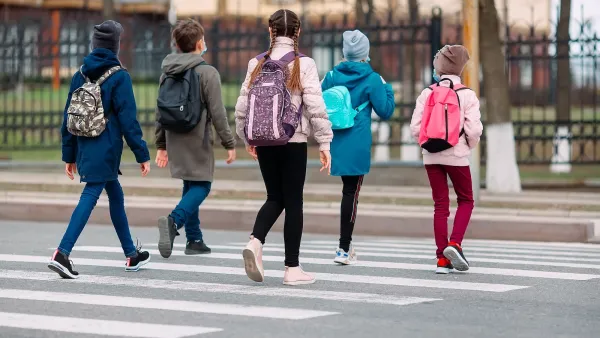
The number of kids walking to school dropped from over 50% to 11% since the 1960s
Unsafe pedestrian infrastructure makes walking to school dangerous or impossible for a growing number of American students.
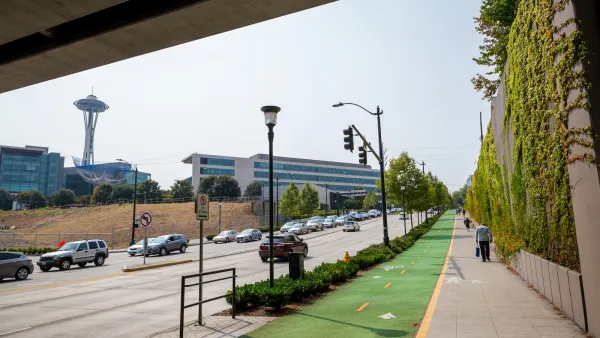
Seattle's transportation levy had a fruitful first year
The city repaired over 17,000 potholes, completed close to 21,000 sidewalk projects, and planted over 1,100 trees with revenue from an eight-year levy approved by voters in 2024.
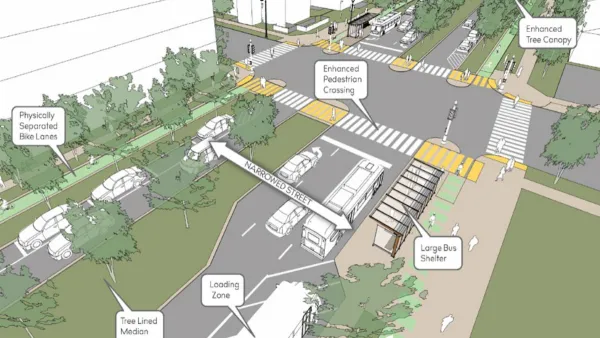
Trump Killed Funding for Milwaukee's Dreamy Multimodal Street. They're Determined to Make it Happen Anyway.
The administration rescinded a $36 million Reconnecting Communities grant aimed at redesigning a 2.6-mile segment of 6th Street.

Planetizen Federal Action Tracker
A weekly monitor of how Trump’s orders and actions are impacting planners and planning in America.

The state-sanctioned urbicide of Austin
People don’t kill cities. Freeways do.

US to reduce Colorado River water deliveries to Mexico
A new Colorado Treaty amendment reduces Mexico’s Colorado River water allocation by 250,000 acre feet.

Baltimore to break ground on $50 million Transit Priority Project
The project will bring faster bus trips, safer streets and better bike connections to Baltimore.

Airbnb launches $250 million 'last-dollar financing' housing accelerator, makes first investment in Austin
The company will put $6.4 million towards affordable housing development in Texas’ capital.

Guerilla urbanists are building DIY bus stop benches in Chicago
A before-and-after of one of the bus stops with a new bench. The new benches are not officially sanctioned or permitted, but the residents who placed them hope they will be the start of a network of DIY benches across the city.

FREE Course: Walkable City 1: Why Walkability?
After describing his path towards focusing on walkability as the essence of good planning, Jeff Speck marches through his five principal reasons for making more walkable places.
Reinventing Malls: Planning Alchemy—Turning Gray Fields Into Gold
The course focuses on the opportunities and imperatives that shape reinvention of mall sites.

Eagle County Government
Harvard University Graduate School of Design
Nashville Planning Department
The Architects Foundation
University of Cincinnati Online
The Pocatello Development Authority
The Urban Renewal Agency of the City of Pocatello
Journal of the American Planning Association