The agency will probe the “Full Self-Driving” system in the wake of crashes that include a pedestrian death.


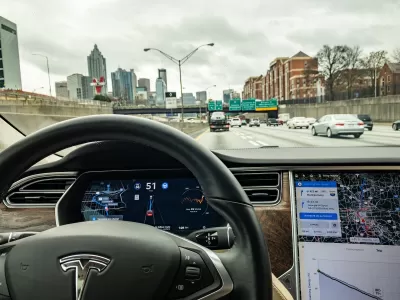
The National Highway Traffic Safety Administration (NHTSA) opened a probe into Tesla’s “Full Self-Driving” system after reports of multiple crashes involving the system, including one that killed a pedestrian.
According to an article by Michel Euler for the Associated Press, the agency will investigate the system’s ability to “detect and respond appropriately to reduced roadway visibility conditions, and if so, the contributing circumstances for these crashes” in roughly 2.4 million Tesla cars from between 2016 and 2024.
The company insists drivers are meant to stay alert while using the system, but are promising to release fully automated robotaxis in 2026. The investigation could prevent the NHTSA from approving new driverless vehicles without steering wheels or pedals. For now, deploying autonomous features in its existing models would fall under the jurisdiction of state agencies, and no federal rules aimed specifically at autonomous vehicles exist.
Tesla was forced to recall hundreds of thousands of vehicles with “Full Self-Driving” systems earlier this year to correct issues including running stop signs at low speeds.
FULL STORY: U.S. to probe Tesla's 'Full Self-Driving' system after pedestrian killed

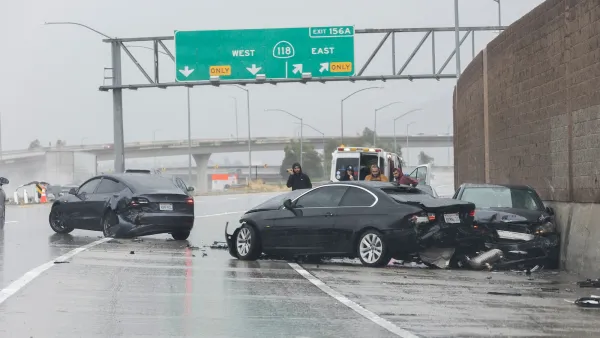
Tesla 'completely' redacts robotaxi crash reports
Reports submitted to the NHTSA also reveal differences in the types of crashes Tesla cars are involved in as opposed to its competitors.
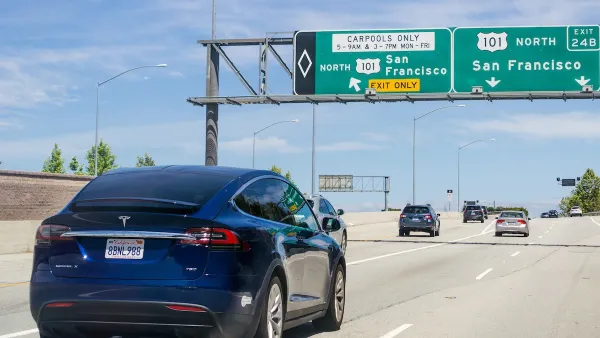
Tesla Announced Human-Assisted Robotaxi Launch in San Francisco — But State Regulators Say Otherwise
The electric carmaker appears to be both-sides-ing its impending launch, telling regulators it will have human drivers on board while touting the project as ‘robotaxis’ to investors.
Federal Regulators Ask Tesla for Robotaxi Details Ahead of Planned Launch
Tesla CEO Elon Musk says the company will launch self-driving taxis in Austin in June and other U.S. cities by the end of the year.

The state-sanctioned urbicide of Austin
People don’t kill cities. Freeways do.

US to reduce Colorado River water deliveries to Mexico
A new Colorado Treaty amendment reduces Mexico’s Colorado River water allocation by 250,000 acre feet.

New Jersey’s second-largest city bans standalone data centers
Jersey City will continue to allow co-location facilities, such as those meant for research institutions that store their own data.

Amtrak not solely to blame for New Jersey commuter rail's unreliability, report finds
A new study from the Garden State Initiative found that NJ Transit’s budget grew 20% across a 4 year period, but reliability declined significantly over the same period.

EPA erases limits on planet-warming pollution from power plants
Under Monday’s plan, power plants would still have some limits on how much mercury, arsenic and other contaminants they can emit.

Phoenix announces new on-demand transit service, more frequent RAPID buses
Both new services will launch in October, and are part of Phoenix's Project Effective Access Solutions for Easing Congestion.

FREE Course: Walkable City 1: Why Walkability?
After describing his path towards focusing on walkability as the essence of good planning, Jeff Speck marches through his five principal reasons for making more walkable places.
Reinventing Malls: Planning Alchemy—Turning Gray Fields Into Gold
The course focuses on the opportunities and imperatives that shape reinvention of mall sites.

Eagle County Government
Harvard University Graduate School of Design
Nashville Planning Department
The Architects Foundation
University of Cincinnati Online
The Pocatello Development Authority
The Urban Renewal Agency of the City of Pocatello
Journal of the American Planning Association