A vote by the Mobile city council secured three key agreements that will pave the way for bringing passenger rail service back to coastal regions east of New Orleans.


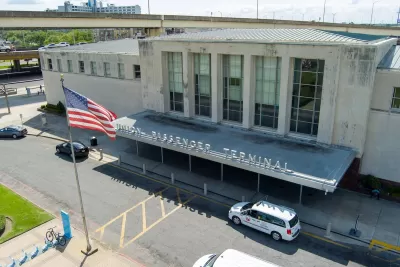
A unanimous vote from the Mobile, Alabama City Council paves the way for renewed passenger rail service east of New Orleans for the first time since Hurricane Katrina damaged rail infrastructure on the Gulf Coast.
As John Sharp explains in AL.com, the vote “authorized three crucial agreements needed to bring Amtrak service between New Orleans and Mobile. The service, when it begins, will offer twice daily trips between the two cities with four coastal Mississippi stops - Pascagoula, Biloxi, Gulfport and Bay St. Louis.”
The vote, which approved a funding agreement and a lease of city-owned land to Amtrak, helps unlock federal funding for replacing track and building new platforms. The approvals were in question earlier this year, when council members expressed reluctance to support the agreements. “Amtrak officials hope by spring of next year the first train connecting the two cities – with four coastal Mississippi stops – will be rolling.”
FULL STORY: All aboard, finally: Mobile backs agreements needed to bring Amtrak service to Gulf Coast


Amtrak’s Mardi Gras train ‘blows away’ ridership expectations
The line brought back rail service between New Orleans and Mobile, Alabama for the first time since Hurricane Katrina.

New Orleans-to-Alabama Amtrak Line Returns, 20 Years After Katrina
The Mardi Gras line now offers two daily round-trip trains between New Orleans and Mobile, Alabama.
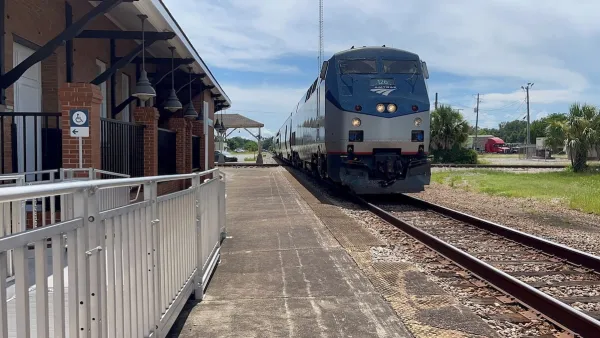
Amtrak Rolls Out New Orleans to Alabama “Mardi Gras” Train
The new service will operate morning and evening departures between Mobile and New Orleans.

Planetizen Federal Action Tracker
A weekly monitor of how Trump’s orders and actions are impacting planners and planning in America.

The state-sanctioned urbicide of Austin
People don’t kill cities. Freeways do.

US to reduce Colorado River water deliveries to Mexico
A new Colorado Treaty amendment reduces Mexico’s Colorado River water allocation by 250,000 acre feet.

5 New England states march closer to 800 megawatt wind energy project
Securing federal approval for the project may be complicated under the Trump administration, which has historically been hostile towards domestic wind power.

Baltimore to break ground on $50 million Transit Priority Project
The project will bring faster bus trips, safer streets and better bike connections to Baltimore.

Airbnb launches $250 million 'last-dollar financing' housing accelerator, makes first investment in Austin
The company will put $6.4 million towards affordable housing development in Texas’ capital.

FREE Course: Walkable City 1: Why Walkability?
After describing his path towards focusing on walkability as the essence of good planning, Jeff Speck marches through his five principal reasons for making more walkable places.
Reinventing Malls: Planning Alchemy—Turning Gray Fields Into Gold
The course focuses on the opportunities and imperatives that shape reinvention of mall sites.

Eagle County Government
Harvard University Graduate School of Design
Nashville Planning Department
The Architects Foundation
University of Cincinnati Online
The Pocatello Development Authority
The Urban Renewal Agency of the City of Pocatello
Journal of the American Planning Association