After years of delays, cost overruns, and deadline extensions on a FEMA-funded street repair program, New Orleans officials face a massive funding shortfall and accusations of mismanagement.


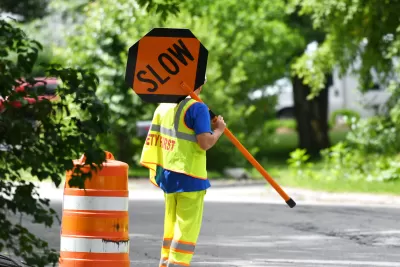
As part of a 2015 deal to settle outstanding Hurricane Katrina Claims, the U.S. Federal Emergency Management Service granted the city of New Orleans $1.7 billion to complete nearly 300 street projects by August 2023. But as of May 2018, only $10 million of the funding was under construction and the city was under federal scrutiny. In 2022, that deadline was pushed to March 2025. Today, with less than a year to go, according to an article from Nola.com, not only are city officials planning to request another extension, but they are also facing a budget shortfall of as much as $1 billion.
“According to Joe Threat, the city's Deputy Chief Administrative Officer for Infrastructure, estimates from the construction firms involved in the work have skyrocketed due to higher costs for labor and materials that have impacted all sorts of projects since the start of the pandemic,” reports Nola staff writer Sophie Kasakove. Costs also rose as workers began tearing up streets and identifying additional repair needs. But some local elected officials say the program has been handled badly from the start.
In an effort to get a handle on delays and cost overruns, which Kasakove writes have plagued the effort over the past six years, the city recently contracted consulting firm CDM Smith, which identified the $1 billion estimated shortfall as part of a draft “gap analysis.” She reports “68 out of 273 projects set to be completed through what's known as the Joint Infrastructure Recovery Request, or JIRR, are currently on hold awaiting additional funding,” and 100 projects are in the planning process but not yet started, according to the city’s roadwork website. The city has expressed its commitment to completing all the projects, but local leaders and residents are frustrated and quickly running out of patience.
Read the full story: Officials face up to $1 billion funding shortfall for New Orleans roadwork

20 Years After Katrina, New Orleans is More Unaffordable Than Ever
The city’s post-hurricane redevelopment has failed to include its most vulnerable residents.

Post-Katrina Programs a Blueprint for Housing the Working Class
The housing initiatives developed after Hurricane Katrina teach valuable lessons for post-pandemic affordable housing production.

New Orleans Convent to Become Large Urban Wetland
Hurricane Katrina damaged a Catholic convent in New Orleans. Then the nuns spearheaded a project to transform the land into a wetland area that will protect the city from flooding in the future.

Planetizen Federal Action Tracker
A weekly monitor of how Trump’s orders and actions are impacting planners and planning in America.

California plans to bury El Niño’s downpour
If the state plays its cards right, it may be able to store a billion acre-feet of El Niño’s water in aquifers.

Chicago breaks ground on $3 billion megadevelopment
The new neighborhood, titled Foundry Park, will one day host 3,700 residences.

California High-Speed Rail Authority CEO resigns after $600,000 scandal
Under Ian Choudri, the authority used taxpayer dollars to fund first class flights and trips to nightclubs.

Want to study the Missouri River? Soon, you may need unanimous approval from 10 states
Legislation would require 10 governors’ permission to study or build projects moving water outside the basin.

Desperate measures: Advocates weigh draining Lake Powell to fill Colorado River
Draining the reservoir could reduce evaporation losses by a couple hundred thousand acre-feet.

FREE Course: Walkable City 1: Why Walkability?
After describing his path towards focusing on walkability as the essence of good planning, Jeff Speck marches through his five principal reasons for making more walkable places.
Reinventing Malls: Planning Alchemy—Turning Gray Fields Into Gold
The course focuses on the opportunities and imperatives that shape reinvention of mall sites.

City of Rosemead
Rutgers University, Edward J. Bloustein School of Planning and Public Policy
One Hundred Miles
Hunter College, City University of New York (CUNY)
The Architects Foundation
University of Cincinnati Online
City of Cambridge
Montrose County
The Pocatello Development Authority