Bike infrastructure isn’t just about bike lanes: safe, supportive spaces where adults can learn to ride and repair bikes are a key component.


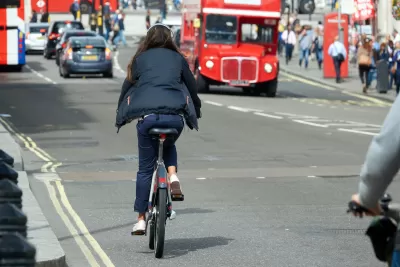
Safe, protected bike lanes and connectivity to transit are important factors in supporting more cycling. But, Alison Griswold writes in Bloomberg CityLab, “The social infrastructure of urban cycling — programs that give people the skills, tools and confidence to get on two wheels — can be just as important as physical infrastructure, especially when it comes to bridging access gaps.”
Around the world, rates of cycling for women are significantly lower than for men, due to a host of factors from harassment to to infrastructure. “For many decades, the streets of cities around the world have largely been built around the mobility preferences of men.”
Social and educational programs that help people learn to ride and feel confident on bikes can help close the gap. “In the UK, Transport for London reported last June that uptake of adult cycle training sessions was ‘particularly strong among some traditionally under-represented cycling groups,’ with 76% female participants and more than 40% from Black, Asian, and other ethnic minority backgrounds.” Griswold provides examples of other education programs, but notes that few adult bike education programs exist in comparison with programs aimed at children. The popularity of biking helps, too: “A 2021 survey of cycling behavior in 17 countries and 35 major cities found women biked as much as men when cycling’s overall mode share exceeded 7%.” Sadly, only a few global cities meet that threshold.
FULL STORY: The Other Kind of Bike Infrastructure Cities Need

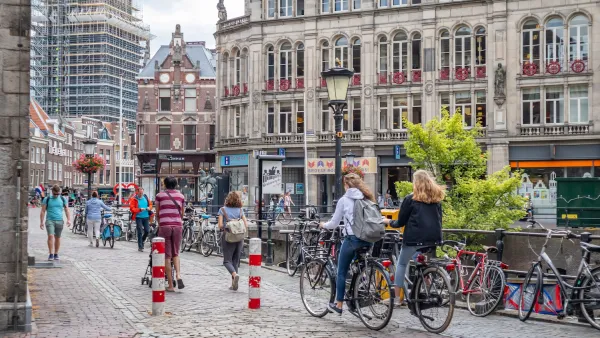
2025's 30 Most Bike-friendly Cities
Copenhagenize has released its list of top cities for cyclists. Spoiler alert: the United States doesn’t make the list.
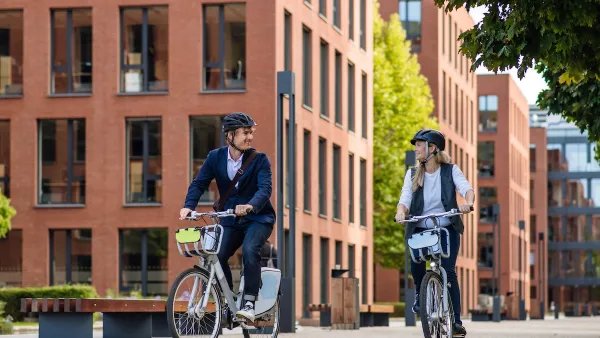
7 Ways Cyclists are Winning in the AI Revolution
For individual cyclists and transportation planners, AI offers some useful tools for understanding bike riders’ behavior and assessing gaps in a city’s bike infrastructure.
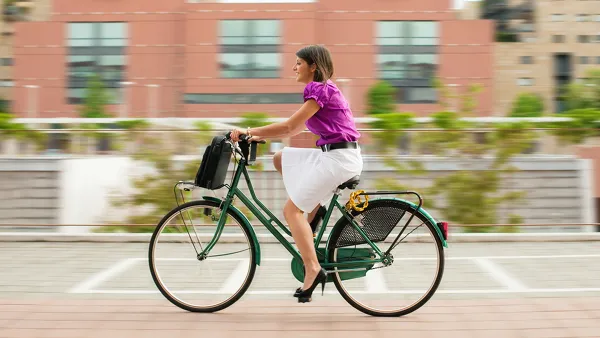
The Rippling Effects of Bike-to-Work Subsidies
A European movement to incentivize people to commute by bicycle is changing travel patterns and making mobility more sustainable.

Planetizen Federal Action Tracker
A weekly monitor of how Trump’s orders and actions are impacting planners and planning in America.

The state-sanctioned urbicide of Austin
People don’t kill cities. Freeways do.

US to reduce Colorado River water deliveries to Mexico
A new Colorado Treaty amendment reduces Mexico’s Colorado River water allocation by 250,000 acre feet.

Amtrak not solely to blame for New Jersey commuter rail's unreliability, report finds
A new study from the Garden State Initiative found that NJ Transit’s budget grew 20% across a 4 year period, but reliability declined significantly over the same period.

EPA erases limits on planet-warming pollution from power plants
Under Monday’s plan, power plants would still have some limits on how much mercury, arsenic and other contaminants they can emit.

Phoenix announces new on-demand transit service, more frequent RAPID buses
Both new services will launch in October, and are part of Phoenix's Project Effective Access Solutions for Easing Congestion.

FREE Course: Walkable City 1: Why Walkability?
After describing his path towards focusing on walkability as the essence of good planning, Jeff Speck marches through his five principal reasons for making more walkable places.
Reinventing Malls: Planning Alchemy—Turning Gray Fields Into Gold
The course focuses on the opportunities and imperatives that shape reinvention of mall sites.

Eagle County Government
Harvard University Graduate School of Design
Nashville Planning Department
The Architects Foundation
University of Cincinnati Online
The Pocatello Development Authority
The Urban Renewal Agency of the City of Pocatello
Journal of the American Planning Association