A seven-block stretch of Main Street will be permanently blocked off to traffic and enhanced to create a vibrant, pedestrian friendly zone.


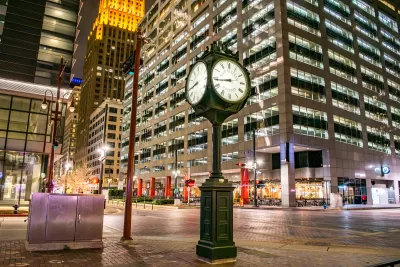
“Houston is finally tackling its walkability issue head-on” by transforming a seven-block portion of downtown’s Main Street into a car-free corridor, according to an article in Chron. Renee Yan reports the project, called “More Space: Mainstreet 2.0,” is in its final design and engineering phase and will likely break ground next year. In addition to lighting, stormwater, and aesthetic improvements, the street will be raised so it is level with the sidewalk. Work is expected to be completed in time for Houston to host the 2026 FIFA World Cup matches.
The project was inspired by an initiative the city undertook in 2021 to support local businesses during the pandemic. Chron previously reported that “[t]he city launched it as a pilot program to restrict car traffic and allow restaurants and bars to create gathering spaces along Main Street.” The program was very popular with residents and business owners, so after it expired in 2023, the city council voted unanimously to make it permanent.
Houston isn’t the only city to make pandemic-era car-free street projects permanent after positive reaction from the public and boosts to local restaurants. Other places in the U.S. that have done so include San Francisco’s John F. Kennedy Drive; 34th Avenue in Jackson Heights, Queens; multiple streets in Manhattan’s Meatpacking District in New York City; California Ave in Palo Alto.
FULL STORY: Project aims to make Downtown Houston zone more walkable by 2026

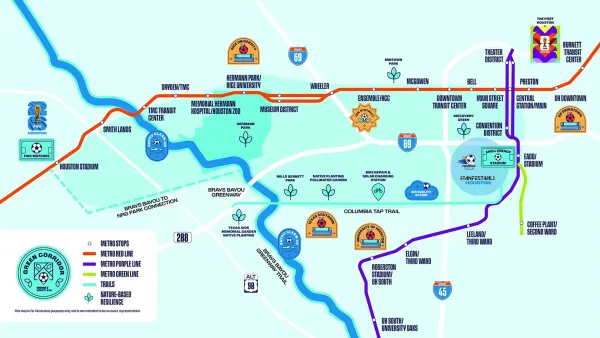
Houston improved walkability ahead of the World Cup. Will it last?
Some mobility advocates say the city's 'Green Corridor' amounts to 'lipstick on a pig' rather than a true commitment to better transit and walking infrastructure.
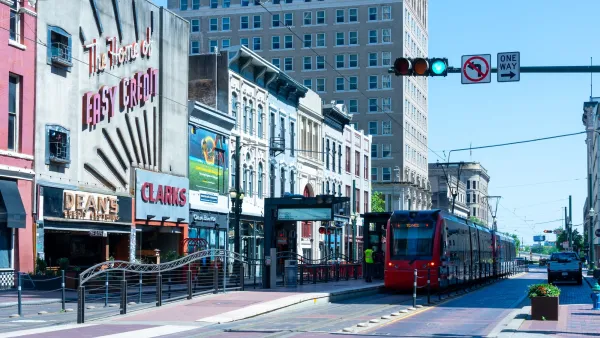
Houston's pedestrian promenade on track to be ready for World Cup crowds
The city is transforming seven downtown blocks along a light rail line into a car-free zone focused on outdoor dining and entertainment.
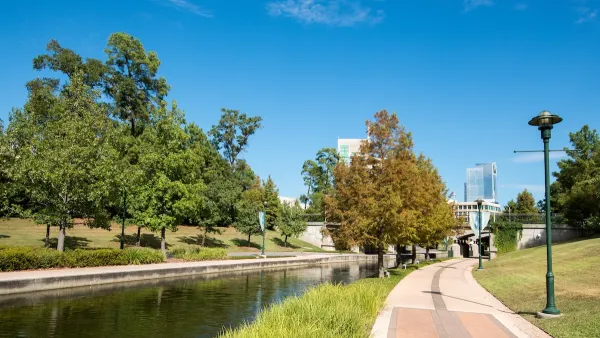
Retro-silient?: America’s First “Eco-burb,” The Woodlands Turns 50
A master-planned community north of Houston offers lessons on green infrastructure and resilient design, but falls short of its founder’s lofty affordability and walkability goals.

The state-sanctioned urbicide of Austin
People don’t kill cities. Freeways do.

US to reduce Colorado River water deliveries to Mexico
A new Colorado Treaty amendment reduces Mexico’s Colorado River water allocation by 250,000 acre feet.

New Jersey’s second-largest city bans standalone data centers
Jersey City will continue to allow co-location facilities, such as those meant for research institutions that store their own data.

Amtrak not solely to blame for New Jersey commuter rail's unreliability, report finds
A new study from the Garden State Initiative found that NJ Transit’s budget grew 20% across a 4 year period, but reliability declined significantly over the same period.

EPA erases limits on planet-warming pollution from power plants
Under Monday’s plan, power plants would still have some limits on how much mercury, arsenic and other contaminants they can emit.

Phoenix announces new on-demand transit service, more frequent RAPID buses
Both new services will launch in October, and are part of Phoenix's Project Effective Access Solutions for Easing Congestion.

FREE Course: Walkable City 1: Why Walkability?
After describing his path towards focusing on walkability as the essence of good planning, Jeff Speck marches through his five principal reasons for making more walkable places.
Reinventing Malls: Planning Alchemy—Turning Gray Fields Into Gold
The course focuses on the opportunities and imperatives that shape reinvention of mall sites.

Eagle County Government
Harvard University Graduate School of Design
Nashville Planning Department
The Architects Foundation
University of Cincinnati Online
The Pocatello Development Authority
The Urban Renewal Agency of the City of Pocatello
Journal of the American Planning Association