An injection of federal funding is helping restore buildings and infrastructure to bring residents and businesses back to central districts.


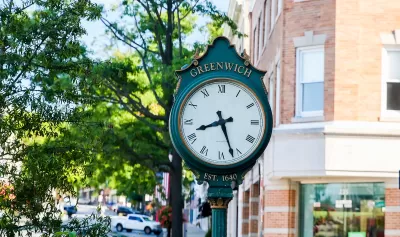
Funding from the American Rescue Plan Act (ARPA) is helping Connecticut towns revitalize declining central business districts, according to an article from the CT Mirror. According to the article, “Of the more than $615 million in ARPA funds spent so far on addressing the pandemic's ‘Negative Economic Impacts’ in Connecticut, roughly $45 million was distributed directly to businesses and nonprofits, including rehabilitating commercial properties.”
“Putting a small amount of ARPA funding toward things like helping commercial landlords bring their street-level properties up to code, so as to be ready for new storefront tenants, can be transformational.” The article provides examples from towns across the state such as Norwich, where federal grants funded the renovation of historic buildings, new pocket parks, and public art. “Elsewhere in the state, the town of Windsor used $100,000 in ARPA funds to help launch two new co-working spaces: one in a retrofitted industrial building near the train station downtown and another in a former bank in Windsor's commercial district.”
FULL STORY: Connecticut's ARPA Funding Has Led to Downtown Revitalizations in Many Towns

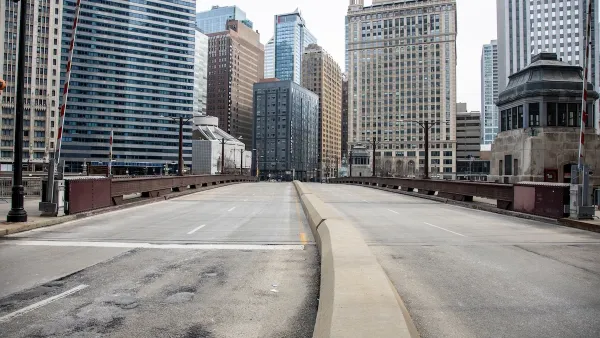
Major US Cities Still Suffering Downtown Decline
Research shows that the “donut effect” hollowing out central business districts since the pandemic continues to cause economic decline in the 12 largest American cities.
Office Conversion Sees No Sign of Slowing
The adaptive reuse of office buildings for residential and other uses will grow by as much as 63 percent in 2024 over last year.

Denver Voters Approve Downtown Revitalization Bonds
The city wants to bring new projects and residents to the downtown core, where 13 million feet of vacant office and retail space await new tenants.

The state-sanctioned urbicide of Austin
People don’t kill cities. Freeways do.

US to reduce Colorado River water deliveries to Mexico
A new Colorado Treaty amendment reduces Mexico’s Colorado River water allocation by 250,000 acre feet.

New Jersey’s second-largest city bans standalone data centers
Jersey City will continue to allow co-location facilities, such as those meant for research institutions that store their own data.

Amtrak not solely to blame for New Jersey commuter rail's unreliability, report finds
A new study from the Garden State Initiative found that NJ Transit’s budget grew 20% across a 4 year period, but reliability declined significantly over the same period.

EPA erases limits on planet-warming pollution from power plants
Under Monday’s plan, power plants would still have some limits on how much mercury, arsenic and other contaminants they can emit.

Phoenix announces new on-demand transit service, more frequent RAPID buses
Both new services will launch in October, and are part of Phoenix's Project Effective Access Solutions for Easing Congestion.

FREE Course: Walkable City 1: Why Walkability?
After describing his path towards focusing on walkability as the essence of good planning, Jeff Speck marches through his five principal reasons for making more walkable places.
Reinventing Malls: Planning Alchemy—Turning Gray Fields Into Gold
The course focuses on the opportunities and imperatives that shape reinvention of mall sites.

Eagle County Government
Harvard University Graduate School of Design
Nashville Planning Department
The Architects Foundation
University of Cincinnati Online
The Pocatello Development Authority
The Urban Renewal Agency of the City of Pocatello
Journal of the American Planning Association