A program that began in 1999 to encourage more electric car ownership is set to expire next year without Congressional and state action.


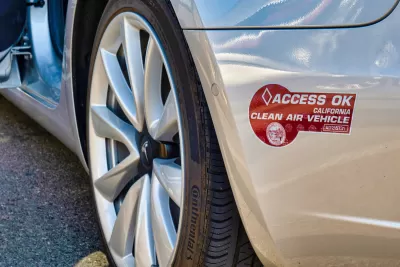
Starting in September 2025, California carpool lanes will only be open to actual carpools, barring hybrid, electric, and compressed natural gas vehicles.
Writing in the San Francisco Chronicle, Michael Cabanatuan notes that extending the program would require action from both the U.S. Congress and the state legislature. “John Goodwin, a commission spokesperson, said it seems unlikely that the current Congress, with its antipathy toward California as well as electric cars, will authorize the extension of a program intended to promote the sales of alternative fuel vehicles.”
Since 1999, ‘clean air’ vehicles have been allowed to use California carpool lanes regardless of the number of passengers. Today, a total of 411,133 vehicles have the permit, according to the California Department of Motor Vehicles. But with more electric vehicles hitting the road, congestion in carpool lanes, in some cases, rivals that in regular lanes.
FULL STORY: Why some vehicles are set to lose access to carpool lanes in California

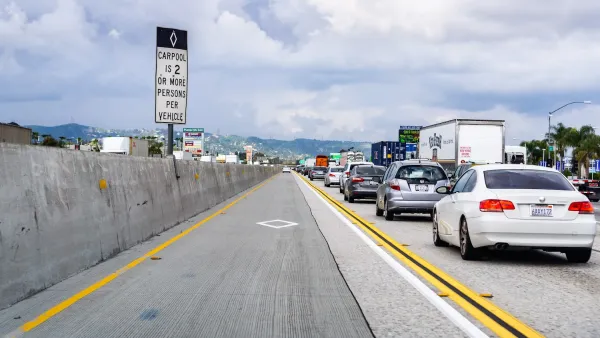
California’s Carpool Lane Exemption for EVs Dies This Week
The program that allows EV drivers to use carpool lanes alone has issued 1,211,530 stickers since it began in 2000.
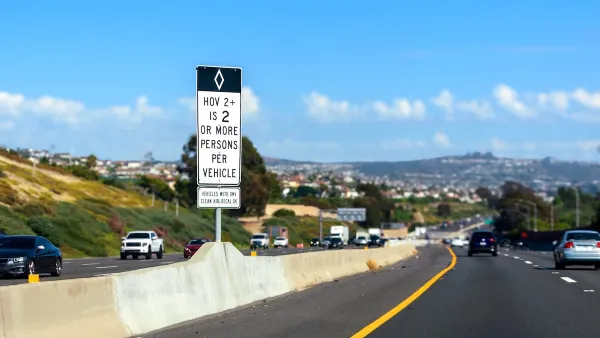
September Must-Reads: Top 10 Articles From Last Month
EV drivers can no longer use carpool lanes alone, Bay Area transit is saved — for now — by a $750 million loan, and a Florida commuter rail line loses its state subsidy, jeopardizing its future.
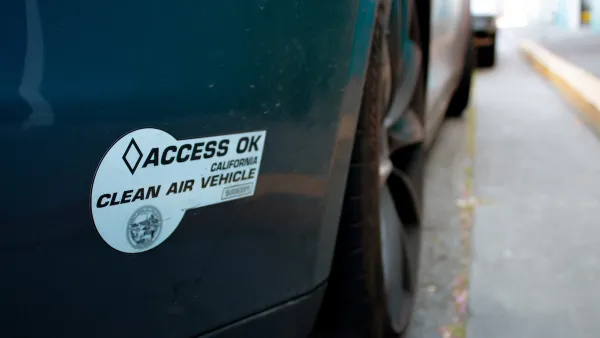
EVs Now Barred From Freeway HOV Lanes
Congress failed to renew a federal program allowing states to let electric car drivers use carpool lanes without additional passengers, forcing California to end EV access to its HOV lanes.

Planetizen Federal Action Tracker
A weekly monitor of how Trump’s orders and actions are impacting planners and planning in America.

The state-sanctioned urbicide of Austin
People don’t kill cities. Freeways do.

US to reduce Colorado River water deliveries to Mexico
A new Colorado Treaty amendment reduces Mexico’s Colorado River water allocation by 250,000 acre feet.

Baltimore to break ground on $50 million Transit Priority Project
The project will bring faster bus trips, safer streets and better bike connections to Baltimore.

Airbnb launches $250 million 'last-dollar financing' housing accelerator, makes first investment in Austin
The company will put $6.4 million towards affordable housing development in Texas’ capital.

Guerilla urbanists are building DIY bus stop benches in Chicago
A before-and-after of one of the bus stops with a new bench. The new benches are not officially sanctioned or permitted, but the residents who placed them hope they will be the start of a network of DIY benches across the city.

FREE Course: Walkable City 1: Why Walkability?
After describing his path towards focusing on walkability as the essence of good planning, Jeff Speck marches through his five principal reasons for making more walkable places.
Reinventing Malls: Planning Alchemy—Turning Gray Fields Into Gold
The course focuses on the opportunities and imperatives that shape reinvention of mall sites.

Eagle County Government
Harvard University Graduate School of Design
Nashville Planning Department
The Architects Foundation
University of Cincinnati Online
The Pocatello Development Authority
The Urban Renewal Agency of the City of Pocatello
Journal of the American Planning Association