Citizen-led projects can lead to broader changes — if cities will listen.


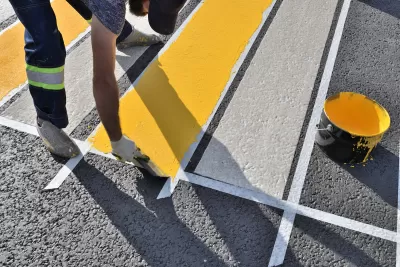
‘Guerilla urbanism’ was the topic of a Congress for New Urbanism webinar that highlighted how individual citizens and groups are “asking forgiveness not permission” to improve their communities.
As Robert Steuteville explains, the movement uses simple, quick, and cheap interventions to make roads safer or utilize empty lots. In Houston, a group of neighbors started growing food on a vacant lot in their neighborhood. In Los Angeles, a group calling itself Crosswalk Collective paints crosswalks at dangerous intersections where the city has failed to do so. A group in Wichita glued toilet plungers to the edges of an unprotected bike lane to create a visual barrier, prompting the city to later install more permanent safety infrastructure.
You can watch a recording of the full webinar at the source link.
FULL STORY: Guerilla Urbanism asks forgiveness, not permission

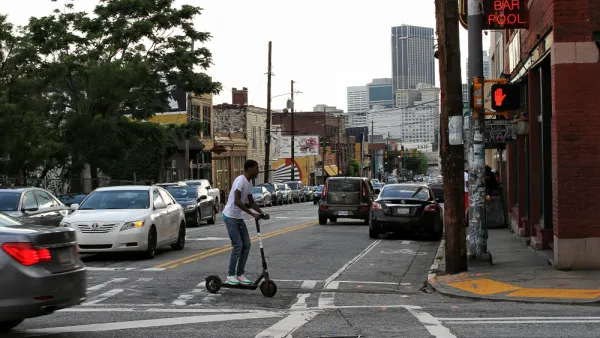
Atlanta Urges Tactical Urbanism To Speed Up Vision Zero Goals
The city's department of transportation has released a guide to help community groups implement low-cost 'tactical urbanism' projects.
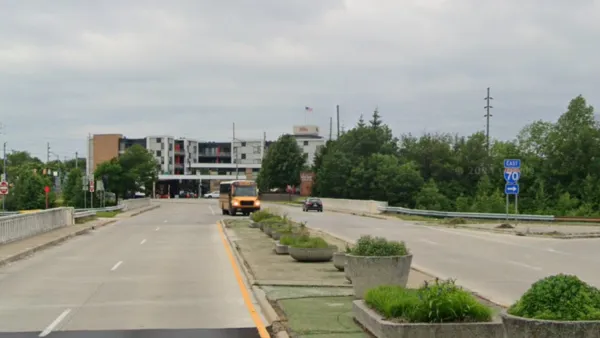
Indy Neighborhood Group Builds Temporary Multi-Use Path
Community members, aided in part by funding from the city, repurposed a vehicle lane to create a protected bike and pedestrian path for the summer season.
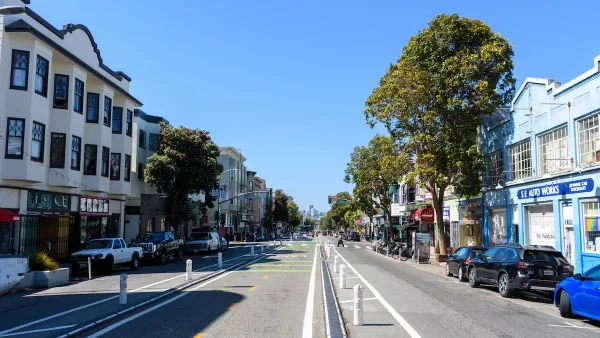
How San Francisco’s ‘People Protected Bike Lanes’ are Moving the Needle on Road Safety
A local bike safety protest has become a global phenomenon.

The state-sanctioned urbicide of Austin
People don’t kill cities. Freeways do.

US to reduce Colorado River water deliveries to Mexico
A new Colorado Treaty amendment reduces Mexico’s Colorado River water allocation by 250,000 acre feet.

New Jersey’s second-largest city bans standalone data centers
Jersey City will continue to allow co-location facilities, such as those meant for research institutions that store their own data.

Amtrak not solely to blame for New Jersey commuter rail's unreliability, report finds
A new study from the Garden State Initiative found that NJ Transit’s budget grew 20% across a 4 year period, but reliability declined significantly over the same period.

EPA erases limits on planet-warming pollution from power plants
Under Monday’s plan, power plants would still have some limits on how much mercury, arsenic and other contaminants they can emit.

Phoenix announces new on-demand transit service, more frequent RAPID buses
Both new services will launch in October, and are part of Phoenix's Project Effective Access Solutions for Easing Congestion.

FREE Course: Walkable City 1: Why Walkability?
After describing his path towards focusing on walkability as the essence of good planning, Jeff Speck marches through his five principal reasons for making more walkable places.
Reinventing Malls: Planning Alchemy—Turning Gray Fields Into Gold
The course focuses on the opportunities and imperatives that shape reinvention of mall sites.

Eagle County Government
Harvard University Graduate School of Design
Nashville Planning Department
The Architects Foundation
University of Cincinnati Online
The Pocatello Development Authority
The Urban Renewal Agency of the City of Pocatello
Journal of the American Planning Association