The report indicates that large formula funding programs tend to support the status quo, reinforcing car-centric planning and inequitable spending patterns.


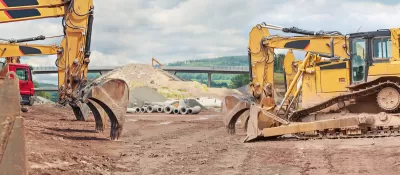
A new report from the Urban Institute assesses the gap between the equity goals of the Biden administration and the way federal funds from the Infrastructure Investment and Jobs Act (IIJA) and other infrastructure programs are being distributed, writes Jared Brey in Governing.
“While the term ‘equity’ is used in lots of ways, a key question for infrastructure funding is whether it reaches places that need it the most. That requires understanding inequitable patterns of spending in the past, which helped create racial and class inequities in access to clean water, fast Internet, safe transportation options and affordable housing,” Brey explains.
“The researchers found that formula funding programs, which provide the lion’s share of transportation funding to states, are likely to reinforce existing patterns: Most transit funding, for example, goes to places that already have more transit service, rather than to car-centric places with few alternative travel modes. Competitive grants are often more targeted to areas with higher shares of people of color, the report found.” The report suggests reforming some of the major federal formula funding programs that are out of step with today’s funding needs.
Unsurprisingly, “communities with less government staff capacity to apply for grants are substantially less likely to receive funding,” signaling a need for more resources devoted to helping underresourced local governments apply for grants. “The federal government should play a role in supporting local governments with low staff capacity, the report says.”
FULL STORY: Measuring Equity in Federal Infrastructure Spending


Over Half of IIJA Funds Still Up for Grabs
Just 40 percent of funds from the massive infrastructure law have been allocated to projects three years after its passage.
Top Republicans Encourage Governors to Ignore FHWA Guidance
Senators McConnell and Capito reject the administration's efforts to steer federal funds to infrastructure projects that prioritize road maintenance and transit and pedestrian improvements over new road construction.
How to Prioritize Equity in the Infrastructure Bill
Experts recommend a more rigorous focus on equity considerations as the federal government begins to select projects to fund through the Infrastructure Investment and Jobs Act.

The state-sanctioned urbicide of Austin
People don’t kill cities. Freeways do.

US to reduce Colorado River water deliveries to Mexico
A new Colorado Treaty amendment reduces Mexico’s Colorado River water allocation by 250,000 acre feet.

New Jersey’s second-largest city bans standalone data centers
Jersey City will continue to allow co-location facilities, such as those meant for research institutions that store their own data.

Amtrak not solely to blame for New Jersey commuter rail's unreliability, report finds
A new study from the Garden State Initiative found that NJ Transit’s budget grew 20% across a 4 year period, but reliability declined significantly over the same period.

EPA erases limits on planet-warming pollution from power plants
Under Monday’s plan, power plants would still have some limits on how much mercury, arsenic and other contaminants they can emit.

Phoenix announces new on-demand transit service, more frequent RAPID buses
Both new services will launch in October, and are part of Phoenix's Project Effective Access Solutions for Easing Congestion.

FREE Course: Walkable City 1: Why Walkability?
After describing his path towards focusing on walkability as the essence of good planning, Jeff Speck marches through his five principal reasons for making more walkable places.
Reinventing Malls: Planning Alchemy—Turning Gray Fields Into Gold
The course focuses on the opportunities and imperatives that shape reinvention of mall sites.

Eagle County Government
Harvard University Graduate School of Design
Nashville Planning Department
The Architects Foundation
University of Cincinnati Online
The Pocatello Development Authority
The Urban Renewal Agency of the City of Pocatello
Journal of the American Planning Association