The State of New Jersey filed a federal lawsuit against the U.S. Department of Transportation on Friday to halt the Manhattan cordon pricing project approved in June by the FHWA, charging that they violated the National Environmental Protection Act.


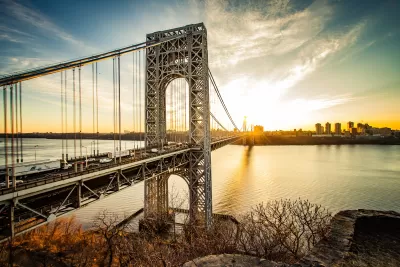
“On Friday, the state filed a lawsuit against the U.S. Department of Transportation (USDOT) and the Federal Highway Administration (FHWA) to block what it describes as ‘the ill-conceived congestion pricing plan,’” reported Matthew Fazelpoor for NJBIZ, the state's leading business journal. More details have emerged since Planetizen first covered the story.
When the FHWA cleared the controversial pricing project last month, “New Jersey leaders noted they had retained Randy Mastro and Craig Carpenito of law firm King & Spalding and were exploring all legal options,” added Fazelpoor. “And on Friday, the state did indeed take legal action.”
The suit argues that the USDOT and the FHWA violated the National Environmental Protection Act, which requires a full environmental impact review for efforts of this projected impact and scope, as well as the Clean Air Act.
Tolls, not environment, prompts lawsuit
“We believe the feds short-circuited the normal review process,” Democratic Gov. Phil Murphy said in an interview on Good Day New York, reported Jimmy Vielkind for The Wall Street Journal on July 21.
Murphy argued that the new tolls will unfairly target New Jersey drivers, who already pay a $17 toll to use the Lincoln or Holland tunnels into Manhattan. Around 111,000 people drove into Manhattan’s business district from New Jersey on an average fall weekday in 2019, according to the New York Metropolitan Transportation Council, a planning group.
“We can’t fix a broken MTA [Metropolitan Transportation Authority] in New York City on the back of New Jersey commuters,” states Murphy on pg. 2 of the 68-page lawsuit [pdf]. “It’s a huge tax on them, and frankly, it challenges our environment because of all the re-routing of traffic that will take place.”
The current plan allows for a peak-hour toll as high as $23 for drivers who enter the cordon below 60th Street in Manhattan. An alternative plan, posted here July 18, would set the maximum at $15.
“Lisa Daglian, who heads an advisory committee that advocates for MTA riders, said most New Jersey residents who commute to Manhattan come on trains or in buses and many of them then ride the subway,” added Vielkind.
“We strongly condemn this lawsuit for its attempt to halt progress on improving transit, reducing congestion and pollution, and creating a healthier and more sustainable region,” she said.
The road pricing program, scheduled to take effect next year, could mean billions of dollars in new transit funding for the MTA.
Additional coverage in Bloomberg City Lab: “New Jersey Sues Over Congestion Pricing Plan in New York City,” July 21, 2023
FULL STORY: New Jersey files federal lawsuit to block congestion pricing in NYC

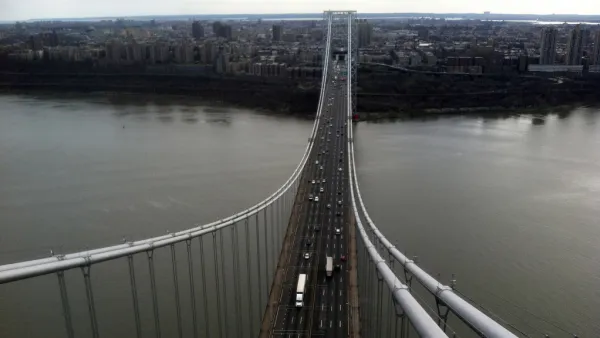
New Jersey Wants an Exemption from Manhattan Congestion Charge
With cordon pricing coming to Manhattan in 2021, New Jersey motorists who pay up to $15 in bridge or tunnel tolls don't want to have to pay another $10 to $14 to drive into the Central District Business tolling zone, but exemptions come with a price.
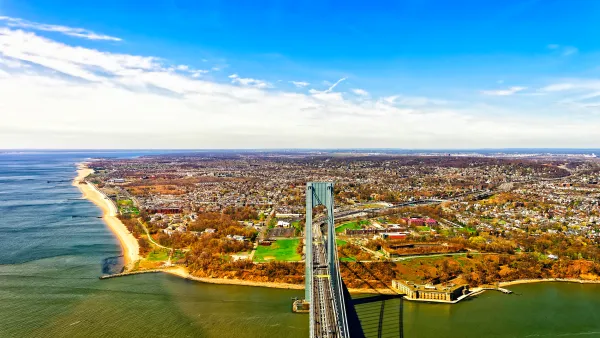
Staten Island Sues Over Congestion Pricing, Too
The borough’s president says the plan would bring more traffic to Staten Island and unjustly burden its residents with air pollution and tolls.
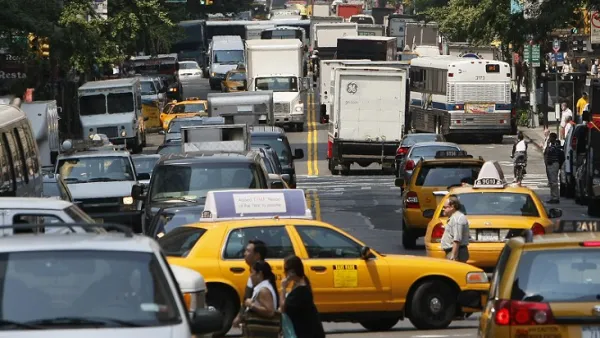
Manhattan Congestion Pricing Could Start in 2023
The Metropolitan Transportation Authority has resubmitted its environmental impact assessment to federal officials, who sent the agency over 400 additional questions earlier this year.

The state-sanctioned urbicide of Austin
People don’t kill cities. Freeways do.

US to reduce Colorado River water deliveries to Mexico
A new Colorado Treaty amendment reduces Mexico’s Colorado River water allocation by 250,000 acre feet.

New Jersey’s second-largest city bans standalone data centers
Jersey City will continue to allow co-location facilities, such as those meant for research institutions that store their own data.

Amtrak not solely to blame for New Jersey commuter rail's unreliability, report finds
A new study from the Garden State Initiative found that NJ Transit’s budget grew 20% across a 4 year period, but reliability declined significantly over the same period.

EPA erases limits on planet-warming pollution from power plants
Under Monday’s plan, power plants would still have some limits on how much mercury, arsenic and other contaminants they can emit.

Phoenix announces new on-demand transit service, more frequent RAPID buses
Both new services will launch in October, and are part of Phoenix's Project Effective Access Solutions for Easing Congestion.

FREE Course: Walkable City 1: Why Walkability?
After describing his path towards focusing on walkability as the essence of good planning, Jeff Speck marches through his five principal reasons for making more walkable places.
Reinventing Malls: Planning Alchemy—Turning Gray Fields Into Gold
The course focuses on the opportunities and imperatives that shape reinvention of mall sites.

Eagle County Government
Harvard University Graduate School of Design
Nashville Planning Department
The Architects Foundation
University of Cincinnati Online
The Pocatello Development Authority
The Urban Renewal Agency of the City of Pocatello
Journal of the American Planning Association