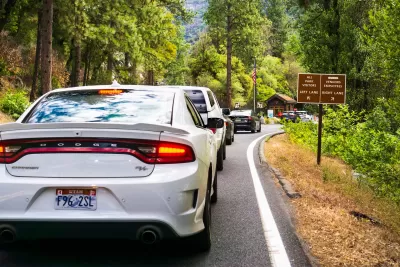
Long lines of cars have been trying to enter the park, with many stuck in traffic for hours and vehicles parked illegally in traffic lanes, on grass, and between rocks.


Yosemite National Park is one the most well-known national parks in the United States. The park, which covers an area of 759,620 acres and was designated a World Heritage Site in 1984, is internationally recognized for its granite cliffs, waterfalls, clear streams, giant sequoia groves, lakes, mountains, meadows, and glaciers.
Unfortunately, too many people are trying to visit the park this summer. As reported by Cari Spencer, lines out of the park have often been at a standstill this season, which is the first summer without a reservation system since before the pandemic. Visitors who arrive after 8 a.m. on weekends and some weekdays should be ready for a long wait. Those who arrive later probably will not find parking and can expect to turn around if they try to enter eastern Yosemite Valley.
In addition to traffic and parking issues, there are also concerns about how increased and intense visitation will affect the park’s wildlife. After all, Yosemite is known for its biodiversity and is one of the largest and least fragmented habitat blocks in the Sierra Nevada, supporting a wide variety of plants and animals.
FULL STORY: ‘Like sitting on the 101 in L.A.’: Yosemite visitors wait in line for hours to enter park

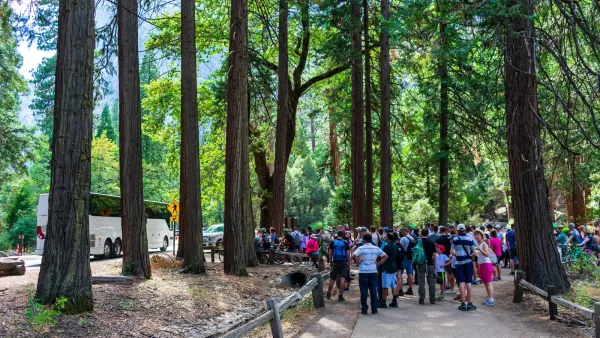
Yosemite crowds wait hours to enter park after NPS ends reservation system
Bumper-to-bumper traffic and a lack of parking foreshadowed a potentially chaotic summer.
National Parks Layoffs Will Cause Communities to Lose Billions
Thousands of essential park workers were laid off this week, just before the busy spring break season.

Parks Overwhelmed by Record Numbers of Visitors
Already understaffed and underfunded, the agencies that manage state and national parks are struggling to keep up with the spike in demand for outdoor recreation over the past year.

Planetizen Federal Action Tracker
A weekly monitor of how Trump’s orders and actions are impacting planners and planning in America.

The state-sanctioned urbicide of Austin
People don’t kill cities. Freeways do.

US to reduce Colorado River water deliveries to Mexico
A new Colorado Treaty amendment reduces Mexico’s Colorado River water allocation by 250,000 acre feet.

5 New England states march closer to 800 megawatt wind energy project
Securing federal approval for the project may be complicated under the Trump administration, which has historically been hostile towards domestic wind power.

Baltimore to break ground on $50 million Transit Priority Project
The project will bring faster bus trips, safer streets and better bike connections to Baltimore.

Airbnb launches $250 million 'last-dollar financing' housing accelerator, makes first investment in Austin
The company will put $6.4 million towards affordable housing development in Texas’ capital.

FREE Course: Walkable City 1: Why Walkability?
After describing his path towards focusing on walkability as the essence of good planning, Jeff Speck marches through his five principal reasons for making more walkable places.
Reinventing Malls: Planning Alchemy—Turning Gray Fields Into Gold
The course focuses on the opportunities and imperatives that shape reinvention of mall sites.

Eagle County Government
Harvard University Graduate School of Design
Nashville Planning Department
The Architects Foundation
University of Cincinnati Online
The Pocatello Development Authority
The Urban Renewal Agency of the City of Pocatello
Journal of the American Planning Association