After more than a year of COVID-19-related restrictions and limited travel, rising attendance figures across national parks show Americans are eager to explore the great outdoors.


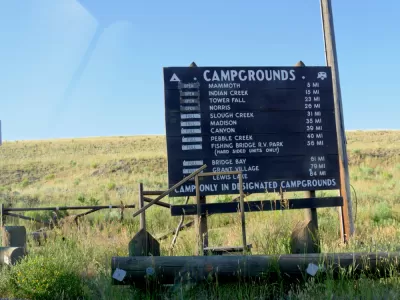
New data released by the National Park Service shows just how much Americans miss and love national parks, as reported by Andy Rose of CNN. Yellowstone National Park, for example, hosted 483,159 recreation visits in May 2021, which is an 11% increase from May 2019 (434,385 recreation visits) and the park’s most visited May on record. It should be noted that May 2020 should not be used as a good year-to-year comparison because the park was closed until May 18. Only two of the park's five entrances were open for the rest of the month. So far in 2021, the park has hosted 658,513 recreation visits, up 14% from 2019.
In 2020 outdoor experiences provided refuge from the COVID-19 pandemic for 237 million visitors to America’s national parks. The number actually represents a 28% decrease from 2019 due largely to temporary park closures and restrictions implemented in response to the pandemic. Although overall visitation fell, several parks experienced record crowds and attracted new visitors. The top ten most visited national parks in 2020 were:
-
Great Smoky Mountains National Park 12.1 million.
-
Yellowstone National Park 3.8 million.
-
Zion National Park 3.6 million.
-
Rocky Mountain National Park 3.3 million.
-
Grand Teton National Park 3.3 million.
-
Grand Canyon National Park 2.9 million.
-
Cuyahoga Valley National Park 2.8 million.
-
Acadia National Park 2.7 million.
-
Olympic National Park 2.5 million.
-
Joshua Tree National Park 2.4 million.
For an in-depth look at 2020 visitation statistics, please visit the National Park Service Social Science website. For national summaries and individual park figures, please visit the National Park Service Visitor Use Statistics website.
FULL STORY: National park visitors surge as Covid-19 pandemic restrictions wane

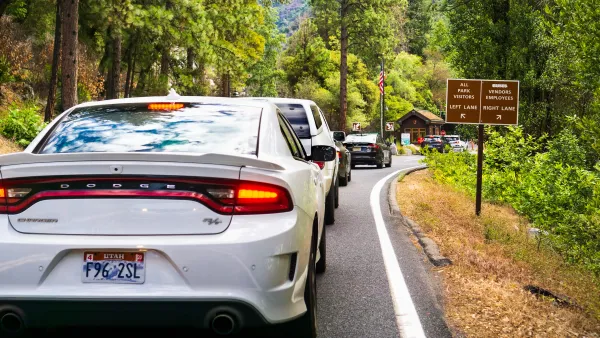
Overcrowding at Yosemite National Park
Long lines of cars have been trying to enter the park, with many stuck in traffic for hours and vehicles parked illegally in traffic lanes, on grass, and between rocks.
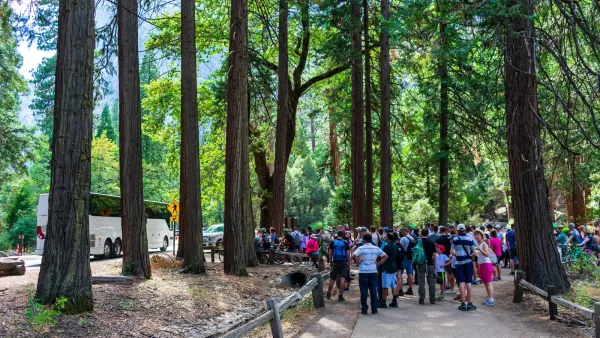
Yosemite crowds wait hours to enter park after NPS ends reservation system
Bumper-to-bumper traffic and a lack of parking foreshadowed a potentially chaotic summer.
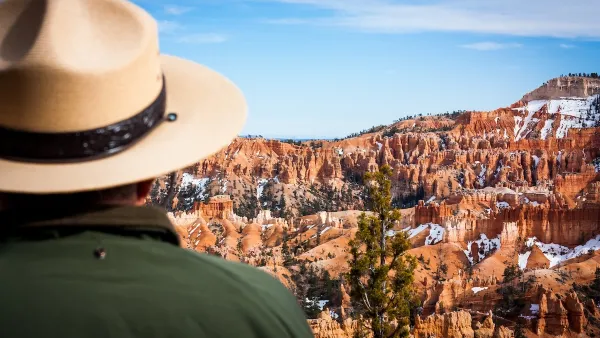
National Parks Layoffs Will Cause Communities to Lose Billions
Thousands of essential park workers were laid off this week, just before the busy spring break season.

Planetizen Federal Action Tracker
A weekly monitor of how Trump’s orders and actions are impacting planners and planning in America.

The state-sanctioned urbicide of Austin
People don’t kill cities. Freeways do.

US to reduce Colorado River water deliveries to Mexico
A new Colorado Treaty amendment reduces Mexico’s Colorado River water allocation by 250,000 acre feet.

5 New England states march closer to 800 megawatt wind energy project
Securing federal approval for the project may be complicated under the Trump administration, which has historically been hostile towards domestic wind power.

Baltimore to break ground on $50 million Transit Priority Project
The project will bring faster bus trips, safer streets and better bike connections to Baltimore.

Airbnb launches $250 million 'last-dollar financing' housing accelerator, makes first investment in Austin
The company will put $6.4 million towards affordable housing development in Texas’ capital.

FREE Course: Walkable City 1: Why Walkability?
After describing his path towards focusing on walkability as the essence of good planning, Jeff Speck marches through his five principal reasons for making more walkable places.
Reinventing Malls: Planning Alchemy—Turning Gray Fields Into Gold
The course focuses on the opportunities and imperatives that shape reinvention of mall sites.

Eagle County Government
Harvard University Graduate School of Design
Nashville Planning Department
The Architects Foundation
University of Cincinnati Online
The Pocatello Development Authority
The Urban Renewal Agency of the City of Pocatello
Journal of the American Planning Association