A years-long process has culminated in a proposal that would encourage the creation of affordable housing, promote transit-oriented development, and position the city for less car-oriented growth.


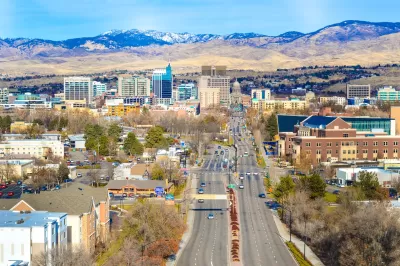
A proposed update to the city of Boise’s zoning code aims to reimagine the Idaho city to be more sustainable, equitable, and affordable through adjusting regulations on “Building heights. Parking requirements. Neighborhood markets. Lot sizes. Transit. Mixed-use complexes.”
As Ian Max Stevenson reports in the Idaho Statesman, “Boise hopes to avoid the pitfalls of sprawl, unaffordability and car reliance that many other cities have faced” as the city grows. The revised zoning rules would permit higher density, include affordable housing incentives, decrease minimum lot sizes, and reduce parking requirements.
“While many of the zoning revisions relate to allowed uses themselves, Boise is also planning to streamline application processes for projects that planners want to see.” The new rules would incentivize adaptive reuse of older buildings and create mixed-use districts near transit corridors and other activity centers.
Critics of the plan say permitting more density outright would remove leverage from the city and could lead to the destruction of affordable housing. The city also lacks a comprehensive public transit system to encourage people to reduce their car use. Boise city planner Tim Keane acknowledges this weakness and says more transit investment is needed, but that how the city grows is a crucial component. “If you don’t have the development pattern, you’ll never have a transit system.”
FULL STORY: Boise wants more affordable housing, higher density, more transit. Here’s the plan

Boise Approves First Zoning Code Update in 60 Years
A comprehensive update of the city’s zoning code aimed at making housing more affordable and promoting sustainable growth received unanimous support from the city council.
Columbus Weighs Revisions to Outdated, Inequitable Zoning Code
The city is seeking ways to boost affordable housing development and encourage mixed-use, transit-oriented development.
Boise Looks to Upzoning To Ease Housing Pressures
The rapidly growing city is evaluating ways to increase housing production, reduce car dependency, and make Boise more walkable.

The state-sanctioned urbicide of Austin
People don’t kill cities. Freeways do.

US to reduce Colorado River water deliveries to Mexico
A new Colorado Treaty amendment reduces Mexico’s Colorado River water allocation by 250,000 acre feet.

New Jersey’s second-largest city bans standalone data centers
Jersey City will continue to allow co-location facilities, such as those meant for research institutions that store their own data.

Amtrak not solely to blame for New Jersey commuter rail's unreliability, report finds
A new study from the Garden State Initiative found that NJ Transit’s budget grew 20% across a 4 year period, but reliability declined significantly over the same period.

EPA erases limits on planet-warming pollution from power plants
Under Monday’s plan, power plants would still have some limits on how much mercury, arsenic and other contaminants they can emit.

Phoenix announces new on-demand transit service, more frequent RAPID buses
Both new services will launch in October, and are part of Phoenix's Project Effective Access Solutions for Easing Congestion.

FREE Course: Walkable City 1: Why Walkability?
After describing his path towards focusing on walkability as the essence of good planning, Jeff Speck marches through his five principal reasons for making more walkable places.
Reinventing Malls: Planning Alchemy—Turning Gray Fields Into Gold
The course focuses on the opportunities and imperatives that shape reinvention of mall sites.

Eagle County Government
Harvard University Graduate School of Design
Nashville Planning Department
The Architects Foundation
University of Cincinnati Online
The Pocatello Development Authority
The Urban Renewal Agency of the City of Pocatello
Journal of the American Planning Association