A proposed bill would require larger towns to add protected bike lanes to any new road improvements and direct state funding to applicable projects.



A bill proposed in the New Mexico state legislature would require some municipalities to install protected bike lanes when making other roadway improvements. The bill would also create a $5 million annual fund to help finance bike lane projects, explains Michael Brady in Smart Cities Dive.
The bill would require cities of over 10,000 people to include bike lanes protected by “permanent physical barriers” such as “raised curbs, bollards, flexible delineator posts, trees or vegetation, and materials like concrete and granite” in any new road projects, in keeping with the Complete Streets approach. The bill, introduced in the House Transportation and Public Works Committee, was put on hold until the next legislative session.
Complete Streets, which centers pedestrian safety and supports multimodal transportation, got a boost from the federal government with a provision in the Infrastructure Investment and Jobs Act (IIJA) that mandates spending on Complete Streets initiatives. “According to Smart Growth America, governments in 37 states, Puerto Rico and Washington, D.C., have produced more than 1,700 Complete Streets policies in the U.S.”
Read the full story: New Mexico considering bill to mandate, fund protected bike lanes in some roadway improvement projects
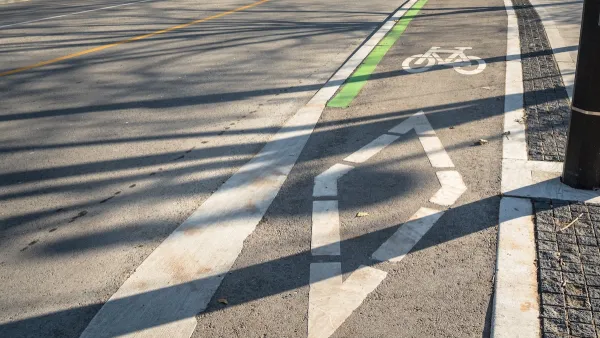
A Troubling Trend of Backlash to Bike Lanes
Some cities are going so far as to rip out protected bike infrastructure that took years of advocacy to build.
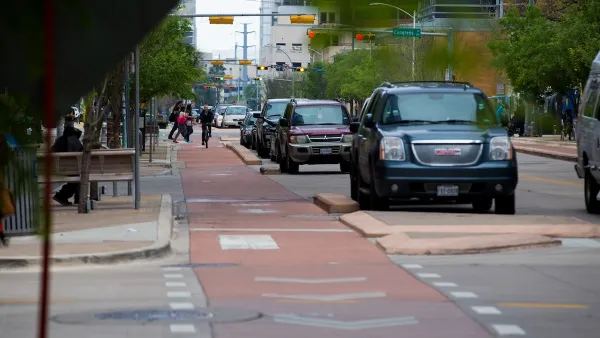
Austin Outlaws Blocking Bike Lanes
Drivers who park in bike lanes will receive citations of up to $300.
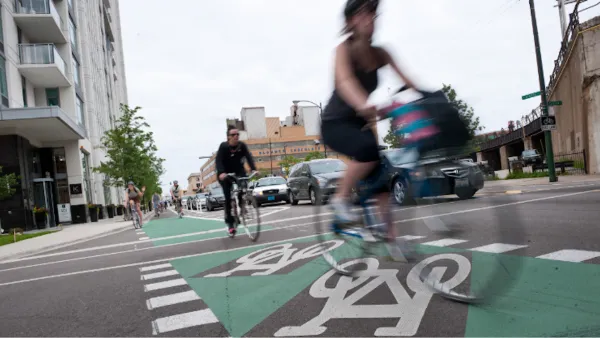
Chicago Had a Banner Year for Bike Infrastructure
The city built more bike lane miles in 2023 than in any previous year.

Planetizen Federal Action Tracker
A weekly monitor of how Trump’s orders and actions are impacting planners and planning in America.

California plans to bury El Niño’s downpour
If the state plays its cards right, it may be able to store a billion acre-feet of El Niño’s water in aquifers.

Desperate measures: Advocates weigh draining Lake Powell to fill Colorado River
Draining the reservoir could reduce evaporation losses by a couple hundred thousand acre-feet.

In Texas, data centers are swallowing promised parkland
Residents who moved to Taylor, Texas for a rural community now have to contend with three data centers in their backyard.

How a Chicago-sized wind farm beat the odds and powered on
The project spanned five presidential administrations and a standoff with a U.S. military base.

MTA gives itself 30 days to transform pit into basketball court
The site has been under construction since 2022; the city originally estimated it would finish the court in 2024.

FREE Course: Walkable City 1: Why Walkability?
After describing his path towards focusing on walkability as the essence of good planning, Jeff Speck marches through his five principal reasons for making more walkable places.
Reinventing Malls: Planning Alchemy—Turning Gray Fields Into Gold
The course focuses on the opportunities and imperatives that shape reinvention of mall sites.

City of Rosemead
Rutgers University, Edward J. Bloustein School of Planning and Public Policy
One Hundred Miles
Hunter College, City University of New York (CUNY)
The Architects Foundation
University of Cincinnati Online
City of Cambridge
Montrose County
The Pocatello Development Authority