After a Forbes article revealed dozens of makeshift sleeping areas in Twitter’s downtown San Francisco offices, the city is asking the company to file for permits if they want to keep them.


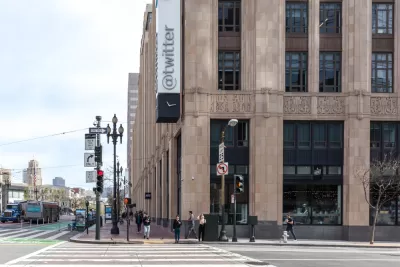
“Earlier this week San Francisco building inspectors told Twitter’s construction company that it had two weeks to submit a building permit that allows for the existing conference room sleepers,” writes Audrey Wachs in The Architect’s Newspaper. Whether people should be encouraged to sleep at work is another question.
The makeshift bedrooms first appeared on social media in December, when employees posted photos of them. After Forbes published an article validating what at first seemed like a bad joke, city inspectors descended on the company. “In order to get the newly-required permits, Twitter’s contractor has to send over revised floor plans that depict the new bedrooms.”
According to Wachs, “The December pictures revealed a sleeping quarter with a queen bed, a nightstand, and two armchairs atop bright orange carpets.” According to one employee, the sleeping quarters are “[not a good look. It’s yet another unspoken sign of disrespect. There is no discussion. Just like, beds showed up.”
FULL STORY: San Francisco says Twitter needs permits for its office bedrooms


Office conversion is picking up steam in San Francisco
The city spent five years streamlining approval processes and reducing fees to encourage more adaptive reuse of vacant office buildings.
With Zero Office Conversions in Four Years, San Francisco Pins Hopes on New Special Financing District
City leaders hope the new incentive will spur the redevelopment of some of the city’s 30,000 square feet of vacant office space into housing.
Op-Ed: San Francisco’s Downtown Plan Nothing Revelatory
Mayor London Breed’s newest proposal for revitalizing downtown San Francisco faces some sharp criticism for offering no new solutions after the city failed to deliver on goals and recommendations made in 2020.

Planetizen Federal Action Tracker
A weekly monitor of how Trump’s orders and actions are impacting planners and planning in America.

The state-sanctioned urbicide of Austin
People don’t kill cities. Freeways do.

US to reduce Colorado River water deliveries to Mexico
A new Colorado Treaty amendment reduces Mexico’s Colorado River water allocation by 250,000 acre feet.

5 New England states march closer to 800 megawatt wind energy project
Securing federal approval for the project may be complicated under the Trump administration, which has historically been hostile towards domestic wind power.

Baltimore to break ground on $50 million Transit Priority Project
The project will bring faster bus trips, safer streets and better bike connections to Baltimore.

Airbnb launches $250 million 'last-dollar financing' housing accelerator, makes first investment in Austin
The company will put $6.4 million towards affordable housing development in Texas’ capital.

FREE Course: Walkable City 1: Why Walkability?
After describing his path towards focusing on walkability as the essence of good planning, Jeff Speck marches through his five principal reasons for making more walkable places.
Reinventing Malls: Planning Alchemy—Turning Gray Fields Into Gold
The course focuses on the opportunities and imperatives that shape reinvention of mall sites.

Eagle County Government
Harvard University Graduate School of Design
Nashville Planning Department
The Architects Foundation
University of Cincinnati Online
The Pocatello Development Authority
The Urban Renewal Agency of the City of Pocatello
Journal of the American Planning Association