Regional transit agency SEPTA plans to streamline its service by replacing some suburban bus routes with on-demand transit.


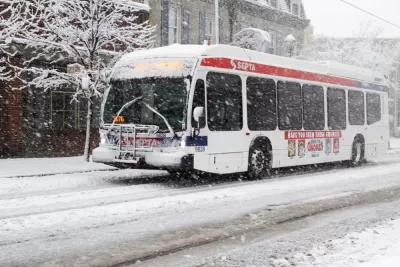
The Southeastern Pennsylvania Transportation Authority (SEPTA) has announced plans to revamp its regional transit system, eliminating some underperforming bus routes and improving service on more well-used lines.
As Emily Rizzo reports for WHYY, “SEPTA also wants to do away with bus routes in ten suburban communities and replace them with a whole new mode of public transit. Microtransit would be mobile, on-demand services that riders can request by phone call or a new SEPTA app — which is still in the works.” SEPTA is relying on on-demand microtransit to supplement the system overhaul and replace inefficient bus routes.
The changes could mean more transfers or increased travel time for some commuters, but could also yield more reliable and efficient service, according to the agency. “The plan has received pushback in places that are losing some local routes, like Philadelphia’s Manayunk area, and in Lower Merion Township, Montgomery County.” Critics also express concern that the new service will exclude people with disabilities and elderly people who may have trouble accessing the technology.
After gathering public input, the agency plans to implement the changes in late 2023.
Read the full story: A look into SEPTA’s new transit systems proposed for the Philadelphia suburbs

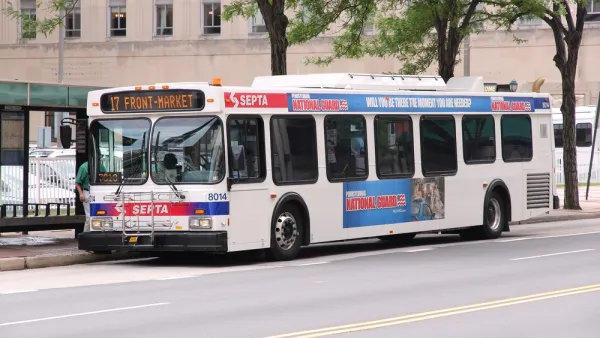
SEPTA Launches On-Demand Transit
The service will expand SEPTA bus service to the Philadelphia suburbs.

Philadelphia Bus Cameras Document Over 30,000 Violations
A pilot program tested AI-powered cameras that monitored bus-only lanes for parked vehicles.
Philadelphia Moves to Improve Paratransit Services
The Southeastern Pennsylvania Transportation Authority’s partnership with a technology provider will boost the system’s paratransit and microtransit services to improve access and accessibility.

Planetizen Federal Action Tracker
A weekly monitor of how Trump’s orders and actions are impacting planners and planning in America.

California plans to bury El Niño’s downpour
If the state plays its cards right, it may be able to store a billion acre-feet of El Niño’s water in aquifers.

Chicago breaks ground on $3 billion megadevelopment
The new neighborhood, titled Foundry Park, will one day host 3,700 residences.

California High-Speed Rail Authority CEO resigns after $600,000 scandal
Under Ian Choudri, the authority used taxpayer dollars to fund first class flights and trips to nightclubs.

Want to study the Missouri River? Soon, you may need unanimous approval from 10 states
Legislation would require 10 governors’ permission to study or build projects moving water outside the basin.

Desperate measures: Advocates weigh draining Lake Powell to fill Colorado River
Draining the reservoir could reduce evaporation losses by a couple hundred thousand acre-feet.

FREE Course: Walkable City 1: Why Walkability?
After describing his path towards focusing on walkability as the essence of good planning, Jeff Speck marches through his five principal reasons for making more walkable places.
Reinventing Malls: Planning Alchemy—Turning Gray Fields Into Gold
The course focuses on the opportunities and imperatives that shape reinvention of mall sites.

City of Rosemead
Rutgers University, Edward J. Bloustein School of Planning and Public Policy
One Hundred Miles
Hunter College, City University of New York (CUNY)
The Architects Foundation
University of Cincinnati Online
City of Cambridge
Montrose County
The Pocatello Development Authority